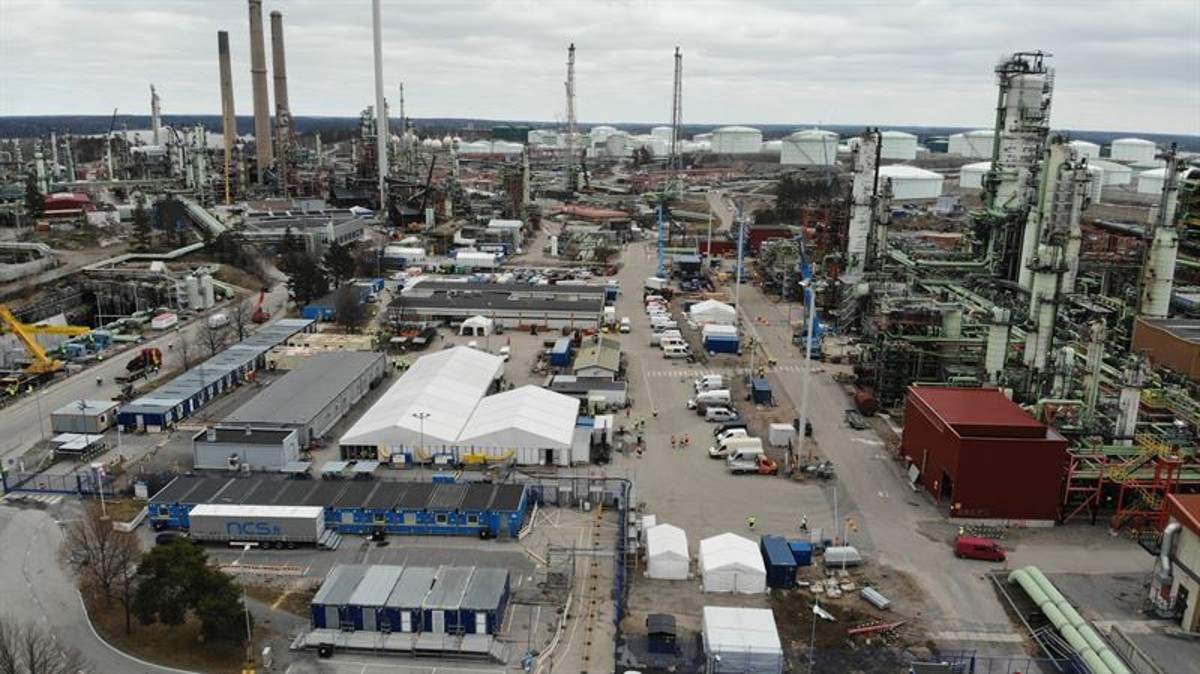
The European Commission has convened its first high-level dialogue with oil refiners to examine diesel and aviation fuel security, existing production capacity and the investment required to keep European processing plants competitive. Energy Commissioner Dan Jørgensen and Defence and Space Commissioner Andrius Kubilius chaired discussions involving refiners, technology providers, engineering businesses, emerging fuel producers, trade associations and NATO representatives. The meeting follows disruption to international fuel markets, but it has not established a binding refining target or an EU investment programme. The Commission and industry intend to develop a joint roadmap.
The Commission identified diesel and aviation fuel as strategically important products for transport, industrial operations and defence. It estimates that refineries within the European Union supply roughly 85% of diesel and 70% of jet fuel consumed in Europe. Those shares underline the continuing contribution of domestic processing assets, although they do not establish how much spare output is available or whether a particular plant can increase the yield of a given product. The meeting also involved representatives of NATO, reflecting the dependence of military logistics on reliable fuel supplies.
Discussions focused first on the output of the existing refinery system. A refinery separates crude oil into fractions, then uses further conversion and treatment processes to produce fuels that meet specified quality and environmental requirements. Increasing diesel or jet fuel production is therefore more complicated than running a crude distillation unit faster. The feedstock, hydroprocessing capacity, available hydrogen, product specifications, storage and export connections all influence which products a site can make and at what volume.
Refinery maintenance is another constraint on available supply. Shutdowns allow operators to inspect pressure equipment, repair processing units, replace catalysts and complete safety work that cannot necessarily be performed while plants run. A prolonged interruption to a conversion or treatment unit can reduce output of finished diesel or aviation fuel even where crude distillation continues. The Commission reported in late September that European refineries were operating near maximum capacity, leaving limited immediate headroom at some facilities. Maintaining safe operation cannot be reduced to a political request for greater utilisation.
On 22 October, the Commission’s Oil Coordination Group reported that European diesel and jet fuel supplies were tight but that there was no physical shortage at that point. Its monitoring involves EU member states and the International Energy Agency, with emergency stocks providing one potential response to disruption. The new refinery dialogue addresses a different issue: whether the industrial asset base can supply sufficient volumes and the appropriate fuel specifications over a longer period. A price increase in a tight market is not, on its own, evidence that European refineries have stopped delivering fuel.
Geopolitical disruption has sharpened the distinction between crude oil security and refined product security. A country may have access to crude and still depend on imported diesel or jet fuel if the processing units needed to make those products are unavailable. Similarly, a refinery may have crude throughput but lack sufficient equipment to meet a sudden change in demand for a particular specification. Storage, blending facilities, ports, pipelines and rail connections determine whether available production can reach the places where it is needed.
Refiners also face high operating costs and uncertainty over the future product mix. Hydrotreaters and conversion units consume fuel, steam, electricity and hydrogen, while upgrades require lengthy engineering, permitting and shutdown planning. A business considering a new processing unit must weigh expected demand for conventional fuels against the possibility of alternative fuel mandates and changing vehicle and aircraft technology. The Commission has asked participants to consider competitiveness and decarbonisation together, without yet identifying which plants or process changes should receive financial support.
The transition agenda includes sustainable biofuels and synthetic fuels made using alternative carbon sources and low-carbon hydrogen. These products have different feedstock, conversion and quality requirements from conventional petroleum fuels. Some refinery equipment may be adapted for new feedstocks or blended production, but the feasibility depends on chemical compatibility, pretreatment needs, product standards and capital expenditure. The dialogue did not announce a new refinery conversion programme or identify plants selected for investment.
In a separate statement on 2 October, G7 leaders agreed to coordinate refinery maintenance schedules and temporarily raise utilisation where feasible, with particular attention to diesel output. That international commitment provides a nearer-term supply response; it is not an EU order directing every refinery to increase production. The technical scope for an increase depends on operating permits, feedstock availability, process constraints and maintenance obligations. A rise in crude throughput would not necessarily deliver a matching rise in the particular grades of diesel or aviation fuel in short supply.
The planned Commission–industry roadmap will have to address refinery resilience alongside investment in biofuels, synthetic fuels and the infrastructure needed to distribute them. Converting or integrating processes for alternative feedstocks involves engineering checks on corrosion, catalysts, hydrogen supply, purification and final fuel specifications. No conversion site, financing instrument or deadline for the roadmap has been confirmed at this first meeting. Refiners and governments must still establish which capacity can be maintained economically, which assets could be adapted and what additional finished-fuel output their proposals would deliver.