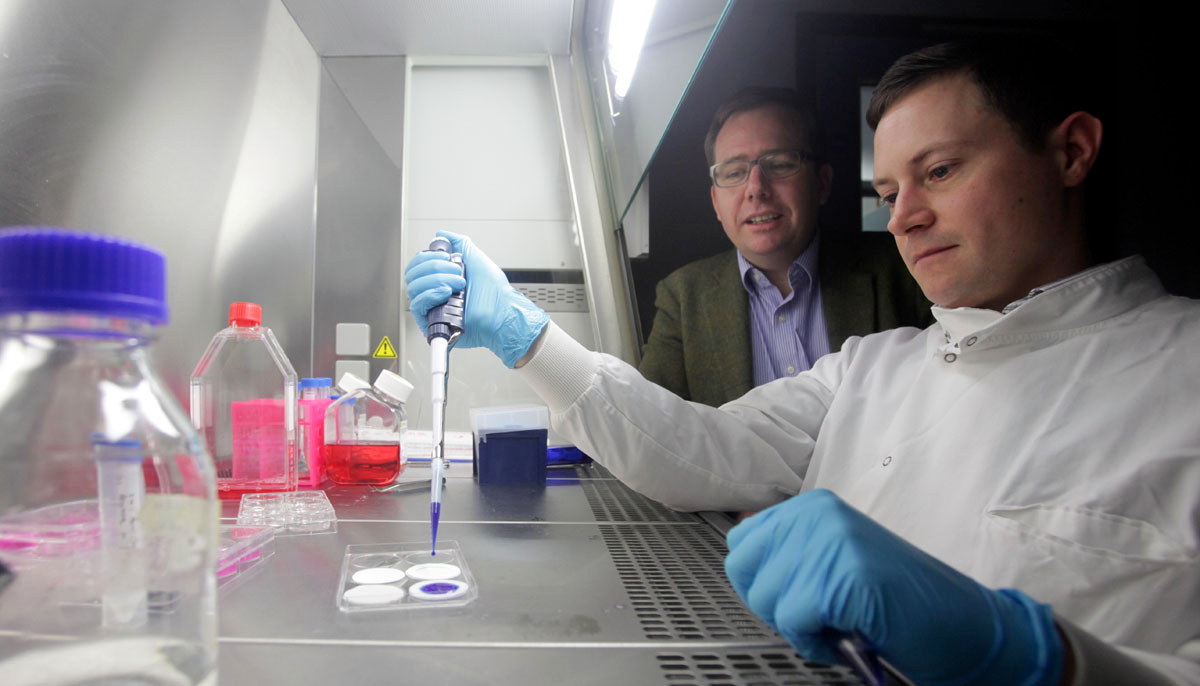
Atelerix and Frontier Space have agreed a two-year programme to evaluate hydrogel preservation of biological samples intended for research in space. The UK partners will examine suspended mammalian cells, organoids and organ-on-chip models, seeking to keep them suitable for analysis after transport and storage. They are targeting opportunities to fly experiments in 2027, but neither a particular launch nor successful orbital validation has been confirmed. The work is intended to establish which biological specimens can be transported without conventional cryogenic storage, under defined handling conditions.
Newcastle-based Atelerix will supply preservation products, protocols and technical support, while Frontier Space will identify suitable research payloads and assist with experimental design, integration and execution. Frontier develops services for in-orbit research and biomanufacturing, rather than operating the preservation technology itself. The memorandum of understanding is a commitment to evaluation, not a signed order for completed flight services. Assessments on Earth and the requirements of individual missions will determine which experiments can move beyond the laboratory.
Space biology experiments impose constraints at several points in a sample’s journey. Cells may be prepared on Earth, held during transport, exposed to launch vibration and acceleration, and subsequently kept inside an experimental payload before recovery and analysis. Some conventional workflows use frozen samples and associated cryogenic or refrigerated hardware, increasing mass, power demand and handling requirements. Replacing a freezer would remove one subsystem, but would not resolve all environmental controls, sterile handling requirements or the conditions needed to keep a sample scientifically useful.
Atelerix encapsulates biological material in an alginate hydrogel. Its stated mechanism is to support cell membranes while lower-than-culture temperatures reduce metabolic activity, allowing some cell types to be transported at around room temperature rather than frozen. The company describes typical storage periods of three to seven days, with longer periods possible for certain tissues; those figures are application-dependent, not a blanket guarantee for the three classes of samples in this programme. Cells can be released using a buffer that dissolves the gel, although the appropriate recovery and viability checks depend on the experiment.
The partners will assess suspended cells, more complex organoids and organ-on-chip samples, whose requirements need not be interchangeable. Organoids contain organised cellular structures, while organ-on-chip models may depend on defined geometry, interfaces and fluid pathways to function as intended. A preservation method must therefore be judged against viability and subsequent biological activity, not only whether a transport container reaches its destination. Frontier’s payload work can help determine how samples are prepared, contained, released and analysed within the constraints of the chosen research hardware.
A viable sample after terrestrial transport has not automatically passed an orbital qualification test. Vibration, acceleration, temperature variation and the delay between payload loading and experiment execution may each affect results. The companies have not published a test protocol, minimum post-storage viability threshold or agreed flight manifest for the collaboration. Those details will shape whether hydrogel storage is appropriate for a given mission, and whether the material remains encapsulated throughout travel or is removed from the gel before observations begin.
The proposed benefit is lower payload mass and simpler sample logistics where bulky cold storage can be dispensed with. Frontier Space estimates that this could save up to $30,000 in launch costs, but that is a prospective company estimate rather than a measured saving from the partners’ trials. The amount will vary with the equipment that can actually be removed and the requirements of a specific mission. Temperature monitoring, containment and safe sample recovery may still be needed even where liquid nitrogen or powered freezing is unnecessary.
Space-based biological research has included investigations of protein crystallisation and cellular behaviour under microgravity, where fluid transport and sedimentation differ from terrestrial conditions. BioOrbit, another UK company, has pursued a separate orbital protein-crystallisation project. That work illustrates the potential uses of space research infrastructure, but it does not validate Atelerix’s hydrogel treatment, nor does it imply a shared programme between the companies. Preservation and the scientific experiment are separate engineering and biological problems that need their own evidence.
Reproducibility will determine whether the technology is suitable for routine research payloads. Investigators need comparable viability, functionality and sample recovery from batch to batch, with records of temperatures, elapsed storage time and treatment conditions. The risk of an inconsistent specimen is not limited to losing cells: altered responses after recovery could compromise the interpretation of an experiment. Repeatable preparation and controlled recovery are therefore as important as demonstrating that a single sample can survive a journey.
Atelerix and Frontier Space now have to establish which specimens and storage intervals meet their respective mission requirements, before any intended 2027 launch can provide flight data. The programme could support a less equipment-intensive method of moving biological material, provided laboratory and subsequent in-orbit results are consistent. There is, as yet, no evidence from this agreement that all space biology samples can abandon cold-chain preservation, or that the proposed savings are achievable across different payloads.