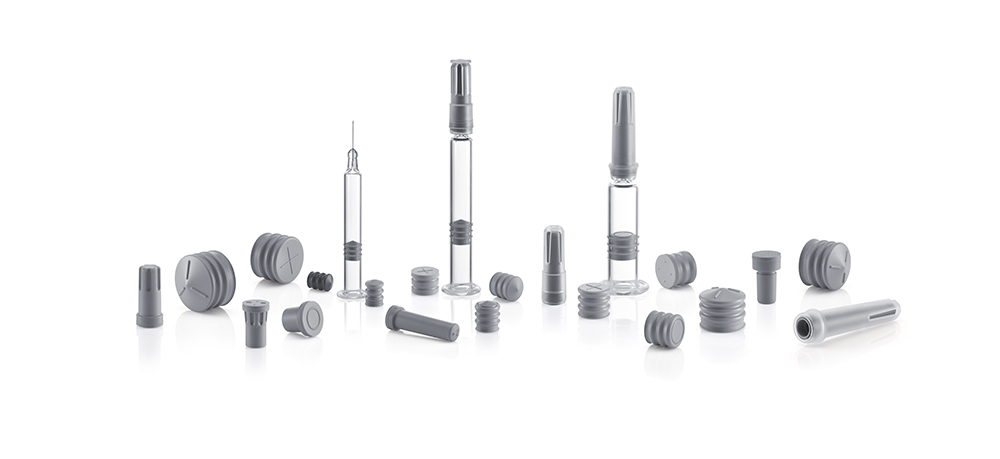
Stevanato Group and Aptar Pharma are assessing complete prefilled syringe assemblies, combining glass barrels, elastomeric plungers and rigid needle shields to generate performance data before drug developers settle on packaging configurations. The companies are testing 1 mL long and 2.25 mL formats intended for standard injection and autoinjector applications. The collaboration responds to the growing complexity of sensitive biologics and concentrated formulations, for which dimensions and individual component specifications alone cannot demonstrate how an assembled system will perform. The programme is a supplier testing initiative, not approval of a drug product or a certified universal syringe design.
Stevanato is contributing its EZ-fill Nexa and Alba glass syringe platforms, while Aptar is providing PremiumCoat and uncoated plungers together with rigid needle shield options. Each component performs a different task. The barrel contains the formulation and establishes the surface along which a plunger travels; the elastomer must maintain a seal while allowing a controlled injection stroke; the needle shield protects the needle and contributes to container closure performance. Matching components dimensionally is a starting requirement, not a guarantee that the completed assembly will operate within its intended limits.
The tests measure the forces needed to start and continue plunger movement. Break-loose force is the initial resistance encountered before a stationary plunger begins to travel, while extrusion or glide force characterises resistance during movement. These values are relevant to manual use and to devices that rely on a spring or another drive mechanism to deliver a dose. A formulation with higher viscosity can raise the load required to move liquid through a narrow needle, which makes the interaction between barrel, plunger, needle geometry and formulation particularly important.
A rigid needle shield also has to meet competing requirements. It must protect the needle and stay attached through handling, yet be removable by the user or the device within an acceptable force range. Shield pull-off tests therefore examine another interaction between the chosen components and the final delivery method. The companies are comparing selected shield options and have not disclosed measured pass rates, numerical acceptance bands or performance results across all potential glass-barrel and plunger combinations. A result for one configuration should not be transferred automatically to another.
The work also examines container closure integrity and plunger seal integrity. These properties concern whether the assembled package can maintain a suitable barrier against contamination and unwanted movement of its contents. A glass container may meet its own dimensional specification while a particular elastomeric component behaves differently in a complete system. Surface condition, lubrication, compression and storage exposure can influence sealing and movement, so evidence from assembled units is more directly relevant to eventual drug packaging decisions than component data alone.
The companies say their test approach is intended to help pharmaceutical customers meet United States Pharmacopeia chapter 382, which concerns the functional suitability of elastomeric components in parenteral packaging and delivery systems. Assessing sealing and component movement in the assembled configuration is relevant to that standard’s intended-use requirements. The related chapter 1382 provides guidance on designing such assessments. Neither chapter makes an early supplier data package a substitute for product-specific stability, extractables and leachables considerations, container closure qualification or regulatory submissions by the drug manufacturer.
Aptar established its broader system-level testing framework in July 2026. The Stevanato arrangement extends it to named syringe, plunger and shield combinations, allowing development teams to compare parts of the design before committing to a particular drug-device package. The partners also offer technical and regulatory support material. They have not announced a validated commercial configuration for every viscosity profile, a manufacturing expansion or a new medicine approved through the collaboration. Selection and subsequent verification remain tied to the particular formulation and route of administration.
High-concentration biological medicines make the choice of components more demanding. Their behaviour under injection can differ considerably with formulation viscosity and the needle selected. That creates interacting decisions about the force available from an injection device, the desired delivery time and the seals needed for storage. Selecting a packaging assembly solely on the basis of catalogue dimensions can leave these relationships to be resolved later, when changes may require new engineering and analytical work.
The companies are exploring needle geometry alongside the selected viscosity profiles, providing an indication of how the tests might narrow engineering choices. A small change in the route through which liquid must flow can alter extrusion requirements even if the glass barrel and plunger are unchanged. The study therefore separates observed force and integrity behaviour from broad claims about drug compatibility. Results from representative assembled systems can inform feasibility, while subsequent development must test the actual drug formulation and proposed commercial configuration.
The joint work will produce comparative information on forces and sealing behaviour, but the companies have not released a programme completion date or numerical results for the full test matrix. The most immediate manufacturing benefit would be to identify an incompatible plunger, shield or barrel configuration before tooling and process decisions become expensive to reverse. Actual scale-up will still require studies of filled, processed and stored product, plus acceptance testing on the final assembly. The announcement concerns earlier engineering evidence, not a change to pharmaceutical approval requirements.