Tadweld has begun an artificial intelligence adoption project through Made Smarter Yorkshire & Humber, using specialist technical support to identify where AI can produce measurable operational gains before the North Yorkshire manufacturer commits to wider deployment.
The Tadcaster business is the first manufacturer in North Yorkshire to begin an AI project through the programme’s Intensive Technical Support service. Orah AI Consultancy is supporting the work, which will assess potential applications and identify higher value opportunities rather than starting from a predetermined software purchase.
Interest in AI across UK business has risen quickly, but manufacturing adoption remains concentrated in administrative work rather than production, supply chain and quality functions. Office for National Statistics data published in July showed that around 35% of UK businesses with 10 or more employees were using at least one AI technology by June 2026, almost three times the proportion recorded in late 2023.
Among businesses already using AI, only 10% described that use as extensive. Make UK research shows a similar pattern in manufacturing, where only 2% of companies regarded AI as widely embedded across their operations and fewer than 40% were using it in some areas.
The distribution of use also remains uneven. Make UK found that 83% of manufacturers using AI were applying it to areas such as HR, finance and administration, compared with 11% in production, 7% in supply chain functions and 6% in quality control.
Factory deployment is more demanding because a useful system has to interact with production data, equipment, quality requirements and established workflows. A tool used to draft an internal document can be tested and corrected before the output affects operations; a system influencing a production schedule, inspection decision or engineering workflow can consume material, delay orders or introduce quality risk if its output is wrong.
Data quality becomes one of the first constraints. Manufacturing information may be spread across machine controls, enterprise systems, spreadsheets, inspection records and manual processes installed years apart without any expectation that their data would later be combined for machine learning.
Valuable operating knowledge may also exist mainly in employee experience rather than structured databases. If experienced staff recognise a pattern in a machine, drawing or production sequence but that judgement has never been recorded consistently, an AI system has little reliable historical material from which to learn.
Tadweld’s assessment led approach allows those conditions to be examined before software is selected. The company fabricates structural steelwork and engineered metal products, so commercial, engineering and production information has to move from enquiry and design through procurement, fabrication, quality assurance and delivery.
Potential applications can sit at several points in that chain, but each depends on a different combination of data and process maturity. Forecasting, document processing, production planning, maintenance analysis and inspection use different types of models and create different operational risks.
Where labour, delay, scrap, rework or decision time creates a sufficiently large cost, the manufacturer can compare AI with conventional software, standard automation or improved data management before selecting a technology. Processes based on stable and clearly defined conditions may gain little from a more complex model.
Rules based systems remain appropriate where decisions can be expressed reliably through fixed conditions. Statistical and machine learning methods become more useful where patterns have to be extracted from larger or less predictable datasets, while generative AI is generally better suited to language and content tasks than deterministic factory controls.
Error tolerance varies substantially between those applications. An inaccurate draft summary can be reviewed before use, whereas an incorrect quality classification can allow a defective component to continue through production or cause acceptable material to be rejected.
Human review has to reflect the consequence of the decision. A system generating suggestions for a planner can operate with a different control structure from one influencing inspection, machine settings or safety related actions.
Commercial confidentiality and cyber security create additional constraints when external AI services are involved. Engineering drawings, customer specifications, prices and process information can all be sensitive, requiring manufacturers to understand what information leaves their own systems, where it is processed and whether it is retained or reused by the provider.
Legacy integration can be equally restrictive. A model may identify a better production sequence, but the benefit is limited if the result still has to be copied manually into scheduling software or if machine data cannot be extracted reliably enough to update the system.
The Government’s Technology Adoption Review has identified skills, cyber security and legacy system integration among the barriers slowing digital adoption. Smaller manufacturers can feel those constraints particularly strongly because they may have deep engineering knowledge without maintaining large internal data science or enterprise IT teams.
Made Smarter’s support model combines technical advice, digital roadmaps, skills development and investment support to reduce that capability gap. Tadweld’s project is expected to establish where AI can create measurable value and what systems, data or workforce capability would be required before implementation.
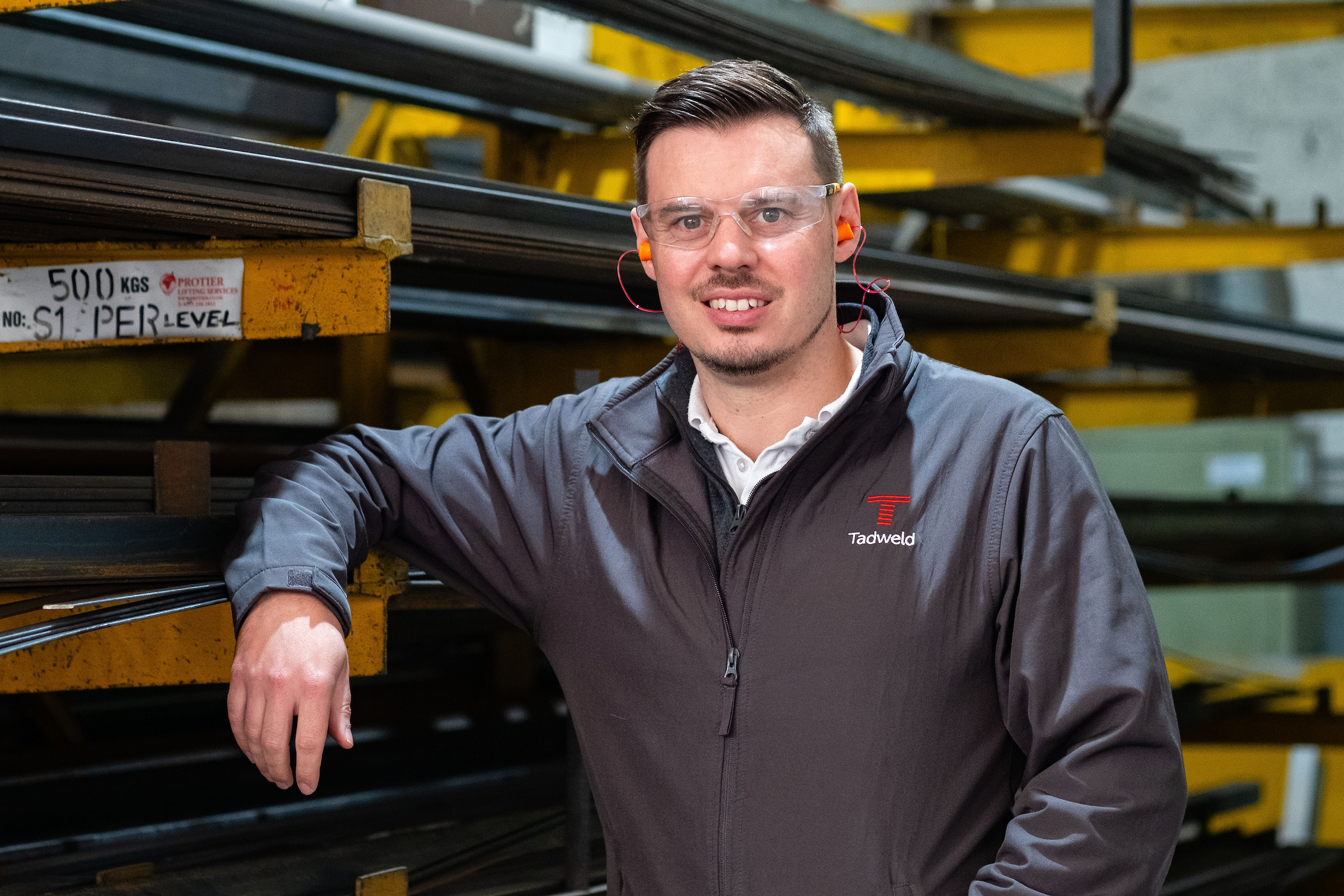
Managing director Chris Houston said: “AI has the potential to help manufacturers unlock significant improvements, but it needs to be introduced thoughtfully and with a clear commercial purpose.”
Manufacturers have already worked through several waves of digital technology whose returns depended more on implementation discipline than on the label attached to the product. AI adds analytical and generative capabilities, but it does not automatically correct incomplete data, unclear processes or disconnected systems.
Make UK has previously found that 75% of manufacturers planned to increase AI investment, suggesting that spending intentions are running ahead of widespread operational maturity. Its 2026 research still shows a substantial gap between companies experimenting with tools and those embedding them through production.
Tadweld’s project is deliberately narrower than a factory wide AI rollout. Assessing applications before selecting technology allows the manufacturer to establish whether a proposed use case has enough reliable data, sufficient economic value and an acceptable error profile to justify implementation.
A process that reduces engineering time, improves planning, cuts rework or increases decision quality without creating disproportionate integration and governance work would provide a measurable basis for wider adoption. Where those conditions cannot be demonstrated, avoiding an unnecessary implementation prevents capital and management time being committed to an AI project with no defined operational return.