Exel Composites has opened dedicated production capability at its Joensuu factory in Finland for carbon fibre tubes used in FLYING WHALES’ LCA60T heavy lift airship, moving the programme into process validation before manufacture of the first aircraft frame.
The new area contains several pull-winding lines and additional space for producing very long composite tubes. Temperature, humidity and air cleanliness can be controlled more closely than in a general production environment, reflecting the repeatability and quality requirements associated with aerospace components.
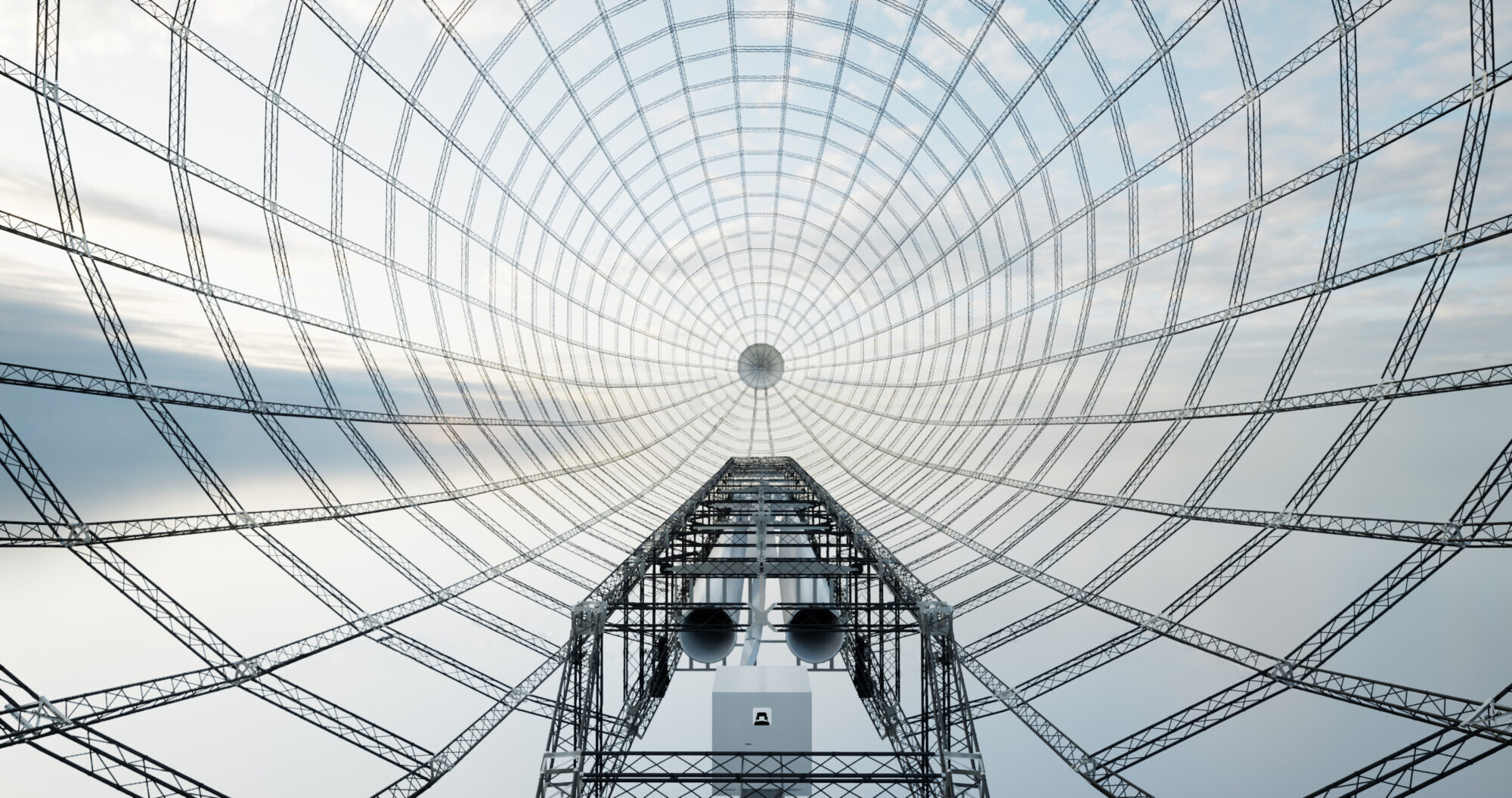
FLYING WHALES’ LCA60T is a 200 metre vertical take-off airship designed to transport cargo of up to 60 tonnes. Its lightweight structural frame is expected to use around 80 kilometres of pull-wound carbon fibre tubes for each aircraft, creating an unusual production requirement in which aerospace quality has to be maintained across a large volume of continuously manufactured composite profile.
The companies deepened their development work under an agreement announced in 2024 following earlier fibre, resin and lay-up trials. The Joensuu investment moves that programme from component development towards proving that the manufacturing process can repeatedly produce tubes to the specifications required for the first airship.
Pull-winding combines longitudinal fibres with reinforcement wound around the tube at controlled angles. The fibres are impregnated with resin, arranged into the required orientation and pulled through a heated die, where the resin cures into the finished profile before the tube is cut to length.
The additional wound reinforcement distinguishes the process from conventional pultrusion by allowing engineers to control transverse stiffness and hoop strength alongside axial performance. Carbon fibres running along the tube carry longitudinal loads, while fibres placed at an angle can resist forces acting around or across the section.
An airship frame subjects structural tubes to loads in several directions, while every additional kilogram of structure reduces the mass available elsewhere in the aircraft. Fibre orientation and wall construction can therefore be adjusted around the mechanical requirement instead of adding material uniformly to obtain more strength.
Mechanical performance depends heavily on how consistently that reinforcement is placed. Variations in fibre tension, alignment, resin content or cure can change tube properties even when the finished dimensions remain apparently correct, making process control central to structural repeatability.
Pull-winding also gives Exel a continuous production route rather than requiring every tube to be laid up individually in a mould. Fibres and resin move through the equipment continuously and the cured profile is cut downstream, which is better suited to a frame consuming tens of kilometres of tubing than labour intensive batch manufacture.
Continuous production still has to satisfy aerospace quality requirements over the full run. A small drift in fibre placement or curing conditions can affect a large quantity of material before the deviation becomes visible unless the process is monitored and controlled within validated limits.
Process validation is intended to demonstrate that the equipment, materials and operating parameters produce components with repeatable properties from one run to another. Exel must establish those limits before production quantities are committed to the first aircraft frame.
The Joensuu area gives the validation work a controlled environment in which temperature, humidity and cleanliness can be managed alongside machine settings. Temperature influences resin behaviour and curing, while contamination or moisture can affect surface condition, bonding and the consistency of some composite processes.
Very long tubes create another manufacturing constraint after curing because components still have to be handled, inspected, stored and shipped without damage. Production line layout needs enough clear space for finished lengths and handling equipment while preventing bending, impact or surface damage after the profile leaves the die.
The quantity required by the LCA60T also magnifies process losses. A scrap rate that appears manageable during development becomes expensive when repeated across around 80 kilometres of carbon fibre tube, particularly when the material and production environment are being controlled to aerospace standards.
Development, production, quality, application engineering and operations teams are based together at Joensuu, allowing defects found during validation to be traced into material selection, component design or machine settings rather than treated solely as isolated production failures.
The airship design and the composite process also have to mature on compatible timelines. Producing large quantities before structural tolerances stabilise risks generating expensive material that later needs modification, while leaving industrialisation too late can leave the programme unable to manufacture enough qualified components for prototype and certification activity.
Validation allows Exel to establish repeatable process parameters using the current component definition and feed the resulting manufacturing data back into the structural programme before the first full frame consumes production volumes.
The dedicated lines may also have uses beyond the LCA60T where long lightweight composite tubes are required in greater quantities than conventional batch methods can supply economically. Those opportunities will depend on the equipment demonstrating stable aerospace level production on its first intended programme.
For the LCA60T, the immediate requirement is now defined: the Joensuu lines must reproduce the required tube properties consistently before manufacturing begins for the first frame, turning earlier material development into a qualified industrial production process.