Biocodex plans to invest €15 million in anaerobic pharmaceutical manufacturing infrastructure at its Beauvais site in France, under a partnership with Belgian biotechnology company MRM Health intended to support the development and eventual commercial production of live biotherapeutic medicines.
The investment will establish a specialist production platform inside an existing 900m² building. Biocodex will finance, build, own and operate the facilities, while MRM Health will contribute process expertise derived from its CORAL technology for manufacturing combinations of living microorganisms.
Project development began in 2026, with initial process work and pilot manufacturing expected during 2027. Biocodex has targeted the first clinical batches for the first half of 2028 and commercial manufacturing capability by 2030. Each milestone depends on the successful development and qualification of the relevant processes.
Live biotherapeutic products contain living microorganisms, such as bacteria or yeasts, which are being developed for therapeutic purposes. Manufacturing them requires controls that differ from those used for conventional chemical medicines because the organisms must be grown under suitable conditions and maintain defined characteristics throughout processing.
Some bacteria involved in microbiome therapies are particularly sensitive to oxygen. Their cultivation can require anaerobic vessels, controlled transfer systems and equipment arrangements that prevent inappropriate exposure to air while limiting contamination from other organisms. The process requirements also depend on the identity and behaviour of each strain.
MRM Health uses its CORAL platform to manufacture complex consortia of bacterial strains through a single production process. The company presents the approach as an alternative to cultivating every constituent separately and then combining the resulting materials, although each formulation will still require its own validated operating parameters and analytical controls.
Industrial scale-up presents further challenges when a product contains several organisms. Growth rates, nutrient requirements and sensitivities can differ between strains, so the composition achieved at laboratory scale must remain sufficiently controlled when larger equipment is introduced. The ability to reproduce that composition contributes to pharmaceutical quality.
At Beauvais, the planned platform will provide process development, analytical testing and Good Manufacturing Practice manufacturing services under programme-specific agreements. MRM Health will be able to use the facilities for its own products, programmes developed with pharmaceutical partners and licensed applications of CORAL.
The agreement is non-exclusive, allowing MRM Health to use other manufacturing partners where necessary. Access to the Biocodex platform consequently creates an additional route to production rather than transferring all of the biotechnology company’s manufacturing activities to a single facility.
The companies envisage expanding production capacity as clinical and commercial demand develops. Neither has published the number or size of the proposed production bioreactors, an annual output target or the percentage of the facility initially reserved for MRM Health programmes.
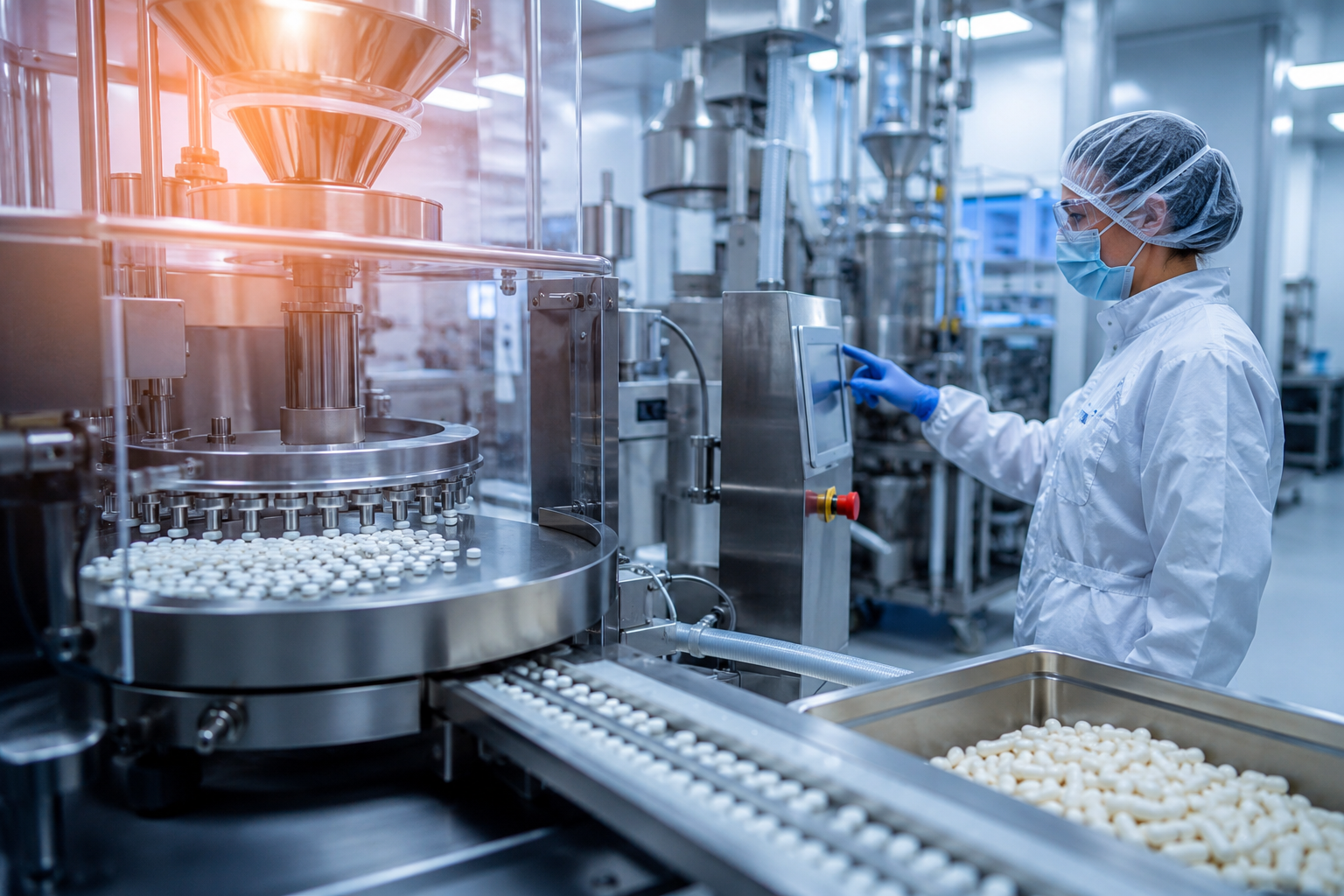
Biocodex already has extensive experience producing pharmaceutical products involving microorganisms. Its Beauvais manufacturing and logistics site has operated since 1968 and includes fermentation and freeze-drying equipment used in existing production activities. The new platform will add a more specialised capability for complex live biotherapeutics.
Freeze-drying can be used to remove water from biological materials under controlled conditions, potentially helping preserve sensitive products during storage and distribution. The precise downstream formulation and drying methods for individual medicines will depend on their stability requirements, rather than automatically following the processes used for existing Biocodex products.
The Beauvais site also handles packaging and distribution for international pharmaceutical markets. In its new project information, Biocodex cites production of approximately 95 million packs a year and distribution to more than 100 countries, figures relating to the established operation rather than forecast output from the proposed anaerobic platform.
MRM Health’s lead candidate, MH002, is being investigated for inflammatory conditions, including ulcerative colitis. The product is still undergoing clinical development, and manufacturing work at Beauvais will be intended to support future studies and potential supply if the programme advances successfully.
A manufacturing route capable of supporting successive clinical phases can reduce the technical changes required as a candidate progresses. Nevertheless, processes must be qualified for each intended use, with controls for identity, purity, potency and other characteristics set according to the medicine and its regulatory requirements.
The partnership builds on an existing financial relationship. Biocodex invested €11 million in MRM Health’s September 2025 financing round, a separate equity commitment from the new €15 million proposed for manufacturing infrastructure. The investment figures should therefore not be combined as though they represented a single newly agreed facility budget.
Dr Sam Possemiers, chief executive of MRM Health, said the companies were establishing “a specialized and scalable manufacturing pathway from clinical development to future commercial production”. He linked the investment to the need for manufacturing infrastructure to develop alongside the underlying therapeutic programmes.
Nicolas Coudurier, chief executive of Biocodex, said the partnership would strengthen European industrial capabilities for live biotherapeutic products. Biocodex also intends the Beauvais platform to serve other biotechnology developers, with two partners already involved according to the company.
The investment remains a development programme rather than an operating commercial manufacturing line. Work during 2027 is expected to concentrate on process development and pilot activities; clinical batch production is targeted for 2028, followed by planned commercial capacity by 2030 as product development, technical qualification and demand allow.