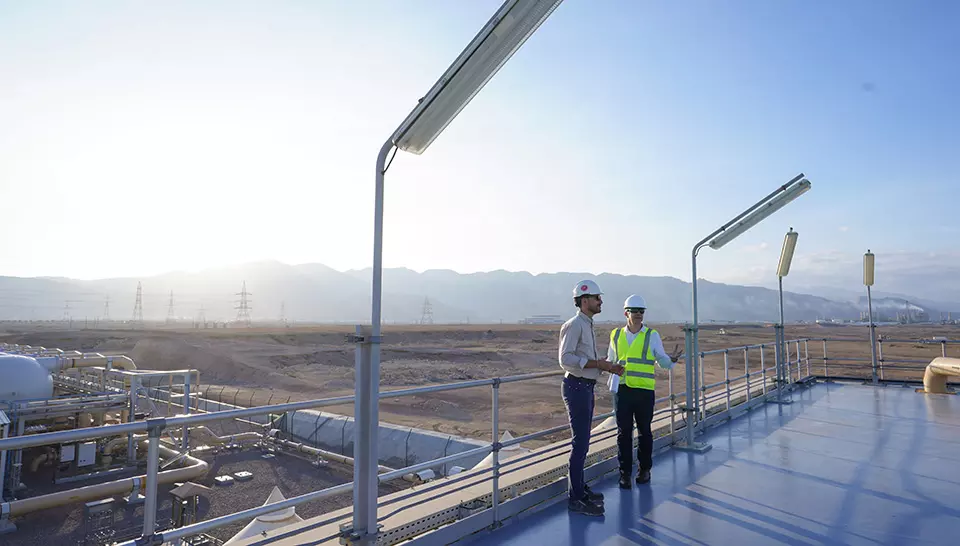
Veolia has secured two desalination contracts worth nearly €200 million combined in the United Arab Emirates and Oman, covering design and treatment technologies for a new water production facility and a separate five-year operations agreement.
The contracts concern the planned Al Hamriyah plant in the UAE and the existing Al Asilah facility in Oman. Their combined stated treatment capacity is 490,000 cubic metres per day, but Veolia’s responsibilities differ substantially between the two projects and the installations should not be presented as equivalent new-build investments.
At Al Hamriyah, the company is responsible for design and the supply of treatment technology for a desalination facility planned to produce 410,000 cubic metres of drinking water per day. Veolia says the plant will serve approximately 1.4 million people once in operation.
The process design is targeting specific energy consumption of 2.75 kilowatt-hours per cubic metre of water produced. The figure is a forecast operating target for the future installation rather than a measured result from a fully commissioned plant, and no confirmed date for the start of commercial water production has been provided.
The treatment arrangement includes dissolved air flotation, dual-media pressure filtration and limestone filtration. Veolia identifies the integration of these systems, particularly pretreatment and remineralisation, as part of its approach to controlling the plant’s performance.
Seawater desalination commonly uses reverse osmosis, in which pumps apply pressure to drive water through membranes that retain most dissolved salts. The electrical energy required depends on the salinity and temperature of the feedwater, membrane condition, recovery arrangements and losses through the pumping and treatment systems.
Pretreatment protects downstream equipment by reducing suspended matter and other material that could foul the membranes. When contaminants accumulate on a membrane, performance can deteriorate and additional pressure or cleaning may be needed to maintain the required output.
Dissolved air flotation introduces fine bubbles that attach to suitable suspended particles or flocs, allowing the material to separate from the water before later treatment stages. Its effectiveness depends on the incoming water and the conditioning and operating arrangements used.
Dual-media filters then use layers of granular material to remove further suspended solids. Their operation involves managing flow, pressure losses and periodic cleaning so that the filters continue to deliver water within the quality limits required by the downstream process.
After dissolved salts have been removed, drinking water may need mineral content and chemical balance adjusted before distribution. Limestone filtration is used for remineralisation, adding an additional treatment stage between membrane processing and final supply.
The energy target for Al Hamriyah is not attributable to any single piece of equipment. Whole-plant consumption reflects the interaction of intake, pretreatment, high-pressure pumping, membrane performance, energy recovery and post-treatment. Veolia has not published a detailed breakdown of the expected energy use by individual process stage.
In Oman, the contract addresses a different requirement: Veolia will operate the Al Asilah desalination facility and optimise its performance over five years. The existing plant is rated at 80,000 cubic metres per day and supplies drinking water to an estimated 200,000 people.
Al Asilah has an associated solar farm intended to diversify the electricity supply used by the facility. Veolia will also introduce Smart Connectors and Hubgrade digital solutions to support monitoring and the management of energy and operational performance.
Monitoring equipment can help operators compare the performance of pumps, filtration equipment and other treatment stages as conditions change. The value of that information depends on the availability of reliable measurements and on the maintenance or operating decisions made in response.
Electricity consumption is a substantial operating consideration for desalination, and changes in feedwater quality, membrane fouling and equipment efficiency can alter the energy required for a given output. Veolia has not supplied a quantified reduction in energy consumption guaranteed under the Al Asilah contract.
The group already operates four major desalination plants in Oman, including the nearby Sur facility. It reports that those operations contribute to drinking water supply for nearly 2.5 million inhabitants, reflecting an established operating presence beyond the new Al Asilah contract.
In the UAE, Veolia identifies Hassyan, Mirfa 2, Umm Al Quwain and Fujairah among its existing desalination references. The latest Al Hamriyah design agreement extends that portfolio, although the supplier has not disclosed the contract value attributable to that project individually.
Across the wider industry, Veolia estimates that its technologies have contributed to about 18% of global installed desalination capacity. The group also aims to double the capacity of desalination facilities it operates worldwide by 2030, an objective that will depend on future operating contracts and project developments.
The company is also examining energy efficiency, water treatment chemicals and the environmental management of concentrated saline discharges. Reverse osmosis separates a relatively low-salinity product stream from a more concentrated reject stream, which requires appropriate handling and discharge arrangements according to the receiving environment.
No commissioning date, separately valued contract amounts or actual energy performance figures for Al Hamriyah are disclosed in the current agreement. At Al Asilah, the five-year operating contract will provide opportunities to assess plant performance over time, but no audited efficiency improvement from the new arrangement is yet available.
The combined package therefore spans two distinct stages of desalination infrastructure: designing the process technology for new capacity in the UAE and managing an existing water production asset in Oman. Its stated 490,000-cubic-metre daily capacity is the sum of the two plants’ nameplate ratings, not an amount of newly commissioned output.

