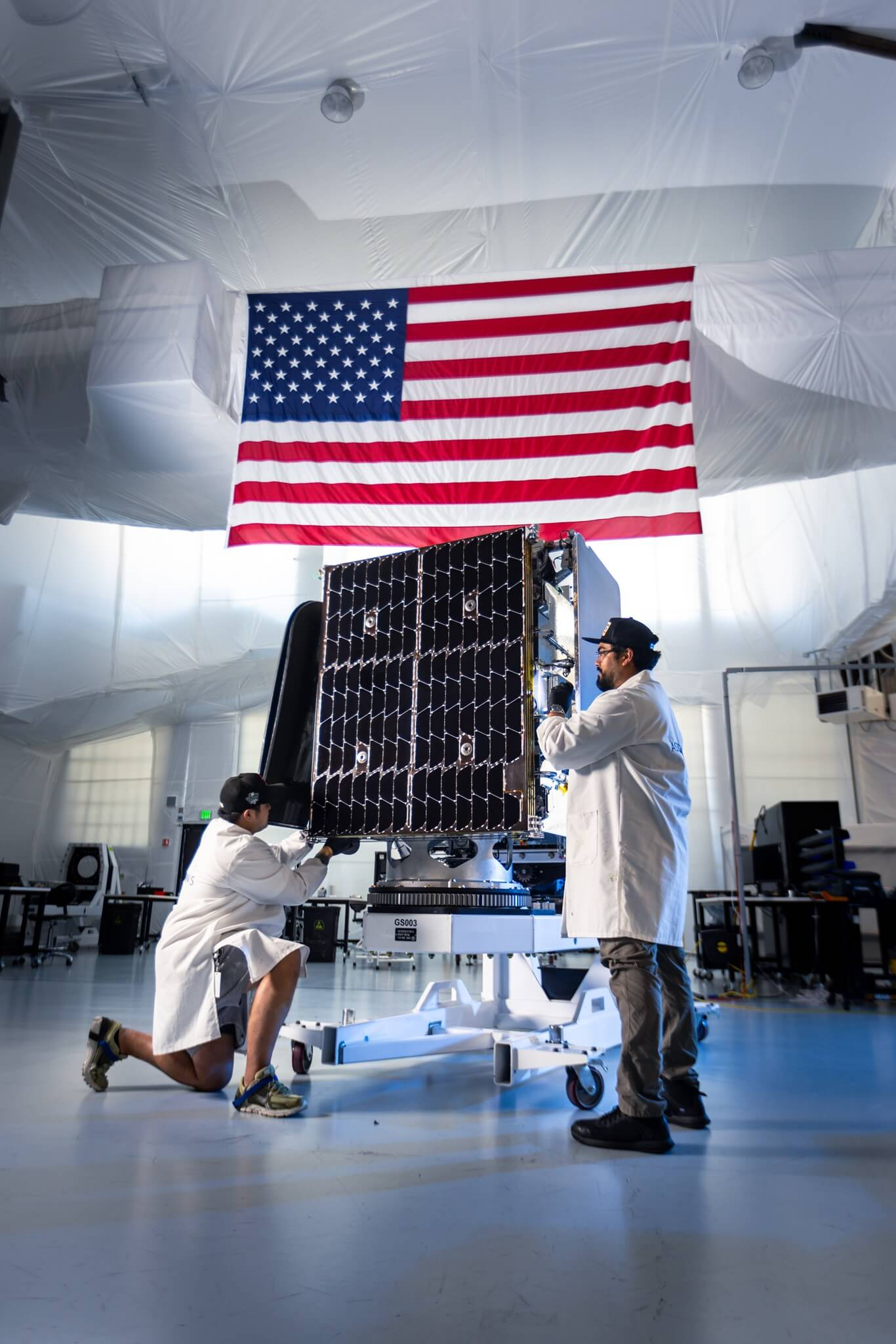
AFD Systems has installed a Stratasys F900 industrial additive manufacturing system to extend the size and volume of polymer aerospace work it can produce within its UK Civil Aviation Authority Part 21G Production Organisation Approval. The Lancashire company says the machine will support larger flightworthy components, tooling and low-volume production across aerospace, defence and other regulated sectors, building on an additive operation that already sits inside a formal aviation production framework.
That approval is central to the investment because a larger printer alone does not make a component suitable for an aircraft. Part 21G requires the production organisation to manufacture against approved design data and maintain the controls, records, inspection and traceability needed to show that a released part conforms to that design. AFD’s approval is focused on polymer additive manufacturing, allowing eligible parts to be produced within a controlled route rather than treating the F900 as an enlarged prototyping machine.
The F900’s main contribution is physical scale. Larger build capacity allows some geometries to be produced as one component where a smaller machine would require the design to be divided, printed in sections and assembled afterwards. Removing an interface can reduce part count and assembly work, but only where the resulting single component remains printable, inspectable and capable of meeting the mechanical and environmental requirements attached to the approved design.
Part consolidation therefore has limits that become more important as builds get larger. A long print commits more machine time and material to one cycle, so a failure late in the build can carry a greater cost than a smaller component, while dimensional stability and post-processing still have to be controlled across the complete part. The value of the F900 lies in widening the set of designs AFD can consider for additive manufacture, not in making every large aerospace component a sensible candidate for printing.
Production control also extends beyond the machine. Material identity, storage, preparation, build parameters, equipment condition, post-processing and inspection all contribute to the manufacturing record, and the released part has to remain connected to that evidence. Increasing the size of what can be printed in-house gives AFD more manufacturing freedom, although the regulatory burden attached to each approved production route remains intact.
Capacity is another reason for adding the system because additive machines can be occupied for extended periods by long builds. Development work, tooling and recurring production can otherwise compete for the same equipment, forcing the manufacturer to prioritise one programme over another even where demand exists for both. Additional industrial capacity gives AFD more scope to separate those workloads, provided inspection, finishing and documentation do not become the next bottleneck once the component leaves the printer.
The company combines additive manufacturing with structural engineering, cabin interiors, systems integration, tooling and metrology, which creates opportunities to redesign parts around the manufacturing method rather than reproduce conventional geometries unchanged. Additive production can be particularly useful where ducts, brackets, interior structures or tooling benefit from internal features and consolidated assemblies that are difficult to manufacture conventionally, but those gains only survive when the revised design can be approved for its intended use.
AFD’s Part 21G approval allows it to work from approved Part 21J design data and release eligible components with the appropriate aviation documentation. That relationship between design and production is important because a manufacturing organisation cannot simply change geometry for convenience once the approved definition has been established; design optimisation and production approval have to remain aligned throughout the route to a flightworthy component.
The company says demand for larger and more complex additive parts is increasing across aerospace and defence, where low production volumes can suit digital manufacture better than capital-intensive tooling for conventional processes. The economics remain application-specific, however, because material cost, build time, qualification and inspection can outweigh tooling savings when quantities rise or the geometry offers little advantage from additive production.
The F900 consequently extends a manufacturing system AFD has already placed under regulatory control rather than creating a new capability from scratch. The useful evidence will come from the components that move through that system: larger approved parts, repeat builds and stable inspection results would demonstrate that the new build volume is translating into usable aerospace capacity rather than simply increasing the maximum dimensions listed on the equipment specification.