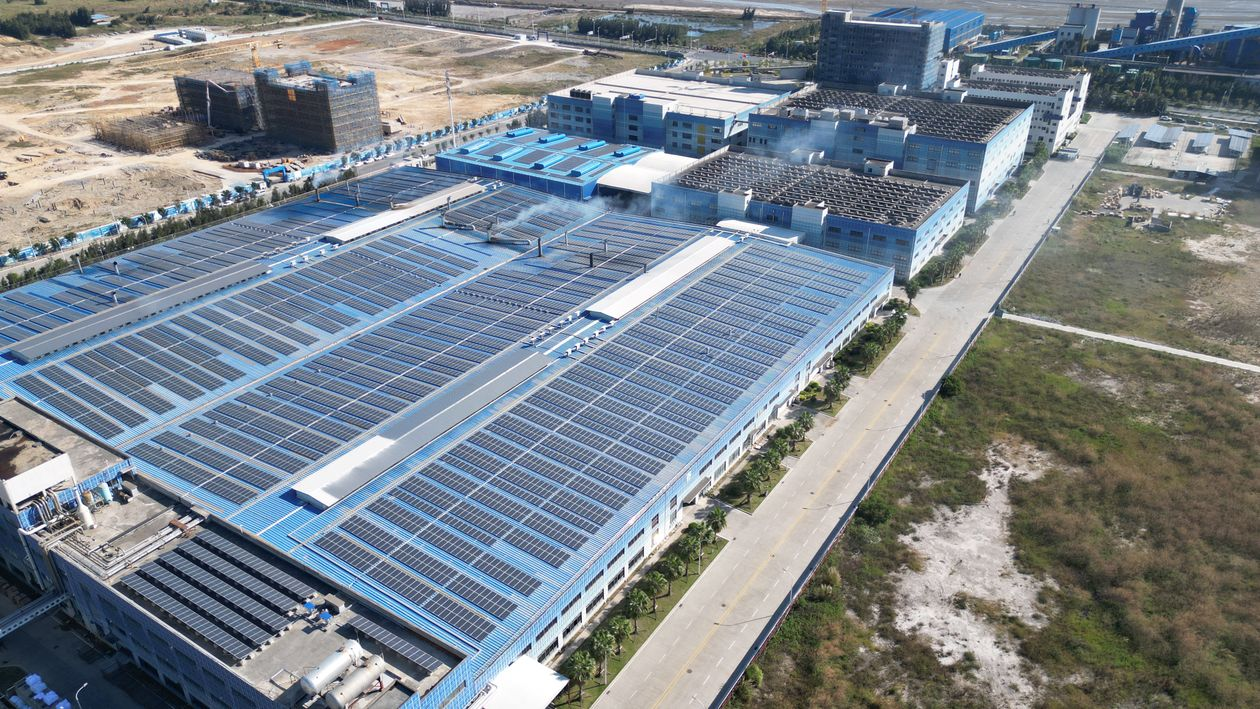
GlobalFoundries has completed approximately 6MW of new solar generation and a 16MW battery energy storage system at its semiconductor manufacturing site in Essex Junction, Vermont, adding on-site energy infrastructure around a factory whose electrical demand has to remain closely controlled.
The projects were developed by Encore Renewables and Lightshift Energy and have now entered operation. GlobalFoundries says the systems will support energy resilience, cost management and the local electrical grid while using previously underutilised land around the manufacturing campus.
Earlier permitting documents describe the battery project as a 16MW, 52MWh installation. Those figures give the system a nominal energy duration of approximately 3.25 hours at maximum discharge, although the actual operating profile will depend on factory demand, grid conditions and the commercial services assigned to the battery.
Power and energy describe different operating limits. The 16MW rating determines how quickly electricity can be delivered or absorbed at a given moment, while the 52MWh figure determines how much energy can be stored before the battery has to recharge.
At a semiconductor fab, those characteristics affect operations differently. Process tools, vacuum equipment, pumps, cleanroom systems, air handling, water treatment and support utilities run across production cycles that cannot simply be shifted into the hours when solar output is highest.
The photovoltaic arrays therefore reduce part of the site’s grid demand during suitable daylight conditions without making the factory independent of the electricity network. Semiconductor production continues around the clock, leaving the grid and other site infrastructure to balance demand whenever solar generation falls below consumption.
Battery storage changes when part of that electricity is drawn from or returned to the network. The system can charge when power is more readily available and discharge later, reducing short periods of high grid demand or supplying capacity when the wider system is under greater pressure.
That function is distinct from dedicated emergency backup. Semiconductor facilities typically protect critical loads through several layers of electrical resilience because even brief disturbances can interrupt process steps, damage material in production or force equipment through controlled recovery procedures.
A grid connected battery can contribute additional resilience and energy flexibility without replacing systems designed for loads that cannot tolerate an interruption. Its usefulness depends on how the battery is dispatched and which parts of the site electrical architecture it is able to support.
The Essex Junction installation was developed by Lightshift Energy through a dedicated project entity, while services are supplied to GF Power, the utility serving the GlobalFoundries campus. The storage asset therefore sits within the site’s broader electrical system rather than operating solely as a standalone renewable project.
Semiconductor manufacturing creates a relatively inflexible energy profile because much of the supporting infrastructure runs even when an individual wafer is not inside a process chamber. Cleanrooms require tightly controlled temperature, humidity and particulate conditions, while vacuum systems, process gases and ultrapure water support groups of tools continuously.
Load shifting is consequently constrained by production and contamination requirements. Some auxiliary demand can be managed around operating conditions, but major process equipment cannot simply be switched off during expensive electricity periods without affecting throughput or product quality.
Storage gives the site another way to change its net grid demand while the manufacturing equipment continues to operate normally. Charging and discharging can alter the electrical profile seen by the network without requiring the fab to change the sequence of wafer processing.
The solar arrays perform a complementary role by generating electricity at the site during daylight hours. Where generation and factory demand do not coincide perfectly, battery capacity can retain some energy for later use rather than requiring production and consumption to occur simultaneously.
Dispatch will also depend on the services provided to the Vermont grid. Large battery systems can change output rapidly, making them useful for balancing variations in network demand and renewable generation as well as managing the electrical profile of the host site.
GlobalFoundries has framed the investment as part of its Journey to Zero programme and wider energy strategy. Electricity cost and availability influence semiconductor manufacturing economics directly, so energy infrastructure affects both environmental targets and the cost of maintaining production.
The Vermont fab is also receiving investment in process capability. GlobalFoundries expanded silicon germanium manufacturing capacity at the site for Marvell in September, adding further production demand to a campus already manufacturing specialised technologies for communications, aerospace, defence and other markets.
New process capacity can increase the load placed on shared utilities even where individual tools become more efficient. Electricity, chilled water, clean dry air, gases and ultrapure water have to be sized around the whole manufacturing system rather than one machine at a time.
Approximately 6MW of solar remains small relative to the continuous electrical demand of a major semiconductor campus, but local generation can reduce purchased electricity during suitable conditions. The 16MW battery provides a larger short duration power resource that can alter when part of that demand reaches the grid.
Its operational value will depend on cycling frequency, electricity prices, grid conditions and degradation. Dispatching the battery aggressively can capture more short term value but consumes cycle life, so operators have to balance immediate energy and grid benefits against the longer term condition of the cells.
Both projects are now operating rather than waiting for construction or commissioning. Their performance can therefore be measured against actual fab demand, solar output and grid conditions, providing a practical test of how on-site generation and several hours of battery storage fit around continuous semiconductor production.