Teradyne has made a strategic investment in Bright Machines alongside a manufacturing collaboration intended to combine robotics, automated electronics test and production data within factory systems used to build AI and data centre infrastructure.
The companies have not disclosed the value or ownership terms of the investment. Their initial technical work will examine how Teradyne robotics and test equipment can be integrated into Bright Machines’ manufacturing platform at its own facilities and customer sites.
Bright Machines has deployed more than 130 microfactories across more than 10 countries and 60 customers. Its platform brings together production design, robotic automation, inspection, material movement and manufacturing data, while current operations include AI infrastructure production in the United States.
AI servers and associated infrastructure combine densely populated circuit boards, power systems, thermal hardware, networking equipment and mechanical assemblies, with configurations changing as processors, accelerators and interconnect technologies move through successive generations. Product changes can therefore arrive while existing manufacturing equipment is still early in its operating life.
Dedicated automation performs most efficiently when product geometry and process sequence remain stable for long enough to justify the engineering effort. Fixtures, robot paths, test sequences and material handling can all be optimised around a known configuration, but a significant design change may require new tooling, programming and validation before the same line can return to full output.
Bright Machines is moving more of that configuration into software. A common production platform can retain digital information about products, assembly steps and inspection requirements, allowing equipment to be reconfigured without rebuilding every part of the manufacturing system when a design changes.
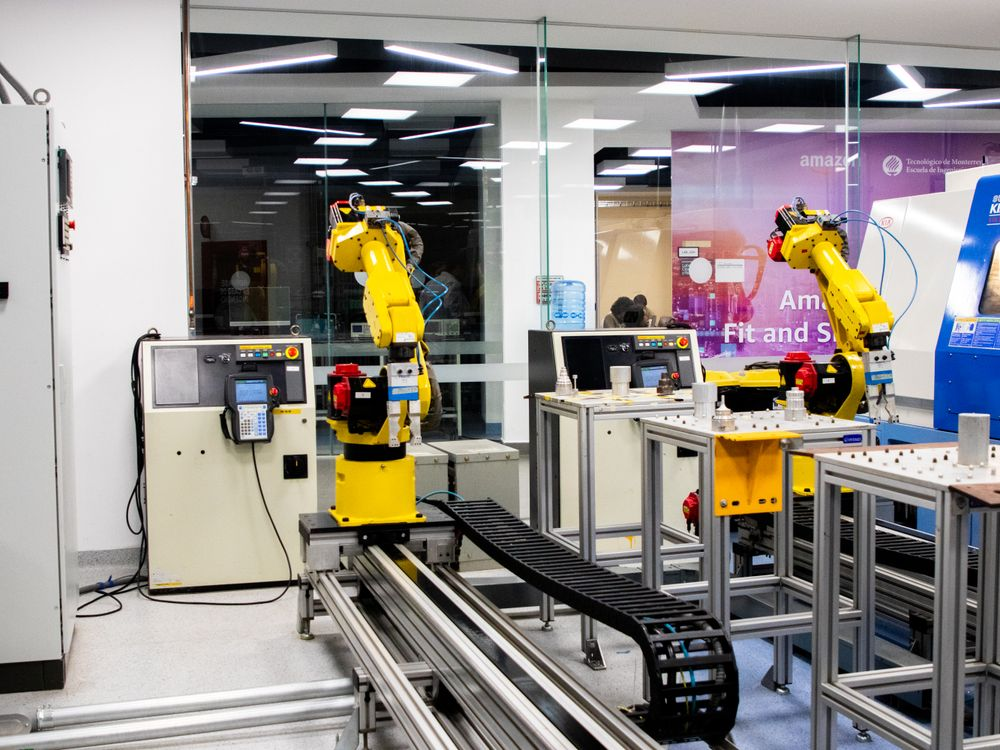
Teradyne contributes hardware from both assembly and verification. Its Universal Robots business supplies collaborative robot arms for applications including assembly and machine tending, while its electronics test operations provide equipment that checks whether boards and systems meet defined electrical requirements before they progress through production.
The planned integration includes precision robotic assembly, robotic loading and unloading of test equipment and autonomous material movement. Linking those stages allows manufacturing data to follow a unit from assembly into test rather than leaving each process as a separate record.
Bright Machines uses product genealogy to retain information about individual units, their configuration and the operations they passed through. A board that subsequently fails electrical test can therefore be traced back to the assembly station, component lot, robot operation or inspection result associated with that specific build.
Without that relationship, engineers may have to investigate production and test databases independently before identifying whether a failure originated in assembly, a component, handling or the test process itself. Combining the records narrows the search when several process stages can produce similar symptoms.
The companies plan to connect assembly and inspection results with robot movements, material handling information and Teradyne electrical test data. The dataset does not correct a production fault automatically, but it gives process engineers a more complete sequence from which to identify where variation entered the build.
High mix production increases the value of that traceability because several configurations may share the same line. Each version can carry different assembly instructions, components and test limits, requiring the manufacturing system to ensure that the physical unit arriving at a station matches the process being applied to it.
Hardware flexibility still depends on how much engineering is needed to teach each new task. A robot arm may be mechanically capable of handling several products, but its reuse is limited if every variation demands lengthy programming, fixture changes and manual validation.
Teradyne has been developing robotics that require less application engineering, while Bright Machines approaches the same constraint through digital production definitions, simulation and equipment data. Their collaboration is intended to reduce the work needed when a manufacturing cell moves between product configurations.
Physical tolerances still set limits on that flexibility. Connector insertion, fastening, board handling and other operations depend on force, position and component variation remaining within acceptable ranges, while every automated change has to preserve product quality and operator safety.
Electrical test introduces another dependency because a passing board can still be damaged or assembled incorrectly later in production. Cable connections, mechanical loading or thermal hardware can create faults after an earlier electrical check has been completed.
Retaining results across successive stages allows later failures to be compared with earlier assembly and test data rather than reducing the manufacturing record to a final pass or fail status. Recurring relationships become easier to identify as production volume increases and the same faults appear across multiple units.
AI infrastructure manufacturers are also working through unusually compressed product cycles. New processors can force changes to board design, cooling and power architecture before existing manufacturing equipment has reached the end of its economic life, increasing the value of production systems that can absorb configuration changes without being replaced.
Bright Machines’ microfactory model retains the physical automation while changing more of the production definition through software. Teradyne’s investment adds established robotics and electronics test technology to that architecture, with the first integrations expected to show whether the approach can reduce commissioning and changeover work in practice.
The companies are still evaluating the combined architecture rather than announcing a finished standard production system. Customer deployments will provide the stronger evidence once assembly, test and material movement are operating from the same production record and design changes can be absorbed without lengthy line re-engineering.