GE Aerospace has agreed to acquire Consolidated Precision Products for $11.75 billion, bringing one of the aerospace industry’s largest specialist casting networks into the engine manufacturer’s industrial base as demand rises across commercial aviation, defence, aftermarket services, and future propulsion programmes.
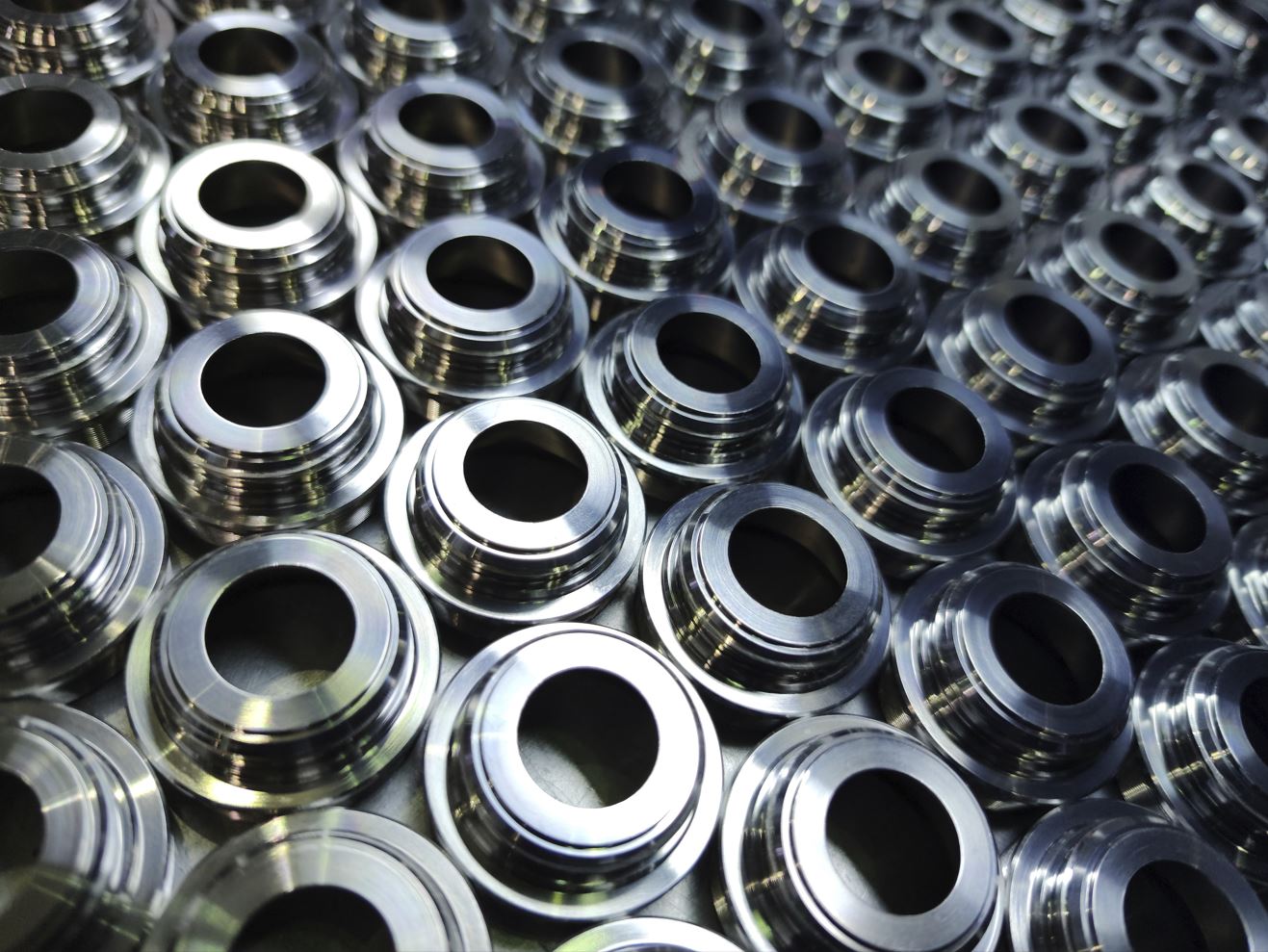
CPP manufactures complex investment and precision sand castings using superalloys, titanium, aluminium, magnesium, and steel. Its products serve commercial and military aircraft, helicopters, weapons systems, industrial gas turbines, and other applications where material quality and dimensional accuracy are critical to component performance.
The company employs approximately 6,600 people across more than 20 facilities. GE Aerospace has worked with CPP as a customer for more than 15 years, so the proposed acquisition converts an established supplier relationship into direct ownership of manufacturing capacity producing components including turbine airfoils and large structural castings.
GE plans to finance $7 billion of the purchase price with cash and the remainder through new debt. Subject to regulatory approvals and customary closing conditions, completion is expected during the second half of 2027.
Precision castings occupy a demanding position in aerospace manufacturing because component geometry and metallurgical performance have to be controlled simultaneously. Parts operating inside gas turbines may face high temperatures, rotational forces, vibration, and repeated thermal cycling while remaining within tightly defined dimensional and material limits.
CPP’s capabilities include investment cast turbine blades and vanes produced using directionally solidified and single-crystal processes. Those methods control grain structure within the metal and are used where conventional cast structures would not provide sufficient resistance to creep and other high-temperature failure mechanisms.
The company also manufactures large titanium and structural castings. Its Pacific Cast Technologies operation in Oregon specialises in complex titanium parts for jet engines and airframes, while other plants manufacture cases, frames, housings, and large superalloy components for aerospace and power applications.
Investment casting involves several tightly controlled stages. A precision pattern is created and surrounded by ceramic material to form a mould before the pattern is removed and molten alloy introduced. The cast component can then pass through heat treatment, machining, coating, dimensional inspection, non-destructive testing, and metallurgical analysis.
Turbine airfoils require additional control because internal cooling passages, alloy chemistry, surface condition, and crystal structure all influence performance. Increasing production is therefore not simply a matter of adding furnace capacity: tooling, inspection systems, process knowledge, skilled labour, qualification, and production yield all affect the number of usable components leaving a plant.
GE Aerospace intends to introduce its FLIGHT DECK operating model across CPP’s facilities, focusing on process stability, quality, and production efficiency. The company also plans closer integration between component design and casting operations as future engine programmes move towards higher performance and increasingly demanding airfoil geometries.
That connection can become important early in propulsion development. Higher turbine efficiency often depends on materials, cooling systems, coatings, and component shapes capable of operating under more severe conditions. A new design cannot enter volume production until casting, machining, inspection, and quality processes have matured sufficiently to manufacture it repeatedly.
CPP’s manufacturing network spans sites in the US, Mexico, Belgium, Poland, and Slovakia. Individual operations specialise in areas including equiaxed superalloys, single-crystal airfoils, titanium structures, large-format castings, finishing, and inspection, giving GE a geographically distributed supply base rather than a single vertically integrated factory.
That distribution matters because aerospace components often move through several specialist operations before final assembly. Casting, machining, coatings, testing, and engine build can occur at different facilities, so capacity or quality constraints in one process can affect complete engine delivery schedules several stages later.
Demand from the installed fleet adds another source of production pressure. GE Aerospace supports around 50,000 commercial and 30,000 military engines, creating ongoing requirements for replacement parts during maintenance and overhaul as well as castings for new engine production.
CPP will continue to serve customers outside GE Aerospace. Its products are used across other commercial aviation, defence, and power programmes, meaning the acquired plants would retain a wider market role even after ownership moves to one of the industry’s largest engine manufacturers.
The scale of the proposed transaction reflects the difficulty of recreating qualified casting capacity quickly. Facilities require specialised equipment, experienced metallurgical teams, long customer approval cycles, and substantial process knowledge, while new production often has to demonstrate consistent quality over extended periods before parts can enter flight-critical applications.
Regulatory approval remains the immediate step before integration can begin. If the acquisition completes in the second half of 2027, GE Aerospace will gain direct control of a global castings network whose products reach almost every major current-generation commercial aircraft programme alongside defence and power markets. Subsequent investment and output from those plants will determine how effectively the additional capacity supports engine production, aftermarket demand, and future propulsion development.