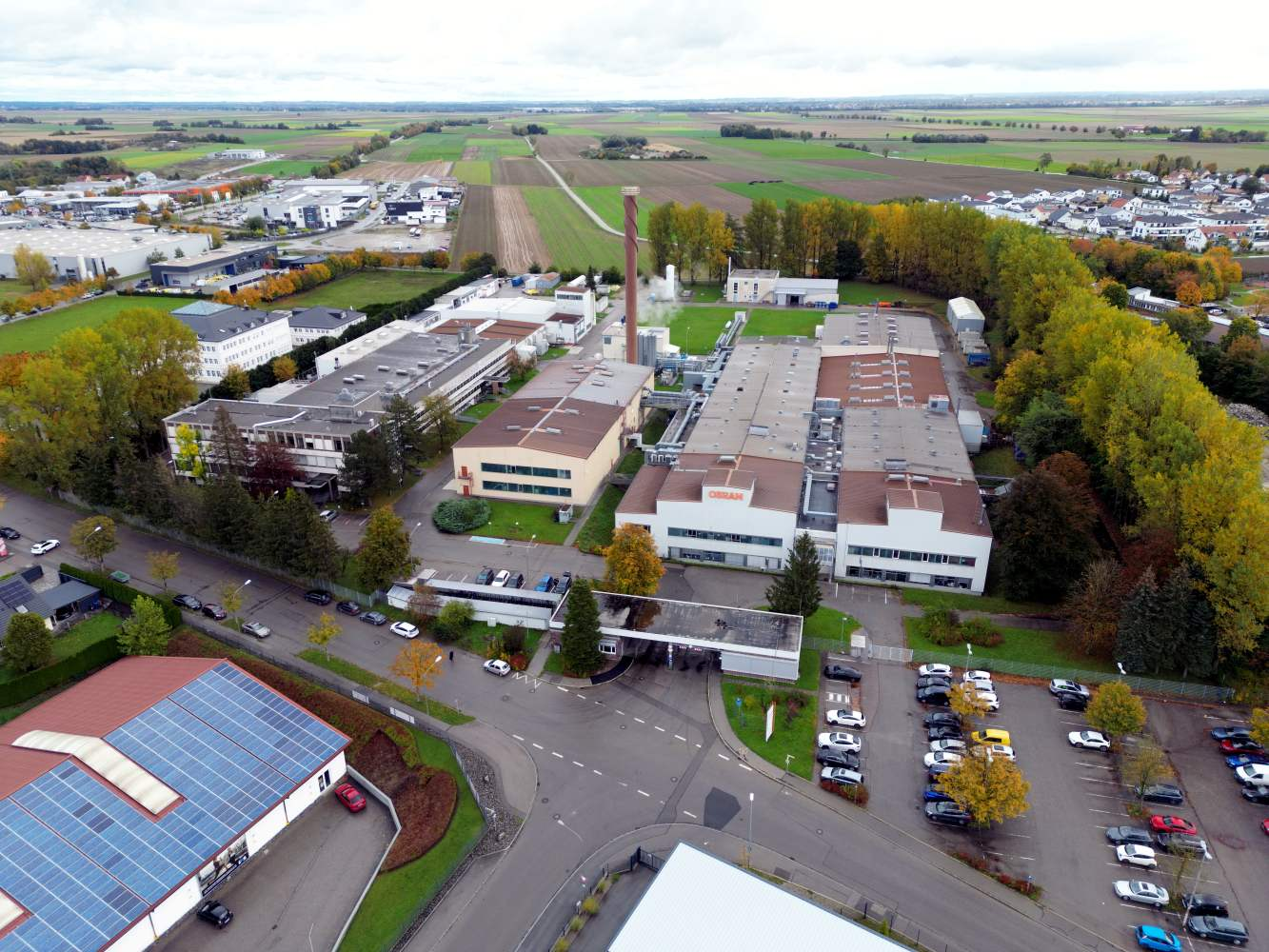
The Elmet Group has agreed to acquire ams OSRAM’s tungsten and molybdenum manufacturing operation in Schwabmünchen, Germany, establishing its first European Union production base and adding a vertically integrated refractory-metals plant to its existing US manufacturing network.
The Bavarian site has produced tungsten and molybdenum products since 1961 and contains around 26,800 square metres of manufacturing space. Its processes extend from powder formation through pressing, sintering, swaging, drawing, machining, and finishing, supported by an on-site laboratory for chemical and physical analysis.
More than 3,500 products are manufactured across the operation, including powders, rods and pins, heavy and fine wire, cathodes, anodes, machined parts, and powder-injection-moulded components. The breadth of that portfolio gives Elmet an established production chain rather than a finishing operation dependent on most upstream processing taking place elsewhere.
The acquisition is expected to complete in the first quarter of 2027, subject to regulatory approvals and work required to separate the plant as an independent operation. Elmet Technologies GmbH, a newly formed German subsidiary, will acquire the assets and take responsibility for the European business.
Elmet already operates vertically integrated refractory-metals facilities in Maine, Ohio, and Michigan. Those plants control the route from powders through forming, sintering, and final machining, and the Schwabmünchen transaction extends that manufacturing structure into Europe close to customers in semiconductor equipment, aerospace, medical technology, energy, and general industry.
Tungsten and molybdenum occupy specialist positions in manufacturing because both retain useful properties at temperatures that can rapidly degrade more conventional metals. Tungsten combines an exceptionally high melting point with high density and strength, while molybdenum offers high-temperature stability alongside characteristics that make it easier to form and machine for some applications.
Those properties support applications ranging from high-temperature furnace components and glass processing to electronics, X-ray equipment, welding, semiconductor manufacturing, aerospace systems, and defence technology. Many of those markets also demand tight dimensional control, traceability, metallurgical consistency, and long-term product qualification.
The Schwabmünchen production chain starts before the final component takes shape. Powder characteristics influence how material behaves during compaction and sintering, while later forming operations such as swaging and drawing develop the geometry and mechanical properties required for rods, wires, and other semi-finished products.
Machining and finishing then turn those materials into application-specific parts. Keeping those stages within one manufacturing organisation provides more control over the relationship between starting powder, thermal processing, mechanical working, dimensional tolerances, and final inspection.
Tungsten’s position on Europe’s critical raw-material list adds another dimension to the acquisition. Strategic security of supply depends not only on access to raw material but on the processing and manufacturing infrastructure required to convert it into qualified components for industrial customers.
A European plant able to carry out powder processing, forming, machining, and laboratory analysis can therefore reduce some of the distance between material supply and finished component production. That is particularly relevant where manufacturers need rapid technical support, smaller customised batches, or documented production routes for highly regulated applications.
Elmet plans to retain the Schwabmünchen leadership team and workforce while investing in equipment, production capacity, quality systems, and commercial capability. It also intends to broaden the material range manufactured at the site, including TZM and tungsten heavy alloys.
TZM is a molybdenum alloy developed for applications requiring improved high-temperature strength and creep resistance, while tungsten heavy alloys combine a high proportion of tungsten with other metals to achieve very high density alongside properties that make component manufacture more practical.
Introducing those materials will require additional process control and potentially further equipment because alloying, powder preparation, sintering, machining, and inspection requirements vary between product families. The planned investment therefore gives the site a route to expand beyond the portfolio transferred with the acquisition.
The transaction also includes arrangements intended to maintain supply to ams OSRAM and another recently separated business during the transition. Existing external customers are expected to move with the operation, with Elmet taking responsibility for supply, quality, and technical support after completion.
Continuity matters in markets where changing a material or critical component can trigger engineering assessment and formal requalification. Preserving manufacturing knowledge, tooling, documentation, and experienced personnel can consequently carry as much value as the physical equipment when ownership of a specialist plant changes.
If the acquisition closes as planned, Elmet will enter 2027 with an integrated European production base spanning refractory-metal powders through to finished components. Subsequent investment at Schwabmünchen will determine how quickly that inherited capability expands into additional capacity and alloy production, but the transaction immediately places a long-established German manufacturing operation inside a wider vertically integrated metals group.