ASML has started construction of its second major industrial campus in the Netherlands, beginning a multi-phase expansion at Brainport Industries Campus North in Eindhoven that could eventually provide around 350,000 square metres of space and capacity for up to 20,000 workplaces.
The first phase is scheduled for completion in 2029 and will accommodate at least 3,000 employees across production, logistics, and supporting office functions. Many of those teams will relocate from existing ASML sites, allowing the company to reorganise manufacturing and material flows as it adds capacity alongside its established operations in nearby Veldhoven.
A central feature of the development will be a new manufacturing system for TWINSCAN lithography modules that ASML describes as a flow factory. The model is intended to create a more continuous movement of components and work through production, reducing unnecessary handling and waiting between stages while allowing output to increase in a more structured way.
The principle is familiar in industries such as automotive and aerospace, but semiconductor lithography equipment presents a different level of manufacturing complexity. Each complete system brings together precision optics, mechatronics, vacuum technology, control electronics, metrology, software, and thousands of specialist components that have to function within extremely tight tolerances.
That makes factory organisation a direct constraint on capacity. Increasing output involves more than installing extra assembly stations: modules have to arrive in the correct sequence, specialist tooling and test equipment must be available when required, and suppliers need to synchronise deliveries closely with production schedules.
BIC North will integrate manufacturing and logistics on the same campus, reducing some of the physical separation between material handling and final equipment production. The first phase therefore gives ASML an opportunity to design new production flows around future volume requirements rather than continuing to add processes incrementally within an established site.
The project forms part of a broader reorganisation of ASML’s footprint across the Brainport region. Its long-term Dutch operations are being structured around three complementary campuses: the De Run 1000 headquarters, the existing De Run 6000/7000 industrial site in Veldhoven, and BIC North as a second major production campus in Eindhoven.
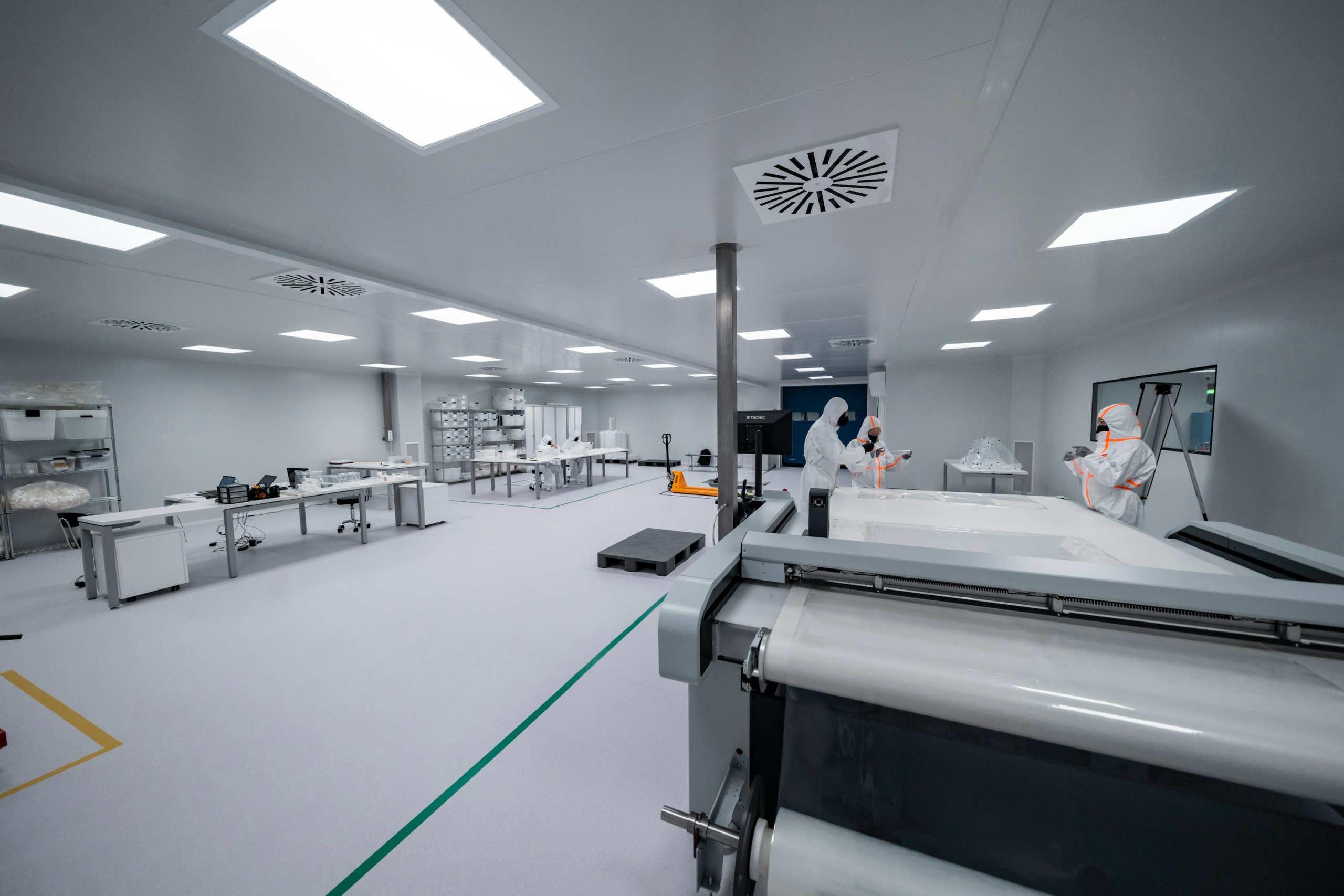
Manufacturing capacity is also being expanded at De Run 6000, including additional cleanroom space for the assembly and testing of lithography systems. BIC North adds a larger reserve of physical capacity for subsequent growth and gives the company room to separate functions that increasingly compete for space as equipment volumes and system complexity rise.
Lithography systems are among the most capital-intensive machines installed in a semiconductor fabrication plant. ASML’s deep-ultraviolet and extreme-ultraviolet platforms are used across established and leading-edge process technologies, making its own production capacity an important part of wider semiconductor investment plans.
Any increase in ASML output also reaches into its specialist supply chain. Precision stages, optical systems, laser equipment, vacuum assemblies, electronics, sensors, machined structures, software, and high-specification materials are supplied by a network of companies that often have to commit capital and skilled labour ahead of the final system build.
Additional campus capacity can therefore influence investment well beyond ASML’s own buildings. Suppliers in the Brainport cluster and elsewhere in Europe need to plan equipment, floor space, recruitment, and inventory against expected demand from a customer whose products themselves have long manufacturing and qualification cycles.
The planned flow-factory model is intended to improve the way those inputs move through production. Material routes, module assembly, testing, calibration, internal logistics, utilities, and employee access can all be considered as part of the initial factory design rather than retrofitted around a mature layout.
That is particularly relevant as lithography tools become more complex. Advanced systems contain larger and more sophisticated modules, while installation and qualification at customer fabs also depend on the quality and sequence of work completed before shipment. Disruption or variation in an upstream module can therefore affect both factory throughput and field installation schedules.
The development will proceed in phases rather than immediately occupying the full 350,000-square-metre envelope. This gives ASML the option to match later construction with actual market demand, an important consideration in a semiconductor sector where capital expenditure can move sharply between investment cycles even while long-term chip demand continues to expand.
The ultimate 20,000-workplace capacity provides substantial headroom without requiring the complete site to be built at once. Future phases can reflect changes in system mix, manufacturing technology, supply-chain structure, and semiconductor demand that are difficult to forecast precisely several years ahead.
Construction now moves BIC North from capacity planning into physical delivery. The first significant industrial milestone will arrive in 2029 when the initial production and logistics functions are due to come online. The pace at which later phases follow will provide a direct indication of how rapidly ASML expects semiconductor-equipment demand to translate into additional European manufacturing capacity.