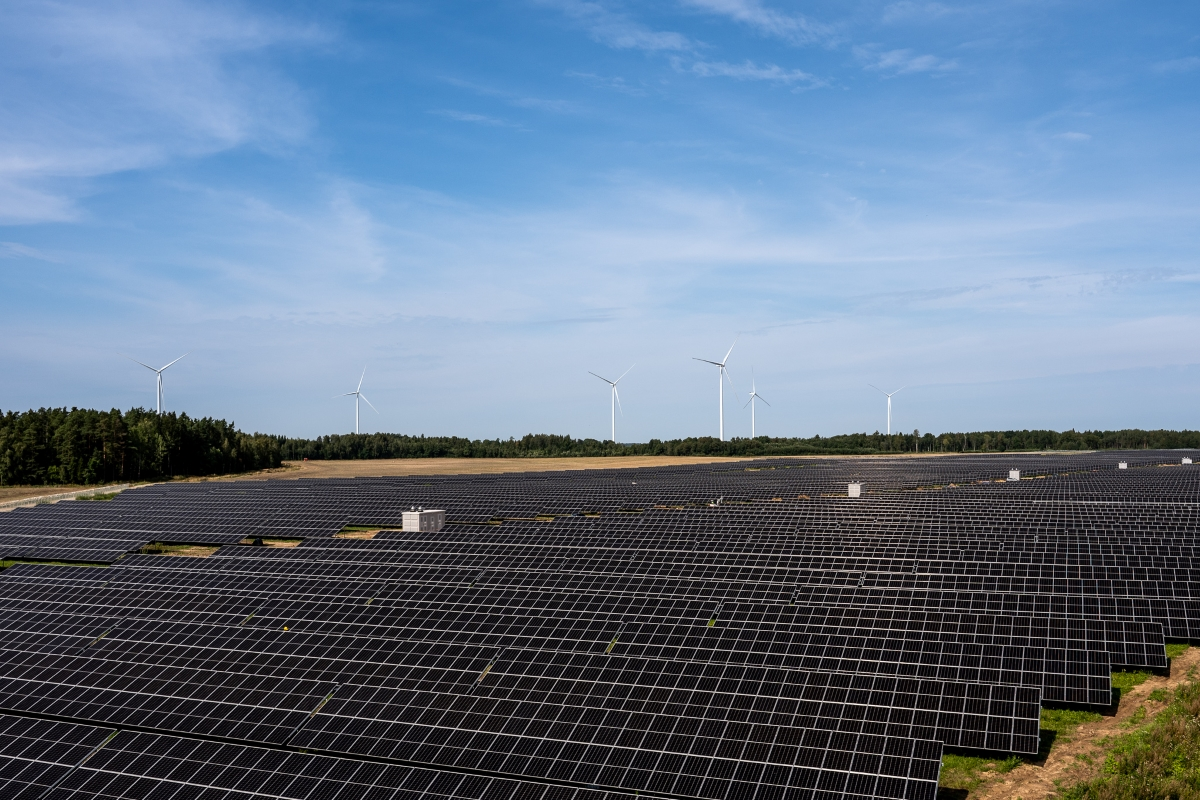
ORLEN Group has commissioned a 42.2MW photovoltaic installation at its Mažeikiai refinery in Lithuania, bringing its largest on-site renewable energy project into operation. The approximately €35 million development is expected to generate around 45GWh of electricity annually and meet about seven per cent of ORLEN Lietuva’s yearly power demand.
The solar farm occupies roughly 60 hectares within the refinery estate and uses nearly 68,000 bifacial photovoltaic modules rated at 620W each. Polish engineering company Electrum delivered the project, which received €2.5 million of support from the European Union’s Modernisation Fund.
ORLEN estimates the resulting generation will reduce annual electricity-procurement costs by approximately €4 million. The project differs from a conventional merchant solar farm because most of its output is intended for a large industrial consumer immediately alongside the generating asset rather than for unrestricted export into the electricity market.
Mažeikiai has substantial and continuous electrical demand. Pumps, compressors, cooling systems, process controls, utilities, lighting, material handling, and supporting infrastructure operate around refinery production that continues through day and night. Solar generation cannot follow that entire load profile, but it can reduce imported electricity while the modules are producing.
The expected seven per cent contribution gives the project a useful industrial scale without suggesting that photovoltaics can make the refinery electrically self-sufficient. Large process sites consume far more energy than most on-site renewable projects can provide, particularly where demand remains high after sunset. The more practical objective is to displace a measurable proportion of grid purchases without disrupting production.
Bifacial modules collect direct sunlight on their front surface and reflected light on the rear, potentially increasing yield where mounting design and ground conditions allow. Actual performance depends on spacing, shading, reflectivity, weather, module temperature, inverter availability, and maintenance, so the 45GWh annual figure will become more meaningful once the plant has accumulated operating data.
Its location within the refinery boundary should help align generation with demand. Industrial facilities with predictable daytime loads can consume a high proportion of solar output directly, avoiding some of the commercial exposure associated with exporting electricity when wholesale prices are low. Mažeikiai also has an established grid connection and electrical infrastructure around a site that already handles substantial power flows.
Land availability is less easily replicated. Dedicating around 60 hectares to solar generation is feasible at Mažeikiai but unrealistic for many constrained manufacturing plants, where rooftops, car parks, adjacent plots, off-site generation, or power purchase agreements may be more practical.
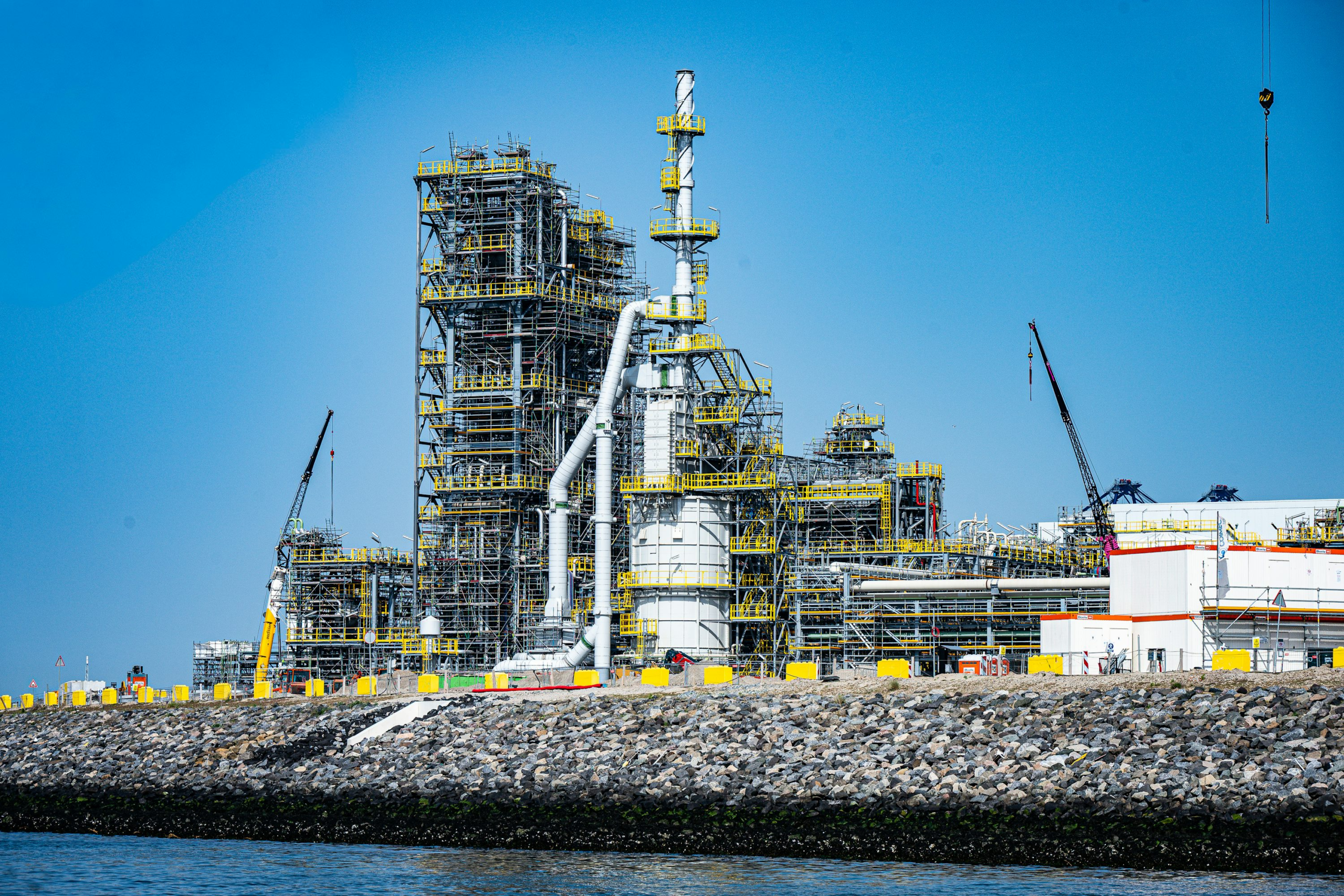
The project sits inside a much larger industrial asset. ORLEN says it has invested almost €4.5 billion in acquiring and modernising the refinery since 2006. ORLEN Lietuva also operates the Būtingė terminal handling crude and refinery feedstocks and the Mockava rail terminal supporting exports towards Poland and Ukraine.
On-site generation therefore becomes another piece of a production and logistics system rather than a standalone energy business. Its value will be measured against refinery demand, electricity prices, maintenance costs, and the amount of generation consumed directly rather than by the installed megawatt figure alone.
The claimed €4 million annual reduction in procurement costs gives the project an explicit operating-cost objective alongside emissions reduction. That saving will vary with market prices and plant output, while inverter failures, module degradation, cleaning requirements, vegetation control, and electrical maintenance will influence realised generation over the asset’s life.
The commissioning also moves ORLEN from renewable-capacity targets into operating evidence. Announced projects can be counted indefinitely; a connected solar farm has to produce electricity every day and has metering precise enough to show whether expected yield and industrial consumption actually coincide.
For energy-intensive manufacturers, the Mažeikiai model is more useful than claims of complete renewable self-sufficiency. A large industrial plant retains grid dependence and continuous demand, but a 42.2MW generating asset now removes part of that purchased load whenever conditions allow.
ORLEN expects the installation to cover around seven per cent of annual refinery electricity consumption. That proportion is modest enough to be credible and large enough to appear in the energy accounts — a rather more practical benchmark for industrial decarbonisation than pretending a refinery has somehow become a solar-powered business.