Volkswagen Group has cancelled plans for a large structural casting facility at its Wolfsburg headquarters plant, abandoning a major element of the Gamechanger manufacturing programme intended to modernise production for future vehicle generations.
The German manufacturer confirmed on 11 November that the production concept would not proceed in its originally planned form. Volkswagen attributed the decision to its current financial circumstances and an ongoing review of investment requirements across the business.
The cancellation has prompted opposition from employee representatives, who argue that the programme formed an important part of the agreement reached between Volkswagen management and its workforce in December 2024.
Gamechanger was intended to introduce advanced manufacturing methods at Wolfsburg, including the use of large structural castings in vehicle body production. The proposed investment would have changed how selected body components were manufactured and assembled within the factory.
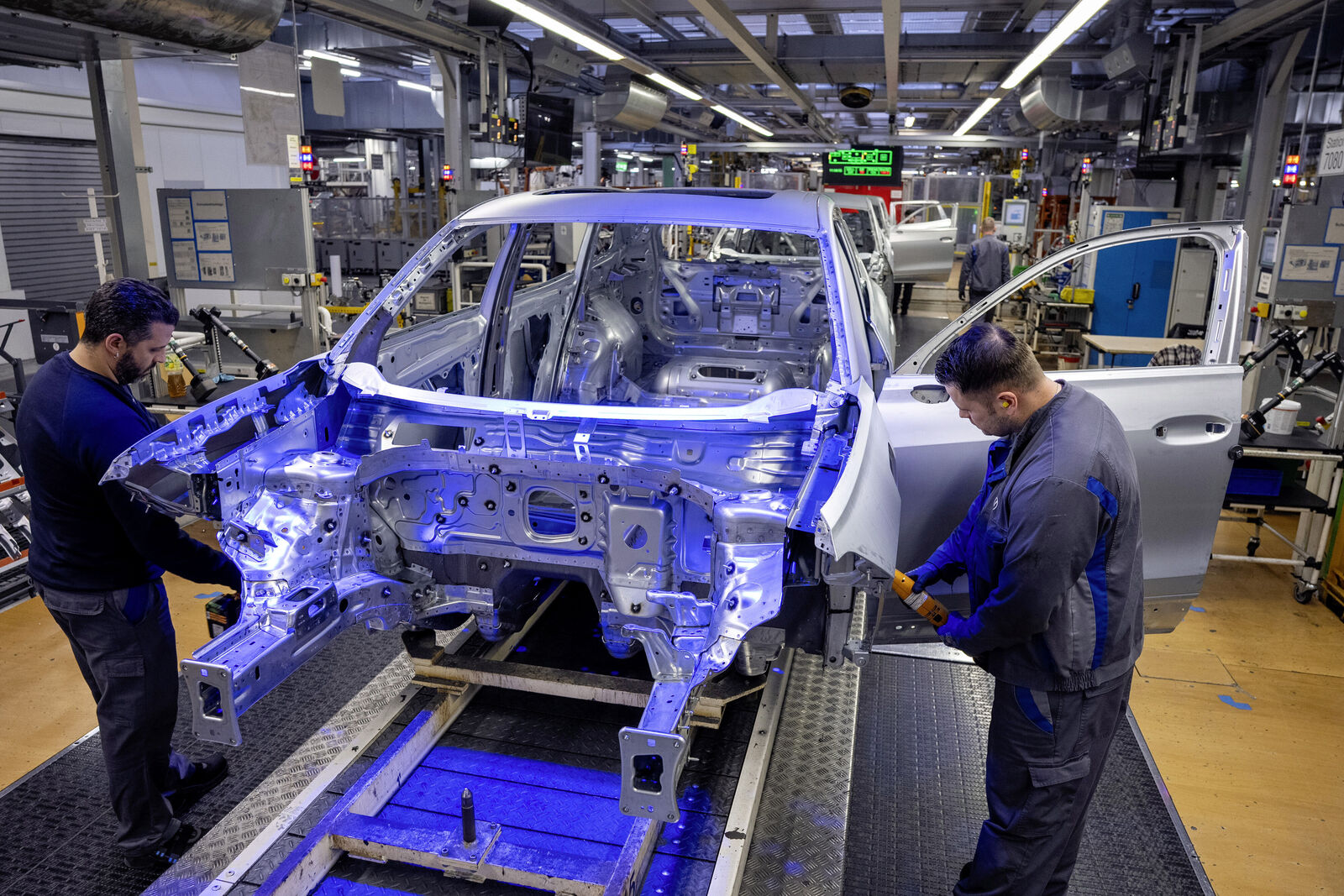
Traditional automotive body construction relies on pressed metal components joined through welding, bonding, mechanical fastening, or combinations of these processes. Individual sections are located in fixtures before joining operations establish the geometry of the completed structure.
Each operation requires manufacturing controls covering component dimensions, positioning, joining quality, and the behaviour of the assembled structure. Production equipment must maintain repeatability while accommodating the tolerances of components supplied from different manufacturing stages.
Large structural casting offers an alternative for selected vehicle components by forming a more substantial portion of the structure in a single casting operation. Molten metal is introduced into a die, producing a component whose geometry incorporates features that might otherwise require several smaller parts and joining operations.
The approach can reduce component counts and simplify some stages of assembly, depending on the vehicle design. Its industrial advantages must nevertheless be assessed against the investment required for casting machines, dies, metal handling equipment, inspection facilities, and the processes used to finish completed components.
Producing large castings consistently requires control over metal temperature, die filling, solidification, and the condition of the tooling. Defects such as porosity or incomplete filling can affect structural performance, while dimensional variation may complicate downstream machining and assembly.
Large castings can also create different maintenance and repair considerations from structures assembled using smaller components. The extent of those effects depends on where the casting is used and how the vehicle has been designed.
The economic case for the technology is consequently linked to production volume, equipment utilisation, component design, and manufacturing yield. A reduction in joining operations does not automatically establish that the complete manufacturing process will be less expensive.
Introducing the proposed technology at Wolfsburg would have required significant changes to an established production operation. The plant already contains extensive stamping, body assembly, painting, and final assembly facilities, supported by specialist equipment and existing supplier arrangements.
Adding a large-casting process would have involved integrating its output with the remaining body manufacturing sequence. The dimensions and tolerances of cast components would need to match those of the parts produced through other methods, with suitable inspection arrangements established at the interface.
Manufacturing changes of that scale also influence factory layouts, material handling routes, equipment maintenance requirements, and workforce training. Their implementation must be coordinated with vehicle launch schedules and the continued operation of existing production lines.
Volkswagen had associated Gamechanger with the introduction of its Scalable Systems Platform, known as SSP. The architecture is intended to support a future generation of vehicles, but a vehicle platform and the manufacturing process used to produce it are separate engineering decisions.
According to the Group Works Council, vehicles based on SSP are still expected to proceed, although their manufacture will rely more heavily on established production methods rather than the technologies originally envisaged under Gamechanger.
The works council has characterised the decision as a significant departure from the industrial commitments made in December 2024. Daniela Cavallo, chair of Volkswagen's Group and General Works Councils, has criticised the cancellation as inconsistent with the agreement between management and employee representatives.
That agreement followed negotiations over manufacturing costs, employment, and the future of the company's German production network. It combined measures intended to improve competitiveness with commitments concerning jobs and future industrial investment.
Employee representatives maintain that production modernisation was an essential part of the arrangement. From their perspective, the programme was intended to provide a route towards more efficient manufacturing alongside changes affecting the workforce.
Volkswagen's financial position has placed greater scrutiny on the timing and cost of new industrial investments. The company faces pressure to control expenditure while developing future vehicles and maintaining the production facilities required for its existing model ranges.
Those requirements are difficult to separate. Delaying a major manufacturing investment can conserve capital in the near term, but an alternative production strategy must still deliver the required manufacturing cost, quality, and capacity when a new vehicle enters production.
Retaining more conventional body manufacturing processes may allow Volkswagen to use established equipment and engineering expertise. However, the company will still have to adapt its facilities to the dimensions, materials, electrical architecture, and assembly requirements of the vehicles ultimately selected for Wolfsburg.
Existing manufacturing methods can be improved through process automation, equipment replacement, better dimensional control, and changes to production sequencing. Their suitability depends on the specifications of the vehicle being manufactured and the capacity available within the plant.
The cancellation also affects the planning assumptions of industrial suppliers associated with future vehicle programmes. Equipment builders and engineering contractors require sufficiently defined production concepts before finalising machinery specifications, tooling, installation schedules, and capacity commitments.
Volkswagen has not disclosed a revised technical specification for the Wolfsburg production system or confirmed how much of the expenditure previously envisaged for Gamechanger will be redirected towards other manufacturing improvements.
The decision does not establish that SSP development has been cancelled, nor does it mean that Volkswagen intends to cease modernising Wolfsburg altogether. It removes the large-casting investment and the original Gamechanger production concept from the factory's announced plans.
Further detail will be required to establish how the replacement manufacturing arrangements will be implemented, what equipment will be retained or upgraded, and whether the revised production strategy can meet Volkswagen's cost and capacity requirements for future vehicles.