Munters Group is expanding chiller manufacturing capacity in northern Italy and establishing a heat exchanger production joint venture in the United States, with investments intended to support growing demand for industrial and data centre cooling equipment.
The Swedish manufacturer plans to invest approximately €25 million in its Italian operation, acquiring adjoining land and developing additional production lines, research and development facilities, and testing capacity over the coming year.
In a separate agreement, Munters will invest $9.5 million in a US joint venture with heat exchanger manufacturer Lordan. The new business will produce coils for cooling equipment at a facility planned near Munters Data Center Technologies' existing operation in Selma, Texas.
Munters will own 45% of the joint venture, while Lordan will hold the remaining 55%. Lordan will manage the factory's day-to-day operations, with Munters contributing supply chain and staffing resources.
The partners expect coil production to begin within 12 to 18 months of the November 2026 announcement. The seven-year agreement also includes commitments concerning the manufacture and purchase of specified quantities of coils, with agreed arrangements for lead times and pricing.
The investments address different stages of the cooling equipment manufacturing process. The Italian expansion concerns the assembly, development, and testing of completed chillers, while the American partnership will provide a more closely integrated supply of heat exchanger components.
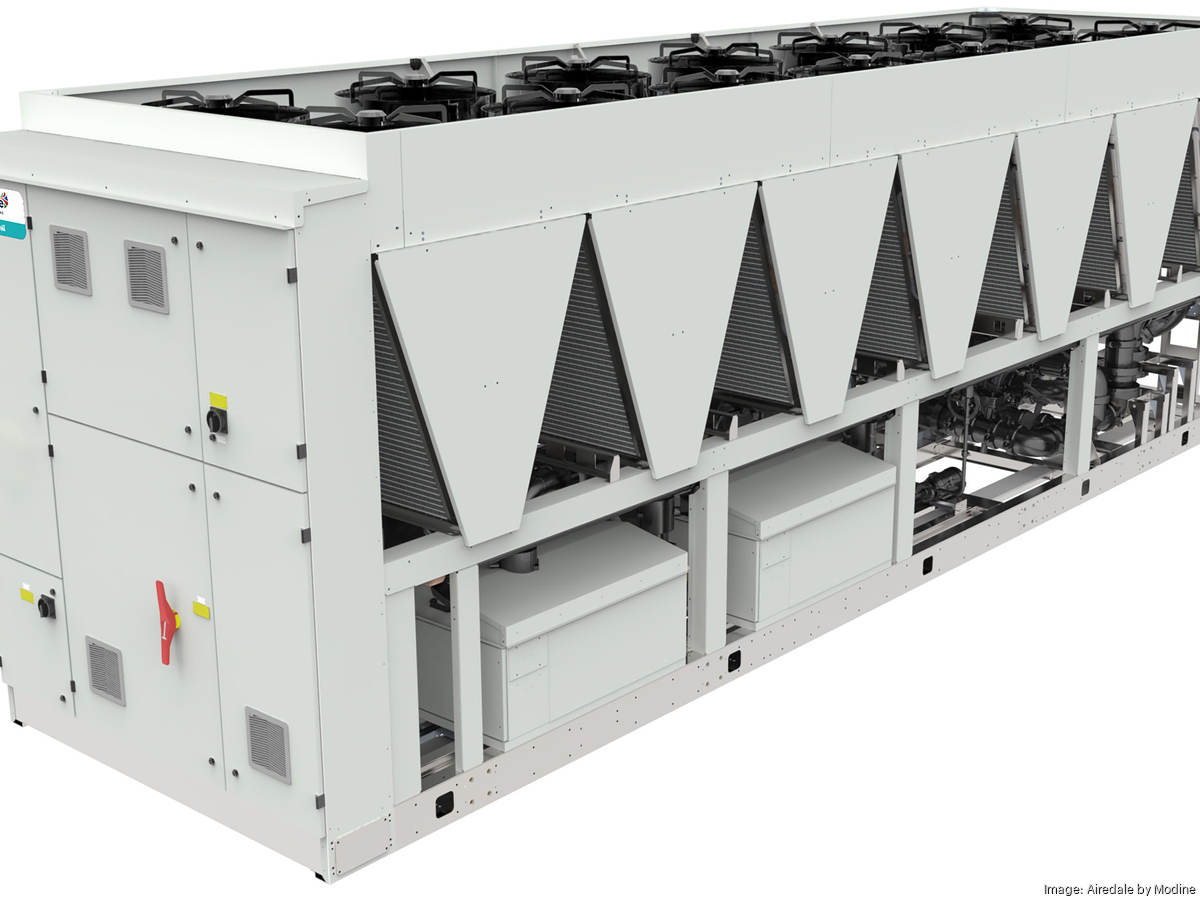
Chillers are used to remove heat from process fluids circulating through industrial cooling systems. Depending on the equipment design, mechanical refrigeration transfers that heat from the cooling circuit to the surrounding environment or another heat rejection system.
A conventional vapour compression circuit includes a compressor, condenser, expansion device, and evaporator. Refrigerant absorbs heat at the evaporator before being compressed and passing through the condenser, where the collected energy is released.
The operating efficiency of a completed unit depends on the selected components and the temperatures at which heat must be absorbed and rejected. Compressor performance, heat exchanger design, refrigerant characteristics, and the associated control strategy all influence the amount of electricity required.
Industrial chiller manufacture therefore involves more than the mechanical assembly of major components. Pipework, pressure-containing equipment, electrical systems, controls, and protective devices must be installed and verified before the finished unit can be delivered.
Testing capacity can become a constraint when production increases. A factory may be able to assemble additional equipment, but completed units still need inspection and functional checks to establish that their electrical, mechanical, and refrigeration systems meet the required specifications.
The Italian investment includes new testing facilities alongside production lines, allowing Munters to develop its manufacturing output and product validation arrangements together. Additional research and development resources will also support the engineering of future chiller designs.
Munters has not disclosed the number of additional units the expanded factory will be able to produce, nor has it announced a confirmed employment target for the investment.
The separate partnership with Lordan addresses component availability. Heat exchanger coils are used in equipment that transfers thermal energy between a circulating fluid and an air stream, including computer room air handlers and fan wall systems.
In a fin-and-tube heat exchanger, fluid flows through tubing connected to a network of thin metal fins. The fins increase the surface area available to exchange heat with the surrounding air, allowing the equipment to transfer more thermal energy within a given space.
Coil performance depends on tube dimensions, fin geometry, material properties, fluid temperatures, and the rate at which air passes through the assembly. These characteristics must be matched to the fan and pumping systems used in the completed product.
Heat transfer is not the only design consideration. Resistance to air movement affects fan energy consumption, while restrictions within the liquid circuit influence the pressure required to maintain the intended flow.
Manufacturing quality also affects reliability. Tube connections, joints, and other pressure-containing sections must be produced consistently to avoid leakage, while dimensional tolerances influence how easily coils can be fitted into equipment during final assembly.
The components are therefore closely linked to the performance and production efficiency of the finished cooling unit. Delays or quality problems at a coil supplier can affect an assembly line even when the other major components are available.
Frank Pellegrino, president of Munters' Data Center Technologies business area, said: “Coils are a critical component in many of our cooling products.”
The Lordan arrangement is intended to give Munters more predictable access to these components through a supplier with dedicated heat exchanger manufacturing experience.
Locating production near the Selma factory could simplify coordination between coil manufacture and final equipment assembly. Shorter transport routes may also reduce some handling requirements, although the scale of any savings will depend on production volumes, material sourcing, and the operation of the new facility.
The seven-year manufacturing and purchasing commitments provide a framework for capacity planning. Lordan will be able to develop production arrangements against anticipated customer requirements, while Munters will have agreed supply provisions for components used in its product range.
The new venture is not equivalent to Munters acquiring an existing wholly owned coil manufacturer. It will operate as a separately owned partnership, with Lordan retaining the majority stake and operational responsibility.
Demand for the equipment is being influenced by the thermal requirements of high-density computing installations. Increasing processor power can concentrate substantial heat loads within limited equipment space, requiring cooling systems with appropriate capacity and control.
Some data centres use liquid cooling close to the computing hardware, while others rely on air-handling equipment or combinations of different cooling technologies. The final arrangement depends on the installed equipment, building infrastructure, climate, and operating requirements.
Munters supplies several elements of these systems, including chillers, computer room air handlers, and fan wall equipment. Expanding production of finished chillers and securing a supply of heat exchanger coils addresses two connected requirements within that manufacturing portfolio.
Both developments remain subject to their respective implementation schedules. The Italian project requires construction and commissioning of additional facilities, while the US joint venture must establish its factory before commercial coil production can begin.
The €25 million Italian investment and $9.5 million American commitment are separate capital programmes. Their contribution to Munters' output will become measurable as the new production and testing facilities enter operation and the Lordan venture begins supplying components.