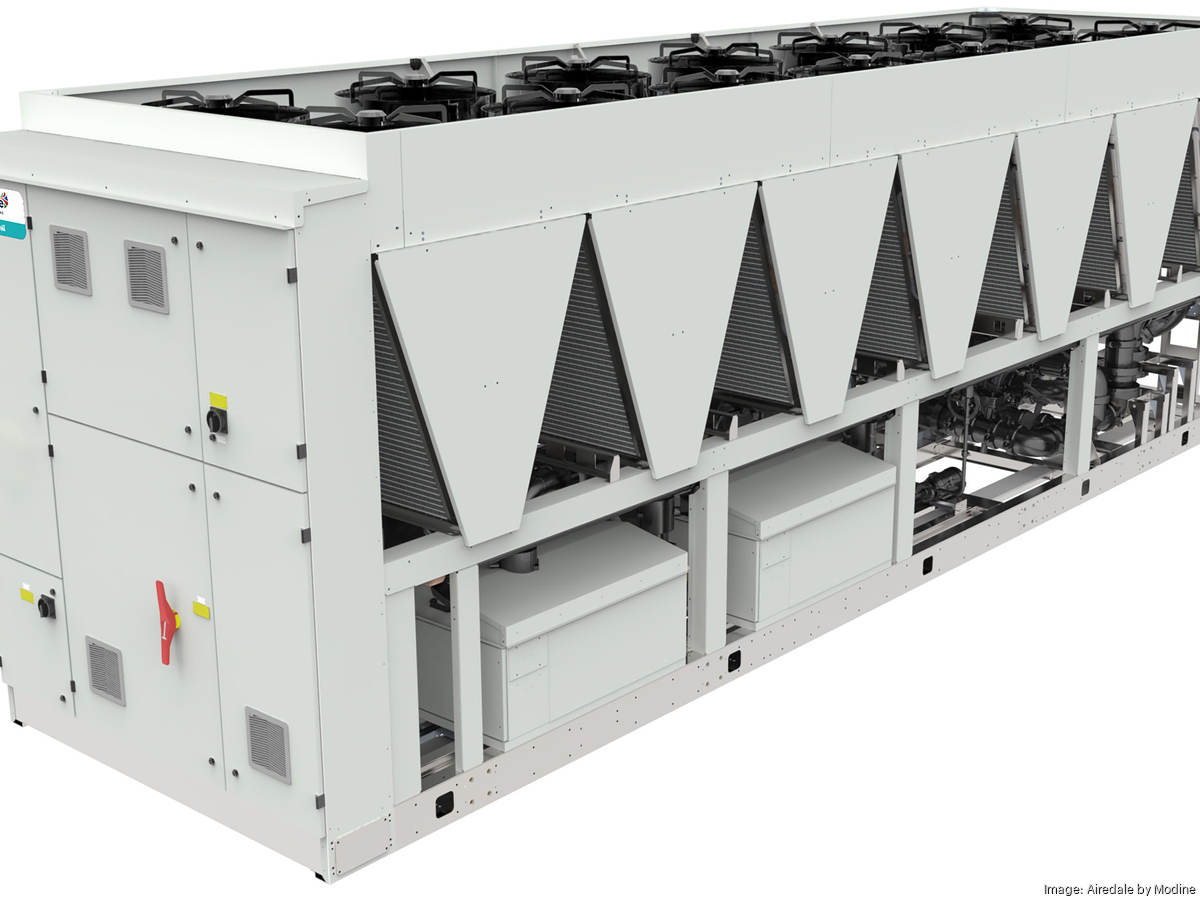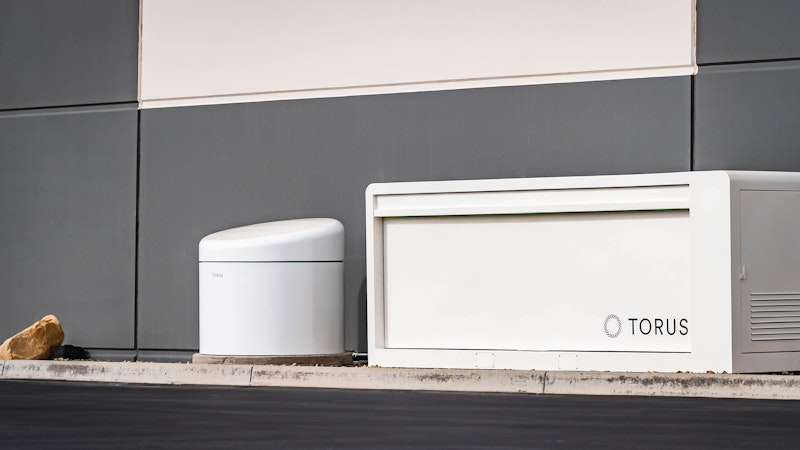
Torus has launched a prefabricated computing infrastructure platform manufactured at its GigaOne factory in Utah, combining high-density processors, electrical distribution, cooling, and energy storage within modular systems designed for deployment at existing industrial and commercial sites.
The Foundry platform is being introduced alongside $500 million in growth capital led by Magnetar. Torus intends to use the financing to expand manufacturing capacity and deploy additional computing and energy storage systems across the United States.
The company's Foundry production line is already operating at GigaOne, a 545,000 sq ft manufacturing facility in Salt Lake City. Torus says the line is being developed to support production capacity equivalent to 500MW of computing equipment load, with a longer-term ambition to expand towards 1GW.
These figures represent intended manufacturing capacity rather than the quantity of computing equipment already produced and installed. The company has not disclosed an independently verified annual production rate for completed Foundry modules.
Foundry is designed to provide computing installations with capacities ranging from approximately 1MW to 20MW per location. Individual modules support 1.2MW of IT load, allowing customers to increase capacity through additional prefabricated units.
The manufacturing approach brings together equipment that would otherwise be installed and integrated across several stages of a conventional data centre construction programme.
Computing infrastructure depends on a coordinated arrangement of processors, networking equipment, electrical distribution, thermal management, and control systems. The performance of the completed installation is constrained if any one of these systems cannot support the required operating conditions.
Prefabrication moves substantial portions of the assembly and testing process into a factory. Electrical equipment, cooling systems, computing hardware, and monitoring devices can be installed and checked before the completed module is transported to its destination.
That reduces the amount of integration work required at the receiving site, although site preparation, grid compatibility, communications connections, and final commissioning remain necessary.
Torus specifies a reference configuration containing eight server racks and four networking racks, with 72 computing nodes and 576 HGX B300 graphics processing units.
The company lists a total IT load of 1,200kW and a system footprint of approximately 577 sq ft. Individual server racks are rated at 125kW, while the networking racks have specified loads of 50kW.
These figures describe the published reference system. The equipment fitted to a commercial installation may differ according to the customer's requirements and the available computing hardware.
The high power density creates substantial thermal management demands. Most electrical energy consumed by computing processors is eventually released as heat, which must be removed to maintain suitable component temperatures.
Foundry uses a cooling configuration described as approximately 80% liquid cooling and 20% air cooling. Its liquid system employs closed-circuit, direct-to-chip cooling to transfer heat away from the main computing components.
Direct-to-chip systems circulate coolant through cold plates attached to processors or other heat-producing devices. Thermal energy passes into the liquid before being transported to equipment that rejects the heat from the circuit.
Cooling performance depends on the flow rate, temperature, and thermal properties of the coolant, alongside the heat rejection capacity available under the site's operating conditions.
Torus says Foundry does not require an on-site water connection for cooling and claims 95% lower water consumption than evaporative cooling arrangements. The comparison is a manufacturer claim, with actual performance dependent on the system configuration and the basis used for measurement.
The electrical architecture is another defining feature. Torus intends to deploy modules at sites where existing grid connections have capacity that is not fully used by the current operations.
Commercial and industrial facilities may have electrical connections sized for peak operating requirements that occur only during limited periods. The available capacity varies according to the site's demand profile, connection agreement, and the condition of the local electrical network.
Installing additional computing equipment requires an assessment of whether the connection can support the new load without exceeding its technical and contractual limits.
Foundry is paired with Torus Reserve, the company's energy storage and management platform. Reserve combines battery storage with inertial flywheel technology and controls intended to manage changes in electrical demand.
Battery storage can supply energy during periods of high demand and recharge when suitable capacity is available. Flywheels store energy mechanically in a rotating mass and can provide rapid power response over short periods.
The two technologies have different operating characteristics. Their combined performance depends on the available energy capacity, power rating, conversion equipment, and the controls used to determine when stored energy is released.
Torus uses predefined load-shaping controls to manage the electrical demand created by computing equipment. These controls are intended to absorb or moderate power changes and reduce the peak demand presented to the site's electrical connection.
Energy storage does not create additional electrical generation capacity. It changes when electricity is drawn from the network and how power is delivered to connected equipment, subject to the storage system's energy and power limits.
The arrangement can also provide backup power during interruptions, with the duration dependent on the connected computing load and the energy available from the storage equipment.
Torus describes the system as an alternative to waiting for new electricity transmission infrastructure before installing computing capacity. However, the suitability of an existing connection must be determined through site-specific electrical and engineering assessments.
Sites will also require appropriate arrangements for equipment access, network connectivity, environmental protection, maintenance, and compliance with local technical requirements.
The company is targeting deployment periods of approximately 12 to 16 weeks between contract and operational computing capacity at suitable locations.
According to Torus, site preparation can take approximately one week, followed by one or two days for installation and commissioning once the prefabricated equipment arrives.
Those figures are the company's deployment estimates, not independently verified guarantees. They also describe different portions of the programme and should not be interpreted as proof that every project can be completed within two days.
Nate Walkingshaw, founder and chief executive of Torus, said: “Most providers are bringing power to the chips. Foundry brings the chips to power.”
GigaOne provides the manufacturing base for the new platform. Torus began operating its first production line at the Utah site in early 2026 and reports that additional production lines have been brought online at intervals of approximately 21 days during the year.
The facility manufactures energy storage equipment alongside the new computing infrastructure, allowing selected electrical and mechanical components to be produced and integrated through the same industrial operation.
Manufacturing at scale will still depend on external suppliers of processors, networking equipment, electrical components, and specialist materials. These inputs must be available in time to support the factory's production programme.
The company employs nearly 400 people and says key parts of its infrastructure are manufactured internally. The $500 million financing will support continued factory expansion and deployment activity, although Torus has not disclosed a detailed allocation of the capital between individual production lines and projects.
Foundry is being offered through three commercial arrangements. A powered shell provides the enclosure and electrical infrastructure without GPUs, while a turnkey configuration includes computing hardware. A third option supplies dedicated computing capacity to enterprise customers through single-tenant equipment.
The commercial arrangements determine which party is responsible for procuring and operating the computing hardware, while Torus provides the associated infrastructure and services according to the agreement.
Initial customers include Hydra Host and another AI cloud provider that has not been publicly identified. Torus reports that thousands of GPUs are already deployed through Foundry installations.
The company has set a target of more than 47,000 GPUs deployed in Foundry modules by the end of 2027. That is a future objective rather than the current installed base.
Expanding from the initial deployments will require sustained factory output, access to computing hardware, and the identification of sites with suitable electrical and operating conditions.
The launch establishes Foundry as an operating manufacturing programme at GigaOne, with further production capacity planned. The scale of commercial deployment will become clearer as the company commissions additional modules and demonstrates their performance across different customer locations.