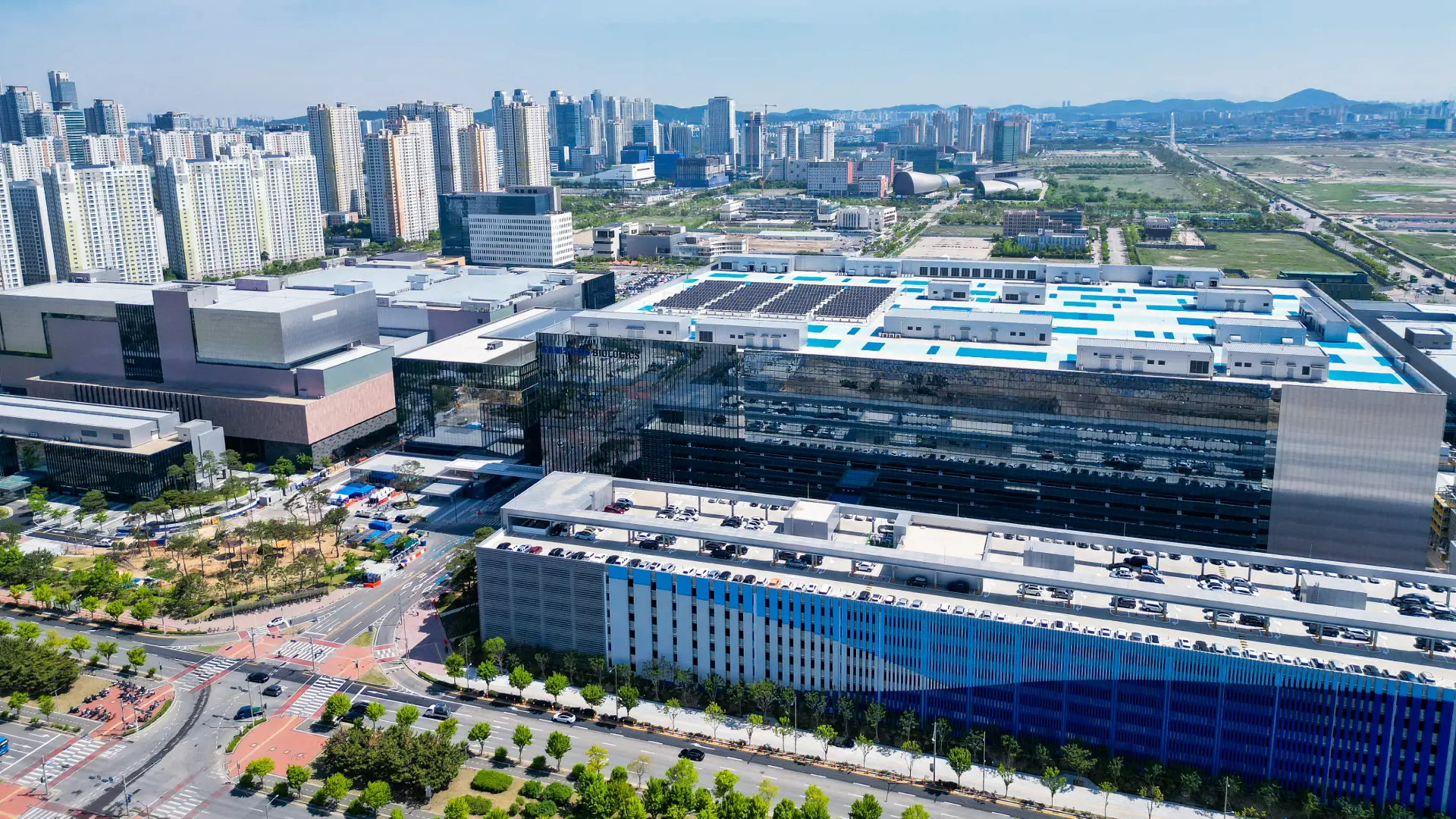
Samsung Biologics has published the formal prospectus for its proposed CHF1.46 billion acquisition of PolyPeptide Group, moving the transaction into its public tender phase as the target company continues to expand peptide manufacturing capacity across six international sites.
The offer is being made through Samsung Peptide AG, a Swiss subsidiary established as the formal bidder. PolyPeptide shareholders are being offered CHF44.31 net in cash for each registered share, with the main acceptance period scheduled to run from 15 September until 12 October 2026.
The price represents a 40% premium to PolyPeptide’s unaffected closing share price on 10 April, immediately before the first public speculation around a possible takeover, and an 11.6% premium to the 60-trading-day volume-weighted average preceding Samsung’s July pre-announcement.
PolyPeptide’s independent directors have unanimously recommended the offer, supported by a fairness opinion from IFBC. Draupnir Holding, the company’s largest individual shareholder, owns approximately 55.65% of outstanding shares excluding treasury stock and has committed to tender its entire holding.
The transaction remains subject to a minimum acceptance threshold of 66⅔% on a fully diluted basis, together with regulatory approvals and other customary conditions. Samsung intends to pursue a squeeze-out of remaining minority shareholders and delist PolyPeptide from the SIX Swiss Exchange after successful settlement.
The manufacturing assets behind the offer explain much of its strategic significance. PolyPeptide operates six GMP-certified facilities across Europe, the United States, and India, specialising in peptide-based active pharmaceutical ingredients from preclinical development through to commercial production.
The network includes sites in Belgium, Sweden, France, India, and the US and gives Samsung access to a manufacturing discipline that differs substantially from its existing large-scale biologics operations. Peptide APIs rely on controlled chemical synthesis, purification, isolation, analytical testing, and extensive solvent and material handling rather than the mammalian-cell culture processes that dominate conventional biologics production.
PolyPeptide is already investing heavily in that capacity. Revenue reached €236.6 million in the first half of 2026, up 41.6% year on year, while capital expenditure totalled €41.3 million, equivalent to 17.5% of revenue.
Commercial production at the company’s new large-scale solid-phase peptide synthesis capacity in Braine-l’Alleud, Belgium, was operating at target utilisation during the period. Construction work to double solid-phase peptide synthesis capacity at Malmö has been completed and the equipment is undergoing commissioning.
Additional capacity at Strasbourg is expected to ramp during the second half of 2026, while projects in Ambernath, India, and Torrance, California, continue to progress. The investment programme means Samsung is bidding for a manufacturing network whose output is already being expanded rather than acquiring static capacity.
Demand from metabolic therapeutics has been a major driver. PolyPeptide reported that the category represented 68.4% of first-half revenue, reflecting the rapid growth of peptide-based treatments including GLP-1-related products.
That market has placed pressure on peptide manufacturing capacity because the chemistry becomes increasingly demanding at commercial scale. Solid-phase synthesis builds peptide chains through repeated chemical reaction and washing steps, generating significant solvent requirements and placing emphasis on cycle efficiency, purification yields, raw-material supply, waste treatment, and analytical control.
Moving a molecule from laboratory quantities to commercial manufacture is therefore not simply a matter of installing a larger vessel. Process conditions, impurity profiles, cleaning validation, equipment qualification, regulatory filings, and customer-specific quality requirements all have to remain controlled as batch sizes increase.
For Samsung, acquiring PolyPeptide would extend its contract development and manufacturing business into another therapeutic modality. Samsung Biologics currently operates 845,000 litres of global biomanufacturing capacity across Korea and a US facility, with its existing portfolio focused heavily on antibodies and other biologic medicines.
Peptide manufacturing adds a separate technical capability and a geographically distributed customer network. That can broaden the services Samsung offers pharmaceutical companies, particularly customers seeking manufacturing partners able to support several therapeutic technologies under a wider corporate relationship.
Integration will still have limits. GMP plants cannot be consolidated casually after an acquisition because customer products are tied to validated equipment, qualified facilities, registered processes, and established regulatory documentation. Moving production can trigger additional comparability work, validation, customer approval, or regulatory changes.
PolyPeptide has already been expanding operations around a multi-site model rather than relying on one large production campus. Samsung will therefore inherit the advantages and complexity of a geographically distributed manufacturing network, including supply-chain coordination, process standardisation, specialised labour, maintenance, quality oversight, and technology transfer between locations.
The tender period begins in September, and the transaction is expected to complete by the end of 2026 if its conditions are satisfied. Until then, the acquisition remains a financial and regulatory process. Its industrial value lies in the reactors, purification systems, analytical laboratories, trained staff, and qualified production capacity Samsung is attempting to put behind the CHF1.46 billion price.