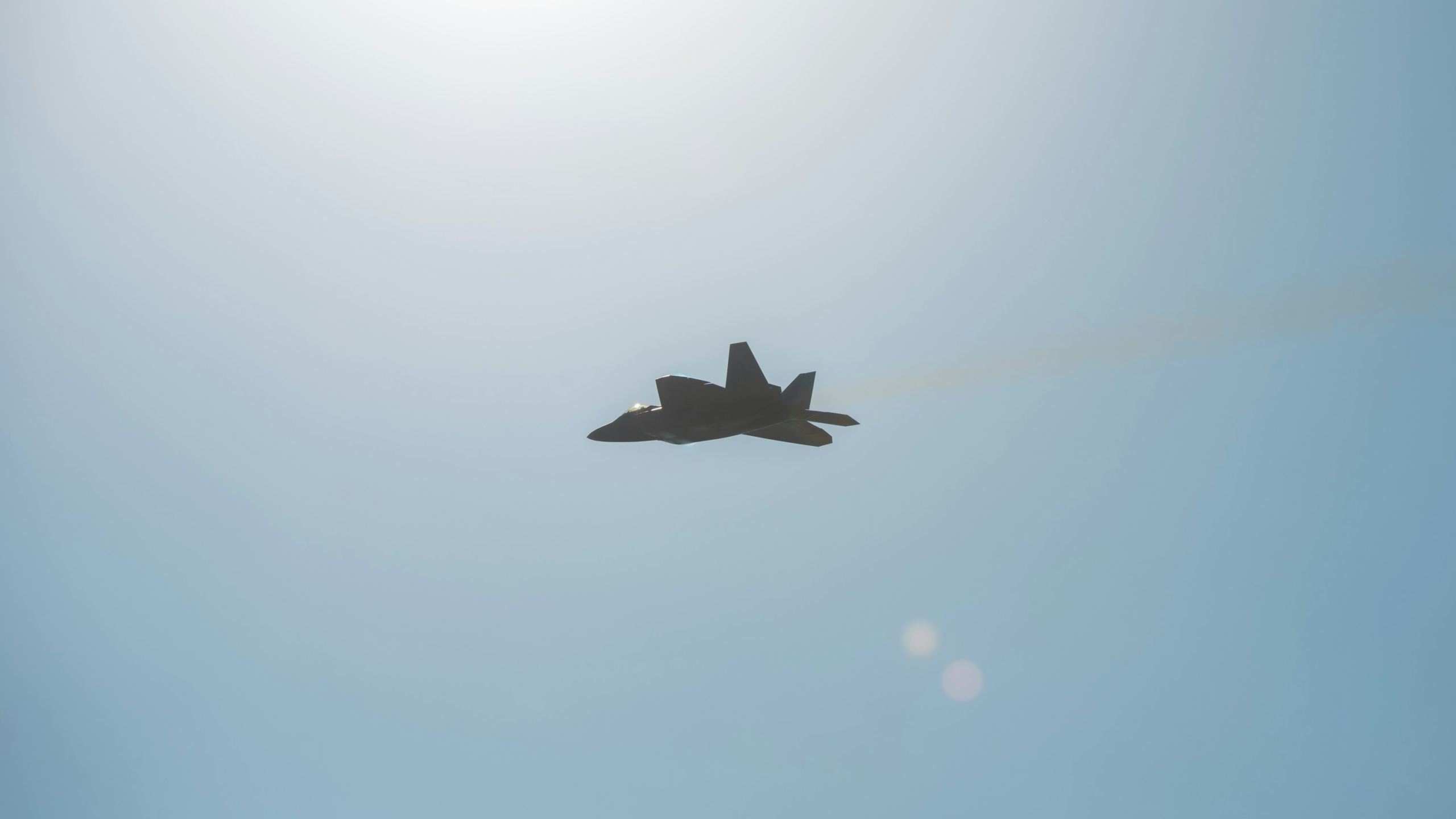
Saab has completed the first flight of the Gripen F two-seat fighter, moving the Swedish-Brazilian aircraft from ground testing into an airborne development campaign that will progressively clear its flight envelope and verify the systems unique to its second cockpit.
The aircraft took off from Saab’s airfield at Linköping at 09:40 local time on 28 August and remained airborne for 40 minutes. Saab chief test pilot Jakob Högberg flew the mission with Brazilian Air Force test pilot Lieutenant Colonel Aviator Abdon de Rezende Vasconcelos.
The first sortie was used to verify core aircraft systems and initial flight performance rather than test the limits of the design. The programme will now proceed through production-acceptance flights before moving into progressive envelope expansion.
That work will clear speed, altitude, G-load, and angle-of-attack limits in stages, with engineers and pilots reviewing flight data before moving further into the operating envelope. Tactical functions and rear-cockpit systems specific to the two-seat configuration will be assessed in parallel.
Gripen F shares its basic architecture with the single-seat Gripen E but is not simply an E with another seat inserted behind the pilot. Extending the fuselage, adding a second cockpit, introducing additional displays and controls, and changing internal equipment arrangements all affect weight distribution, structural loads, systems integration, aerodynamics, and software.
Those differences have to be demonstrated in flight even where the underlying platform is already established. Computer modelling, structural rigs, simulators, and ground testing can establish much of the expected behaviour, but real flight supplies the aerodynamic loads, vibration, thermal conditions, and pilot feedback required to validate the complete aircraft.
The two-seat configuration is intended principally to support training and conversion while retaining operational capability. That allows an instructor to accompany a pilot in a combat-capable aircraft rather than relying solely on simulation or a separate trainer type.
A second crew station also creates additional workload-sharing possibilities, although Saab’s immediate development effort centres on verifying that both cockpits interact correctly with the aircraft’s avionics, mission systems, displays, controls, and software architecture.
Brazil has played an unusually direct role in the programme. Saab says more than 350 Brazilian engineers, technicians, and pilots have participated in training connected with aircraft development, production, flight testing, and maintenance under the wider Gripen technology-transfer programme.
The involvement extends beyond assembly. Brazilian personnel have worked across engineering and test disciplines intended to establish a long-term domestic capability around the aircraft, while Brazil participated directly in co-development of the two-seat version.
The original 2014 Brazilian contract covers 36 aircraft — 28 single-seat Gripen E fighters and eight Gripen F aircraft. Deliveries began in 2020, and Saab reported at the F variant’s rollout in June that 11 aircraft had then been handed over.
Technology transfer on a modern combat aircraft is an extensive industrial exercise. Drawings and machine tools are only part of it; configuration control, manufacturing processes, software baselines, test evidence, quality systems, maintenance procedures, supply-chain management, and engineering authority all have to remain aligned between organisations operating thousands of kilometres apart.
That makes first flight important for more than the individual prototype. Data collected through the campaign will inform acceptance of the aircraft configuration and provide evidence for the production and support systems that sit behind subsequent deliveries.
Saab’s Flight Test Centre in Sweden will conduct the programme. Once envelope expansion, tactical evaluation, rear-cockpit testing, production-acceptance work, and formal aircraft acceptance procedures are complete, the first Gripen F will be prepared for delivery to the Brazilian Air Force.
The configuration has already attracted interest beyond Brazil. Saab stated in June that Thailand and Colombia had also ordered Gripen F aircraft, giving the development programme a wider production base and increasing the importance of stabilising the two-seat configuration for future customers.
Additional customers can improve continuity for manufacturing and support, but each national programme can still introduce its own weapons, communications equipment, support arrangements, training requirements, and mission-system configuration. A common aircraft therefore does not remove the need for disciplined configuration management.
Flight testing is where that engineering becomes visible. Instrumentation will compare measured loads and behaviour with the predictions used during design, while pilots assess handling qualities and systems operation as the aircraft moves through increasingly demanding conditions.
The programme now has to progress methodically. First flight is the photographable milestone; clearing the aircraft for routine operation requires many less conspicuous sorties, engineering reviews, software changes, inspections, and acceptance checks. The Gripen F is airborne, but its useful industrial milestone will come when the test data is sufficiently boring for production aircraft to follow it.