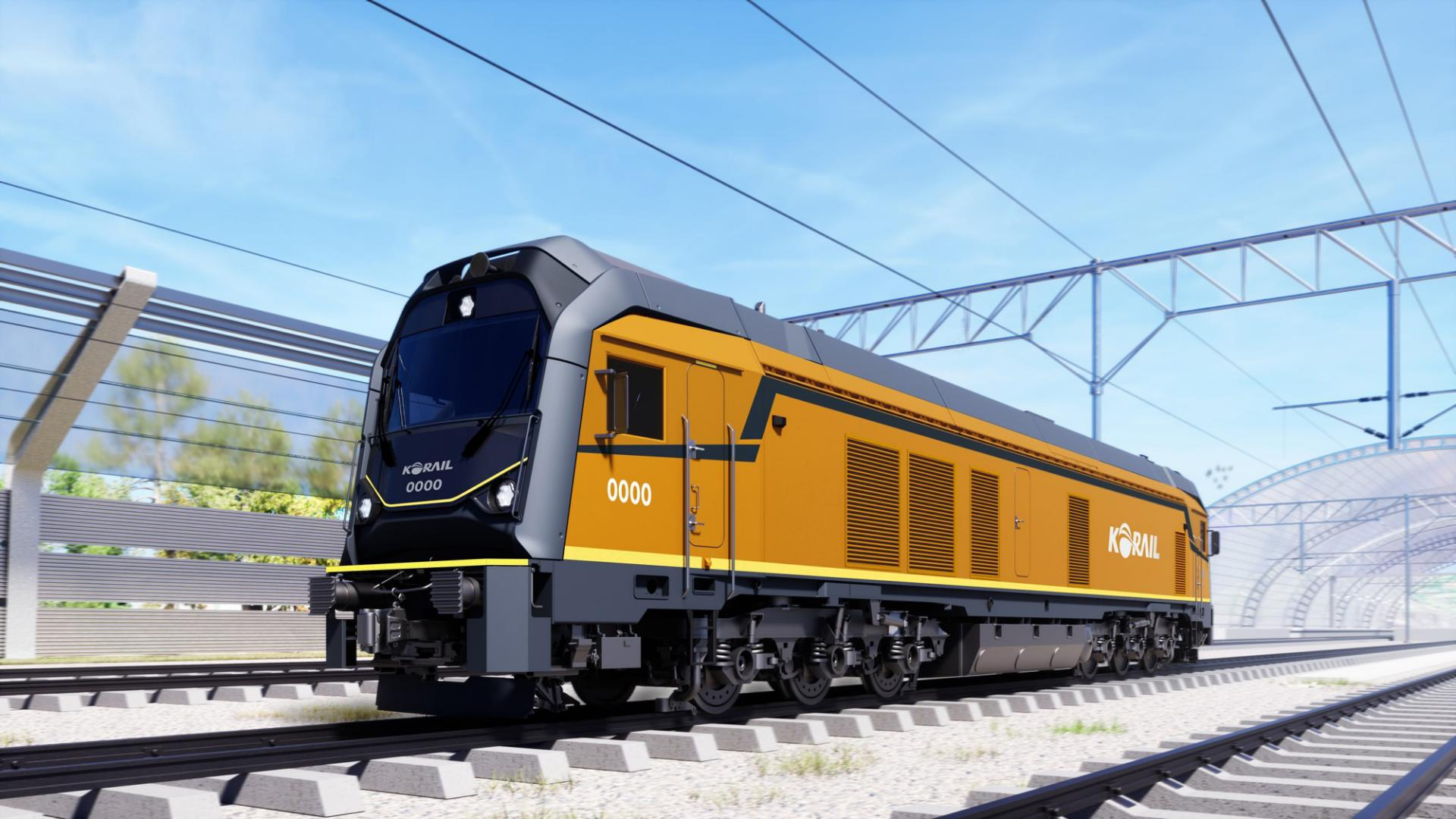
Rolls-Royce is supplying 33 mtu Series 4000R engines for new South Korean freight locomotives being built by Romansys for state railway operator Korail.
Thirty of the engines had already been delivered before August, placing the programme well into the manufacturing and vehicle-integration phase. Romansys will install the units in locomotives intended to replace part of Korail’s existing diesel freight fleet.
The new vehicles are expected to operate mainly on the central freight route between Seoul and Busan. It is Korail’s first use of the current Series 4000R engine generation, although the railway has operated mtu-powered equipment for almost four decades.
Rolls-Royce first supplied engines to Korail in 1987. Earlier applications included Series 183 and Series 396 units used in diesel-hydraulic vehicles, including equipment associated with the Saemaul passenger train fleet introduced between 1987 and 1993.
The latest order transfers that supplier relationship into a modern freight platform, where the engine has to be integrated into a locomotive engineered and assembled by a South Korean manufacturer. Romansys, based in Changwon, is responsible for turning the propulsion equipment into a complete rail vehicle suitable for Korail’s operating requirements.
Engine integration involves more than mounting the power unit inside the locomotive. Cooling, exhaust, fuel systems, control interfaces, vibration isolation, service access, and transmission arrangements all have to be designed around the duty cycle expected from heavy freight operation.
Freight locomotives typically accumulate long operating hours under high load, making reliability and maintainability central to fleet economics. A propulsion failure can affect wagon positioning, terminal schedules, network capacity, and delivery times beyond the individual locomotive taken out of service.
Local technical support is therefore part of the supply arrangement. MEST, Rolls-Royce’s South Korean mtu distributor, will be responsible for service and technical assistance once the new engines enter operation.
MEST is a joint venture between ENST and Rolls-Royce Solutions Asia. Rolls-Royce says the availability and quality of local service played a role in the engine choice, reflecting the importance of parts, diagnostics, maintenance capability, and engineering support over the full life of the fleet.
The programme also illustrates the division of work common in international rail manufacturing. Specialist suppliers provide propulsion, braking, controls, electrical equipment, or other major subsystems, while the vehicle manufacturer integrates those packages into a locomotive that must meet the customer’s overall performance and maintenance specification.
Keeping interfaces stable becomes increasingly important once component delivery begins. With 30 engines already supplied, Romansys can progress assembly against known propulsion hardware, while Rolls-Royce and MEST can prepare the service arrangements required before the fleet enters normal operation.
The order should not be interpreted as a wider reversal of railway electrification. Diesel freight traction continues to be required on routes, operating patterns, and networks where full electrification is absent, incomplete, or unsuitable for the specific duty, while passenger and high-density corridors can follow different technology paths.
Korail is replacing existing diesel locomotives rather than creating a new diesel operation. The immediate engineering question is therefore whether the Series 4000R platform can improve the reliability, serviceability, and operating performance of a fleet that remains necessary within the railway’s freight system.
Almost all of the engines being delivered before the announcement reduces uncertainty around production lead time, but it shifts programme risk towards integration and commissioning. Each finished locomotive still has to pass testing with its propulsion, control, braking, and auxiliary systems operating together before commercial use.
The next visible milestone will be entry into service rather than another engine order announcement. Romansys now has the task of turning 33 delivered propulsion packages into dependable freight locomotives, while MEST’s service organisation will determine how well the long-running mtu relationship survives once the new generation begins accumulating real operating hours.