University of Strathclyde researchers have secured £8m for a ten-year programme aimed at developing ultra-stable lasers that can operate beyond specialist laboratory environments.
Professor Jennifer Hastie of Strathclyde’s Institute of Photonics will lead PORTAL, or Portable Ultra Coherence, after receiving a Royal Society Faraday Discovery Fellowship. The research will target compact laser systems for quantum-enabled navigation, sensing, communications, and precision timing.
Many of the quantum technologies under development in those fields depend on laser light with exceptionally high stability. Existing systems capable of delivering the required performance can rely on large and complex stabilisation arrangements, limiting where they can be installed and how readily they can be transported.
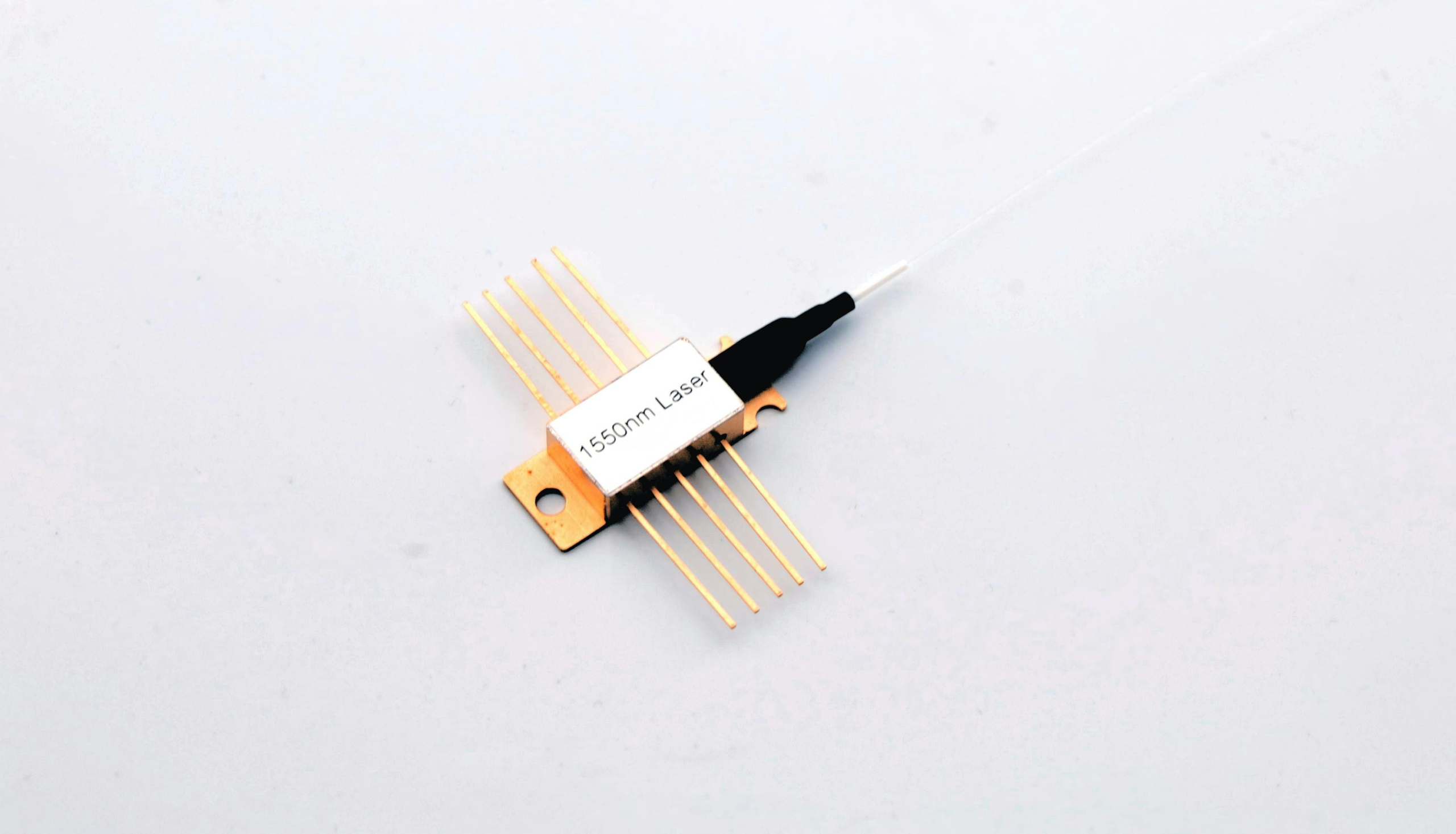
PORTAL will investigate whether comparable optical performance can be retained in smaller, more practical systems. The difficulty is not simply reducing physical dimensions: every change to the optical, thermal, mechanical, and electronic arrangement can affect the stability that makes the laser useful in the first place.
Strathclyde says some demanding applications require coherence lengths extending tens of thousands of kilometres even though the optical wavelength itself is measured in nanometres. Maintaining that degree of coherence from a practical source places tight requirements on frequency stability and on the equipment used to keep the laser operating consistently.
Positioning, navigation, and timing is one of the programme’s intended application areas. Satellite-based systems such as GPS provide essential timing and navigation services, but their radio-frequency signals can be jammed, spoofed, or otherwise disrupted. Quantum sensors and clocks are being developed as complementary technologies that could reduce dependence on those external signals in some applications.
Lasers form part of many of those systems because precise optical interactions are used to interrogate atoms or other quantum references. Reducing the size of the laser and its stabilisation equipment can therefore influence whether the wider sensor or clock remains confined to a laboratory or can be incorporated into transportable equipment.
The engineering challenge becomes increasingly demanding outside controlled research spaces. Equipment may have to tolerate vibration, temperature variation, transport, changing power conditions, and longer periods between specialist adjustment while maintaining the stability needed by the application.
The ten-year fellowship gives the Strathclyde team a comparatively long development horizon. Royal Society Faraday Discovery Fellowships provide up to £8m over ten years, allowing recipients to build research groups around programmes whose technical risks and timescales do not fit easily within shorter project cycles.
Hastie’s fellowship will support expansion of her research team and collaboration with the UK Hub for Quantum Enabled Position, Navigation and Timing, the National Physical Laboratory, the Fraunhofer Centre for Applied Photonics, Imperial College London, and the University of Waterloo in Canada.
That group brings together research, metrology, and applied photonics capability relevant to the path from an optical experiment to an engineered system. Precision measurement is particularly important because claims of improved compactness are of little use if the resulting source cannot be compared accurately with established laboratory references.
PORTAL remains a research programme rather than an announcement of a commercial laser product. Its ten-year duration reflects the amount of development still required before compact ultra-stable sources can be expected to move routinely into deployed quantum systems.
Manufacturability will eventually sit alongside optical performance. A design that works through painstaking laboratory alignment may still be unsuitable for production if assembly tolerances are too tight, components are difficult to source, calibration is labour-intensive, or performance varies materially between units.
The same applies to maintenance. Equipment intended for navigation, sensing, communications, or timing outside the laboratory must operate without continual intervention from the researchers who built it. Packaging, control electronics, diagnostics, calibration, and environmental stability therefore become part of the laser system rather than secondary engineering details.
Strathclyde’s programme starts from a demanding target: retain the coherence required by advanced quantum applications while reducing the equipment needed to achieve it. Success will be measured less by another laboratory record than by how much performance survives once the laser becomes compact, transportable, repeatable, and capable of operating in a less forgiving environment.