Isembard has opened a 160,000 sq ft precision manufacturing factory and global headquarters in Southwark, bringing machining, metrology, software development, and robotics engineering together at a large central London production site.
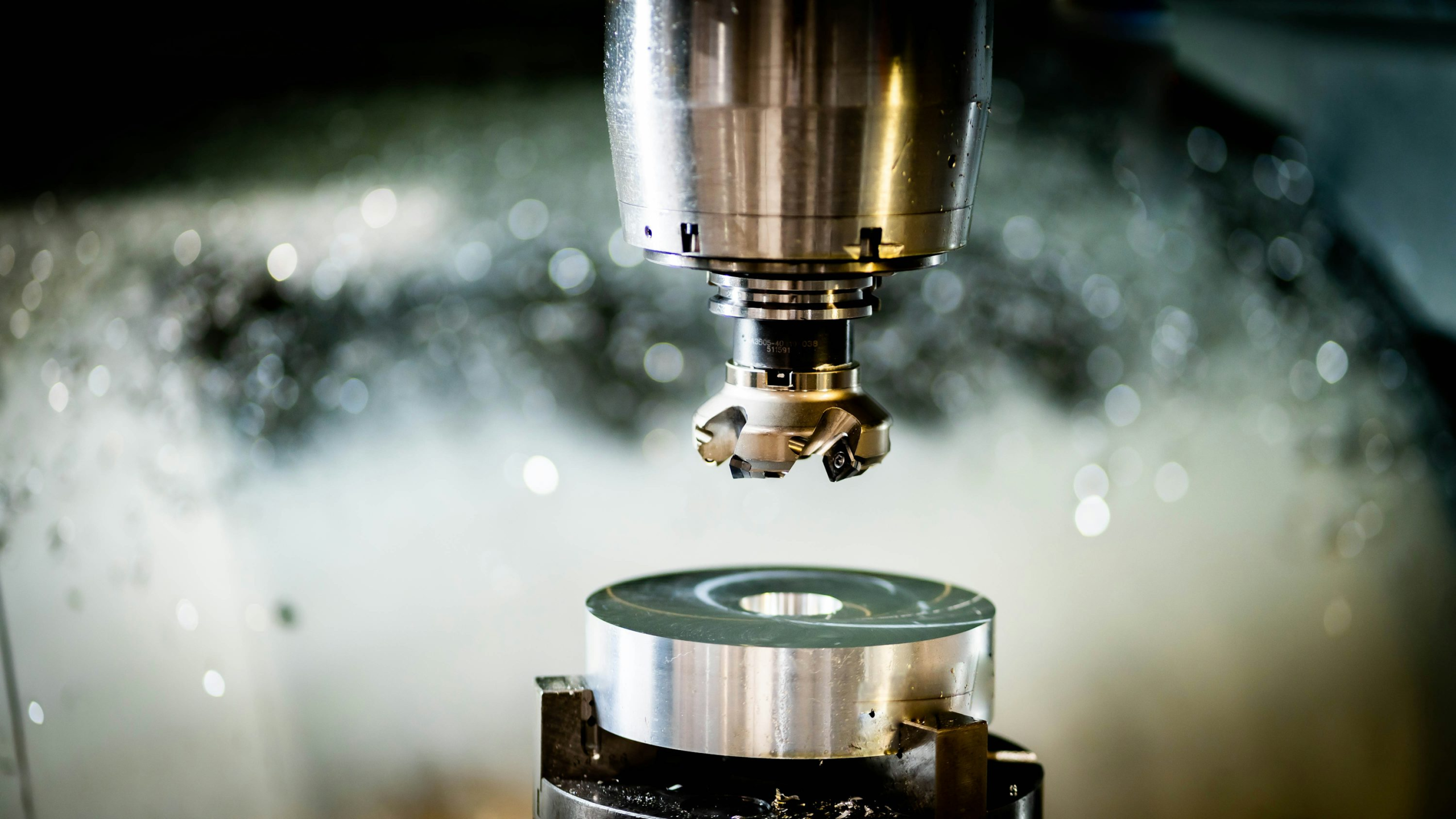
The facility will manufacture components for customers across aerospace, defence, energy, and robotics. Its production equipment includes three-axis and five-axis milling machines, mill-turn systems, wire electrical discharge machining equipment, and a climate-controlled metrology laboratory.
Around 35 people currently work at the Southwark operation, with Isembard planning to increase that figure substantially as production develops. Roles span machining, manufacturing engineering, software, robotics automation, quality, and support functions for the wider factory network.
Software and robotics teams have been placed alongside the production floor rather than in a separate technology office. Their work includes MasonOS, the company’s software platform for functions including quoting, scheduling, production management, and quality control across its distributed manufacturing operation.
That proximity gives the development teams direct exposure to the less tidy realities of factory operation: changing schedules, machine availability, inspection results, tooling constraints, material delays, and new parts whose manufacturing route has yet to be stabilised. Software intended to coordinate a factory has considerably less value if it assumes the factory behaves like a clean database.
Isembard’s broader model combines company-owned sites with partner factories operating against common production methods and digital systems. The company has expanded its network across the UK and into continental Europe and the US, while continuing to add machining capacity for customers requiring comparatively low-volume, technically demanding components.
The Southwark site is unusual partly because of its location. Precision machining companies are more commonly found on industrial estates where floorspace, vehicle access, power, extraction, loading, and property costs are easier to accommodate. Isembard has instead placed substantial production capacity close to London’s engineering, software, investment, and technology labour markets.
The approach reflects a wider problem in advanced manufacturing. Aerospace, defence, robotics, and energy companies rely on extensive tiers of specialist suppliers, many built around experienced machinists and engineers whose process knowledge has accumulated over decades. Machinery can be purchased relatively quickly; experienced production judgement is harder to replace.
Standardising more of the surrounding operating system offers one route to scaling that capability. Common quoting methods, inspection records, scheduling rules, production data, and manufacturing documentation can reduce the amount of knowledge trapped inside one factory or one individual, while giving customers more consistent visibility across several sites.
The limitation is that precision engineering does not become uniform simply because the administration around it does. Five-axis machining, turn-milling, EDM, probing, fixturing, tooling, and inspection remain highly dependent on component geometry, material behaviour, tolerance, batch size, and the capability of individual machines. A distributed network therefore has to standardise what can be standardised without pretending every production problem is interchangeable.
Isembard has attracted substantial investment to test that proposition at greater scale. Earlier in 2026, the company announced a $50 million Series A funding round led by Union Square Ventures, with the capital intended to support further expansion of manufacturing capacity serving aerospace and defence customers.
Demand from those industries is increasing pressure on domestic supply chains. Defence procurement, autonomous systems, aerospace programmes, and efforts to shorten strategically important supply routes have all increased demand for qualified suppliers able to produce complex parts with shorter lead times.
Capacity alone does not solve that problem. A factory filled with five-axis machines can still perform poorly if quoting is slow, programmes are unstable, inspection becomes a bottleneck, or production scheduling leaves expensive equipment waiting for work. Utilisation, first-pass yield, delivery performance, and repeatability determine how much useful capacity those machines actually provide.
The Southwark operation gives Isembard a sizeable environment in which to develop its own manufacturing system while producing customer work. Machine tools, inspection equipment, software teams, automation engineers, and production staff are being brought into the same operation rather than developed as separate businesses.
The more demanding phase begins as methods developed there are transferred across a larger network. A common operating system only earns its keep if another factory can reproduce the improvement without reproducing every person and circumstance that created it. Southwark will therefore be judged as much by what Isembard can replicate elsewhere as by the components leaving its own machines.