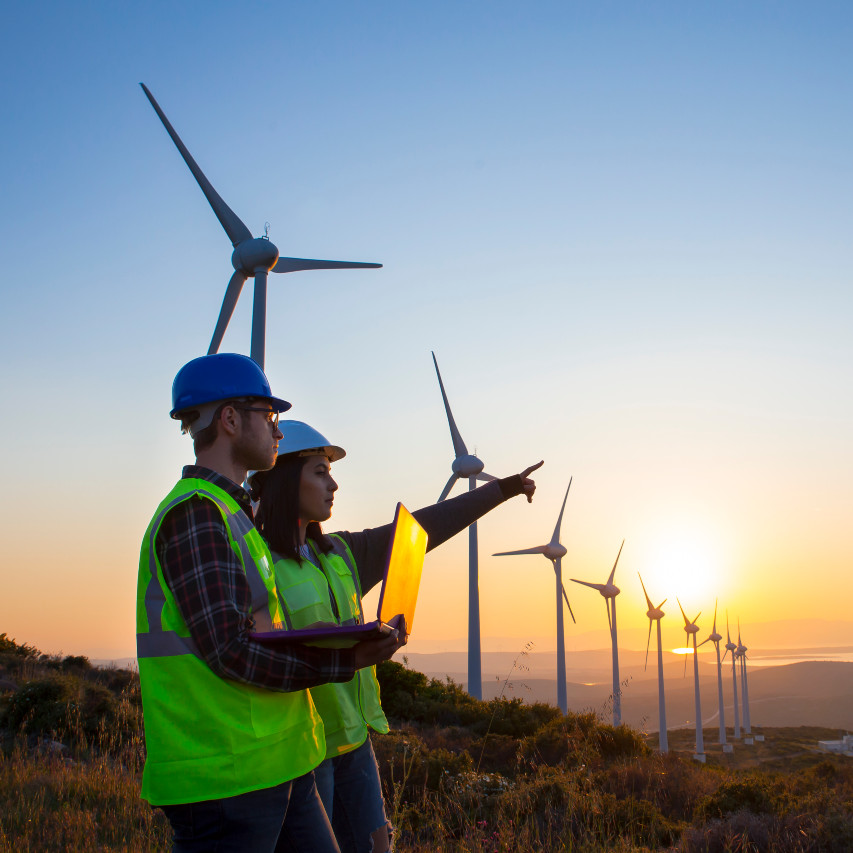
GE Vernova has secured an order to supply four 5.5MW onshore wind turbines for developer wpd’s Haseloff wind farm in Germany, creating a 22MW project supported by a long-term service agreement. The turbines are scheduled to start arriving in November 2027, with commissioning planned for the first quarter of 2028.
The order is for GE Vernova’s 5.5 MW-158m turbine platform: each machine has a 5.5MW rated output and a 158-metre rotor. The four turbines are due to be manufactured at Salzbergen in Lower Saxony, where the company produces machine heads, drivetrains and hubs for wind projects in Germany and export markets. A repeat turbine configuration gives the factory a defined production platform, although the project’s delivery schedule remains more than a year away.
With four machines contributing the contracted capacity, Haseloff’s 22MW figure describes the maximum installed generating rating rather than the amount of electricity it will deliver over a year. Actual energy output will depend on the site’s wind resource, turbine availability, operating restrictions and the electrical characteristics of its connection to the network. Neither an annual generation estimate nor a site-specific capacity factor accompanied the contract details.
A rotor with a diameter of 158 metres sweeps an area of approximately 19,600 square metres, allowing the blades to intercept moving air over a wide cross-section. Blade pitch and generator control regulate power extraction as wind speed changes, while the turbine’s rated output is the upper nameplate generating level rather than a constant operating result. GE Vernova has not specified the Haseloff hub height, meaning the completed tip height cannot be calculated reliably from the rotor dimension alone.
Delivery in late 2027 leaves the developer with construction and installation work before the machines can produce electricity. Civil foundations, access routes, crane arrangements and the electrical collection system must be ready to receive components that are considerably larger than the handling envelopes of conventional industrial machinery. Grid energisation and commissioning then require checks on protection systems, turbine controls and the behaviour of the completed wind farm under operating conditions.
GE Vernova has included long-term service provision in the deal, extending its role beyond the supply of nacelles, rotors and associated turbine equipment. Service arrangements can cover scheduled inspection, component maintenance and condition-based interventions, although the company has not stated the precise duration or commercial terms of the Haseloff agreement. The availability achieved under any such contract will depend on the agreed scope and actual operating performance.
In May 2026, the Salzbergen facility passed 25GW of cumulative wind turbine manufacturing output. GE Vernova presents that figure as the total nameplate generating capacity of turbines produced over the plant’s operating history. It is neither a figure for annual factory output nor an estimate of the electricity that Haseloff will generate, and it provides no indication of the production slots reserved for this order.
The Haseloff contract is separate from GE Vernova’s earlier 16.5MW German order with Stadtwerke Heidenheim for Schlotberg-Jüchsen. That project involves three 5.5MW turbines and was disclosed on 9 November. The new agreement concerns a different developer, four turbines and a commissioning window in 2028. Their common turbine platform does not make them a single wind farm or one combined transaction.
Manufacturing these turbines requires coordination between the machinery assembled at Salzbergen and externally supplied components. The nacelle and drivetrain must be matched with the generator, power conversion equipment, controls and rotor system, while the size of the major assemblies determines haulage and lifting requirements. A standardised platform can support repeated assembly and qualification, but each contracted machine still requires component procurement, factory testing and transport to the individual site.
The agreement also contributes to the workload of contractors responsible for wind farm construction, electrical installation and ongoing servicing. Utility-scale machines place demands on ground engineering, lifting plans and the coordination of high-value components across manufacturing sites and the construction project. Those activities are distinct from the turbine supply contract, and the companies have not identified every subcontractor participating in Haseloff.
The interval between the contract and first turbine delivery exposes the sequence of industrial work still ahead. Manufacturing and delivery require procurement and production capacity; foundations, access roads and grid equipment are responsibilities of the broader project delivery programme. Any delay in those interfaces can move the operating date even when the supplier completes its machines to schedule. GE Vernova has not disclosed a project-specific annual generation forecast or construction completion date.
Deliveries for the four Haseloff machines are scheduled to start in November 2027, with commissioning expected in the first quarter of 2028. The long-term service component begins to carry operational value only once the turbines have been installed and entered service.