Genesis AI has raised $500m in Series A funding to expand production of its Eno general-purpose robot and the data systems used to train it. The round values the French-founded company at $3.5bn after investment, with manufacturing, logistics and laboratory operations among the initial deployment targets. The financing supports a proposed scale-up; it is not evidence that Eno has already reached mass production.
Premji Invest, Khosla Ventures and Eclipse jointly led the funding, with other participants including Bpifrance, NVIDIA, AMD Ventures, Samsung Next and Ericsson. Genesis had previously announced $105m in seed funding, taking its disclosed total raised to $605m. The latest round is new equity financing, not revenue from customers or the value of a confirmed robot orderbook. The company has not disclosed comparable commercial deployment volumes for Eno.
Genesis is increasing production while testing Eno with early customers. The existing pilot programme remains relatively small, with a broader rollout envisaged in 2027. Initial work is directed towards factories, logistics facilities and laboratories, where tasks may involve moving between stations and handling objects with different shapes or surface properties. A pilot installation, however, does not by itself establish sustained operation across a complete production shift.
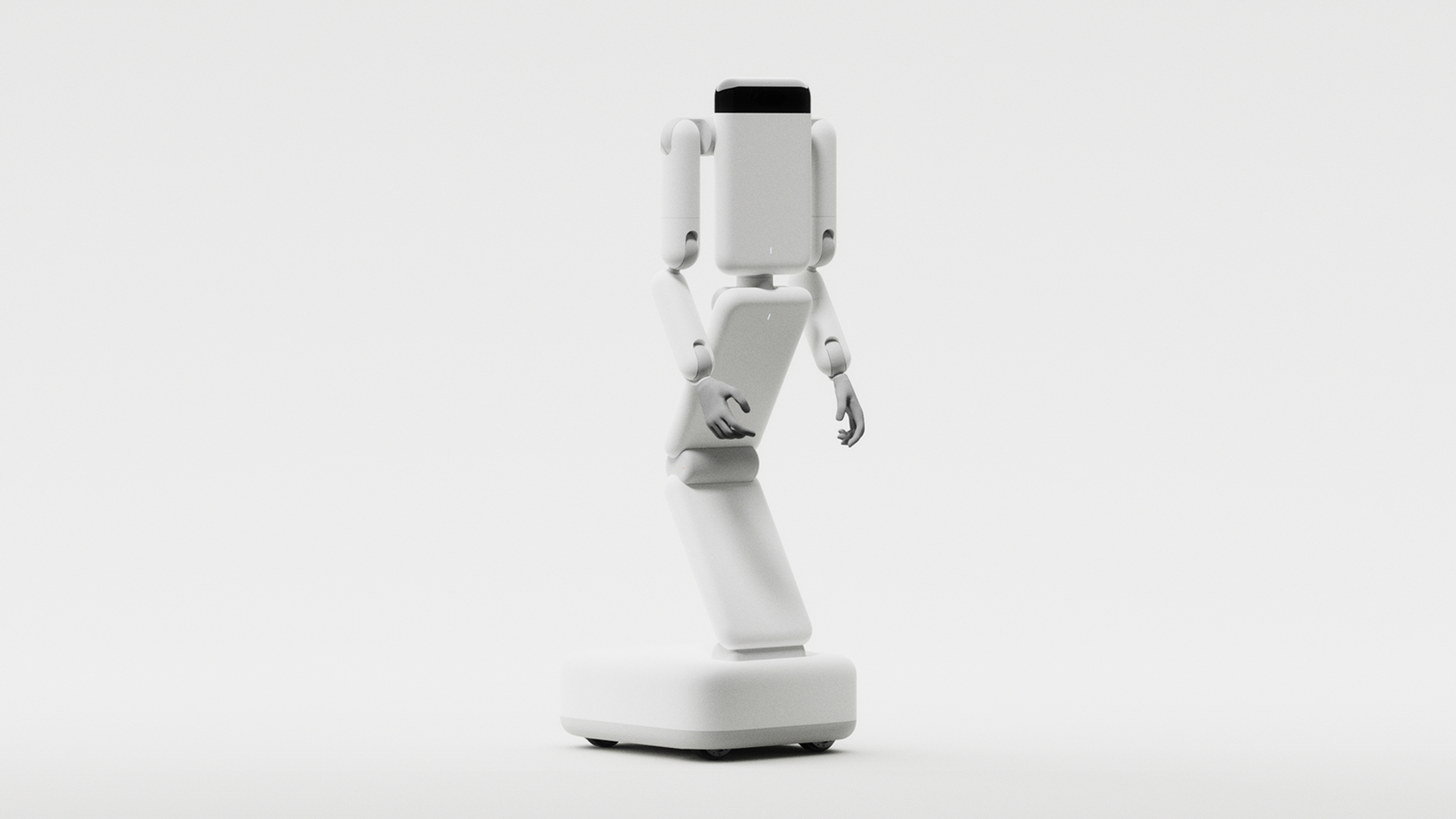
Eno has a wheeled base, a mobile articulated body and two arms with dexterous hands. Rather than reproducing human walking, its design combines wheeled travel with manipulation at different working heights. This arrangement may suit some factory floors and laboratory aisles, while its practical working envelope will still depend on surface conditions, payload, reach, available clearances, safeguarding and interaction with other equipment.
Object manipulation remains a demanding aspect of general-purpose robotics. Packaging, sorting and laboratory operations can require a machine to recognise a changing orientation, control grip force, react to slipping objects and recover from mistakes. Fixed industrial robots often deliver high repeatability in controlled cells, but a new product, tool or task can require fresh programming and validation. Genesis is attempting to widen the range of tasks through learned control while retaining enough repeatability for industrial use.
The company’s GENE foundation model is intended to acquire general manipulation capabilities from physical task data. Genesis is using sensor-equipped gloves to capture human hand movements and contact information, creating demonstrations that can help train control policies for robotic hands. The correspondence between human and robot mechanics is part of the engineering problem: finger geometry, actuator response and available sensing differ, even when hand proportions are similar.
Genesis World provides a simulation environment for rehearsing and refining robotic tasks before they are attempted on physical equipment. A simulated environment allows many task variations to be tested without tying up a production cell, but transfer to the real world remains subject to friction, object tolerances, lighting, sensor errors and mechanical wear. Physical trials and feedback are therefore necessary to establish whether a learned movement can be repeated reliably under operating conditions.
Genesis says it is developing important hardware components internally, including motors, actuators, gearboxes and hands, alongside its AI control systems. Coordinating the mechanical design and training process can support iterative improvement, but the approach also makes component durability, supply availability and maintenance important constraints on scaling production. Engineering a successful prototype and sustaining a fleet of serviceable robots are separate stages of industrial development.
In a media demonstration, observers saw robotic arms completing a multistep packing and labelling task, although errors occurred when the sequence was repeated. Observers also described concerns over the working life of the dexterous hands in their present form. These observations relate to development equipment; they are neither an independent failure-rate estimate nor a forecast for a future Eno production version. They nevertheless indicate the engineering work still required before broad deployment.
A useful industrial assessment must go beyond successful demonstrations. Facilities need to understand the frequency of failed grasps, the reliability of recovery procedures, the maintenance interval for hands and actuators, and how the robot behaves when personnel or equipment enter its operating space. A task performed once with a trained operator nearby is different from one completed repeatedly at a specified rate, with documented safety and quality performance.
Genesis has discussed US contract manufacturing and supply chain arrangements for the next production phase, while maintaining its European engineering activities. Its work with LG CNS is intended to test Eno in manufacturing and logistics applications. The company has not disclosed a comprehensive customer delivery total or independently verified operating performance across the range of tasks it is targeting, leaving the scale and economics of its next rollout to be demonstrated.
The funding will support robot manufacture, training data collection, compute infrastructure and recruitment. Those investments can expand the number of tasks Genesis is able to test and the volume of hardware available to customers. Whether Eno moves from limited pilots to repeat industrial deployment in 2027 will depend on proven task performance, serviceable mechanical components, safeguarding integration and the ability to support installed machines.