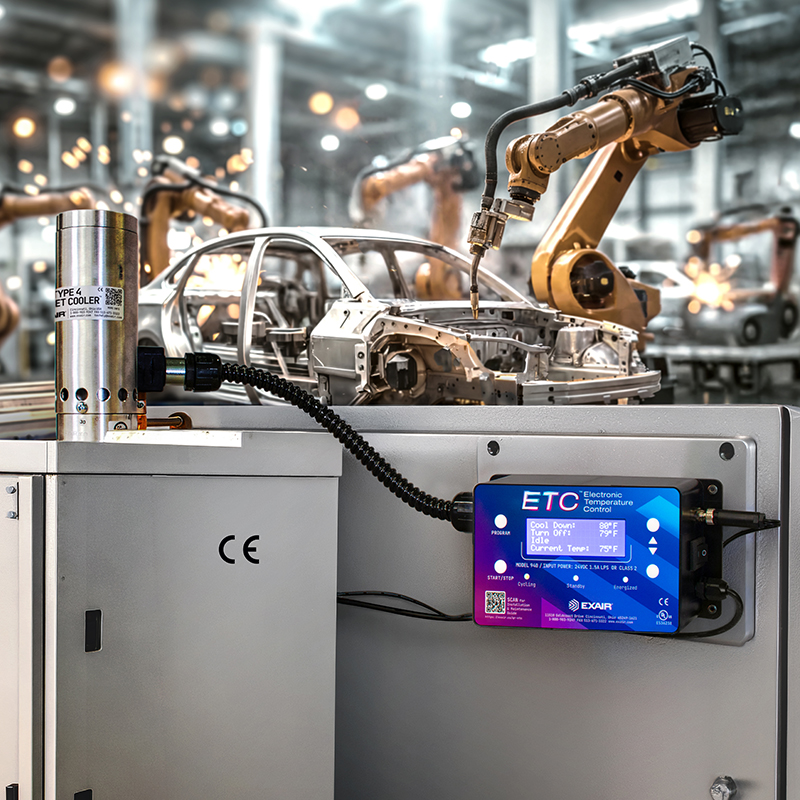
EXAIR has redesigned its Electronic Temperature Control (ETC) for Cabinet Cooler systems, allowing the temperatures at which electrical enclosure cooling starts and stops to be adjusted independently. A revised interface and more flexible temperature differential settings give operators greater control over cooling cycles and the compressed air consumed by the equipment.
The UL Listed controller monitors temperature inside an electrical cabinet and opens a solenoid valve when the programmed upper threshold is reached. Compressed air then drives the Cabinet Cooler until the internal temperature falls to the lower setting, when the valve closes. Separately adjustable switching points determine the permitted temperature range and the interval between successive cooling cycles.
Electrical enclosures contain components that produce heat during operation, including variable speed drives, power supplies, programmable logic controllers and motor control equipment. Their heat output changes as machinery starts, stops and changes load. The surrounding factory temperature can add to the demand on a cabinet’s cooling system, particularly when equipment stands near ovens, process machinery or other sources of heat. Excessive internal temperatures can cause protective trips and interfere with the reliable operation of controls.
Cabinet Coolers generate cold air through a vortex tube connected to the factory’s compressed air supply. The incoming air separates into hot and cold streams; cold air is delivered into the enclosure and the hot fraction is discharged outside. Warmer air inside the cabinet is displaced through the system’s exhaust arrangement. The vortex tube contains no moving parts and operates without a refrigerant circuit, although producing and distributing its compressed air still requires energy elsewhere in the plant.
When heat generation fluctuates, switching off the cooling air between demanding operating periods can reduce demand on the compressed air network. A cabinet may reach its upper temperature setting while a drive operates under sustained load and remain below that point during a later idle interval. The valve then remains closed until cooling is required again. The achievable reduction in air use depends on the enclosure’s heat load, ambient conditions and the proportion of time the system can remain off.
The distance between the upper and lower settings also determines how frequently cooling starts and stops. Closely spaced thresholds can cause frequent valve operation when temperature varies around the selected range, while a wider differential permits longer cooling and idle periods. Setting the two temperatures independently lets the operating band be matched to both the maximum acceptable cabinet temperature and the response of the cooling equipment.
EXAIR has simplified the controller interface so those settings can be changed more easily during installation and subsequent adjustment. The improved differential controls are intended to give a more practical balance between temperature stability and compressed air consumption as equipment loads and seasonal conditions change. The update concerns the controller’s switching behaviour; the underlying vortex cooling method and the Cabinet Cooler’s dependence on a suitable compressed air supply remain the same.
The temperature-responsive ETC operates separately from EXAIR’s Electronic Flow Control, which uses a photoelectric sensor and timed valve operation to supply air during production events. The ETC takes its input from enclosure temperature, so a cooling cycle is triggered by thermal conditions within the cabinet instead of the passage of a component through a machine.
EXAIR offers dual solenoid options for the ETC and Cabinet Cooler systems suited to NEMA 12, NEMA 4 and NEMA 4X enclosures. These enclosure classifications reflect different protection requirements, including resistance to dust, water and, for NEMA 4X equipment, corrosive environments. The wider Cabinet Cooler range also includes equipment for hazardous locations and ATEX applications. The chosen cooler and installation must match the enclosure’s required protection rating.
The enclosure design affects the airflow path as well as the cooling capacity required. EXAIR’s NEMA 4 and NEMA 4X Cabinet Coolers use low pressure relief valves that seal when cooling is inactive to maintain enclosure protection. During operation, cold air distribution and the exhaust arrangement need to move heat away from sensitive components while preserving the enclosure’s intended resistance to contaminants.
Compressed air quality and available supply pressure are important operating conditions. Moisture or dirt entering the cooling system can create problems for electrical equipment, while a drop in pressure can reduce the amount of cooling available when the solenoid opens. Where several cabinets share one plant air network, their simultaneous demand must be considered alongside other tools and processes using compressed air.
Commissioning therefore involves selecting temperature thresholds from the installed components’ operating limits, checking cabinet temperatures through representative production cycles and confirming the available cooling capacity at the expected ambient conditions. Monitoring the duration of cooling demand provides a basis for assessing air consumption after the settings are changed. EXAIR’s redesigned ETC provides the switching adjustment needed for that approach while continuing to operate with the existing Cabinet Cooler product family.

