AIXTRON recorded €274.9 million in third-quarter orders, up 122% year on year, as manufacturers increased investment in semiconductor deposition equipment for high-speed optical communications. The German equipment supplier reported quarterly revenue of €183.6 million, 54% higher than a year earlier, and an equipment order backlog of €549.4 million at the end of September. Photonics orders linked to artificial intelligence data centre networks have become the dominant driver of its manufacturing workload.
Optoelectronics accounted for approximately 68% of AIXTRON’s third-quarter equipment orders, with power electronics representing another 24%. The fastest-growing applications involve indium phosphide devices used to create light for high-speed data links. Such components form part of the optical transceivers that carry traffic within and between data centres. Investment in faster interconnections increases demand for equipment that can deposit precisely controlled semiconductor layers during device manufacturing.
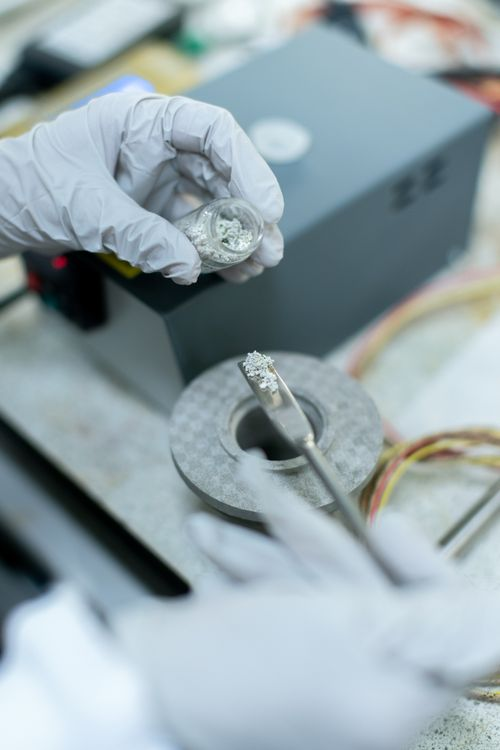
AIXTRON’s systems use epitaxial deposition processes to grow compound semiconductor structures under controlled conditions. In an optical device, the thickness, composition and uniformity of semiconductor layers affect the properties of the resulting laser or related component. Production equipment must repeatedly deliver those conditions over multiple wafers, since variations can affect performance and yield. A customer’s decision to expand wafer processing capability therefore depends both on expected optical-component demand and on the availability of qualified manufacturing tools.
AIXTRON identified demand across established 800G optical transceivers and the emerging 1.6T generation. Manufacturers continue to expand 800G production while preparing higher-speed equipment for qualification and deployment. The transition requires compatible lasers, substrates and optical components, so factories can be running several product generations simultaneously as their customers upgrade data centre networks.
Total orders for the first nine months reached €660.9 million, up 76% from €374.7 million in the comparable period. The €549.4 million equipment backlog at 30 September compares with €286.5 million a year earlier and €257.8 million at the end of 2025. These outstanding equipment commitments provide visibility for production planning, with revenue recognised as systems are delivered and the relevant acceptance conditions are met.
Third-quarter gross profit rose to €87.3 million and gross margin reached 48%, against 39% a year earlier. Operating profit before interest and tax was €56.7 million, equivalent to a 31% EBIT margin. Higher equipment shipments and a favourable combination of products and sales regions supported the quarterly result. The contribution of each product category will continue to change as the order backlog moves through assembly, testing and customer acceptance.
Nine-month revenue stood at €358.1 million, 3% below the previous year’s comparable period even as orders and third-quarter deliveries accelerated. Equipment production requires semiconductor components and other parts to be supplied, systems to be assembled and tested, and customers to prepare their facilities for installation. AIXTRON said production output had increased sequentially during 2026 and expects a further increase in the fourth quarter as its photonics backlog advances through manufacturing.
AIXTRON is coordinating the production increase with its suppliers and developing a further manufacturing site at Penang in Malaysia. Construction of that facility is still under way. The site is intended to improve flexibility in the company’s production network, while existing operations continue to handle deliveries against the present equipment backlog. Additional manufacturing capacity will need to be incorporated into the same testing, quality and customer acceptance arrangements as current systems.
Gallium nitride and silicon carbide customers are at an earlier stage of capacity expansion, with initial equipment orders and a growing project pipeline reported by AIXTRON. Gallium nitride devices are being evaluated for power conversion in AI infrastructure, while silicon carbide serves higher-voltage applications including industrial drives and electric vehicles. Manufacturing tools must be qualified for the different wafer materials and layer structures, creating separate production schedules from the established optoelectronics order book.
Customer advance payments have contributed to the company’s liquidity as it prepares equipment for delivery. Operating cash flow in the first nine months reached €311.1 million, compared with €128.5 million a year earlier, and free cash flow was €289.9 million. Net financial assets were approximately €591 million. The advances support procurement and manufacturing expenditure while production and subsequent customer acceptance remain in progress.
AIXTRON has retained full-year revenue guidance of €560 million, plus or minus €30 million, alongside an expected gross margin of about 42% and EBIT margin of 17–20%. The company disclosed the initial order surge earlier in October; its completed third-quarter accounts now quantify the profitability, cash generation and equipment backlog supporting the remaining production schedule. Shipments and customer acceptance in the fourth quarter will determine how much of that activity enters 2026 revenue, with further deliveries planned into 2027.