IMDEA Materials Institute has developed a manufacturing and surface-treatment sequence for two magnesium alloys under investigation for biodegradable medical implants. Researchers produced alloy powder, built specimens by selective laser melting and used plasma electrolytic oxidation to form protective coatings. In laboratory corrosion testing, coated printed specimens showed increases in corrosion resistance approaching two orders of magnitude compared with untreated material. The work remains at the materials research stage.
The work forms part of the EU-supported MACS project, which examined Mg-4Zn-0.5Mn and Mg-4Zn-0.5Ca alloy systems. The chemical designations describe magnesium containing approximately four units by weight of zinc and smaller manganese or calcium additions. The project systematically compared the two compositions through powder production, laser processing, coating and corrosion testing. It was intended to address the manufacturing and degradation difficulties that have restricted wider use of magnesium in temporary biomedical devices.
Magnesium is lightweight and gradually degrades in biological environments, making it a candidate material for temporary medical devices. The intended device would need to maintain its shape and mechanical strength for the required healing period before gradually breaking down. Corrosion that progresses too quickly can reduce its load-bearing capacity, while variations across the metal’s surface can lead to uneven degradation. Manufacturing and protective surface treatment therefore have to be developed together.
Selective laser melting, a laser powder-bed fusion process, builds components by spreading thin layers of powder and melting defined regions in sequence. It can create complex geometries with less machining of internal features than conventional manufacture. Magnesium requires careful control of powder handling and processing conditions because it is reactive and susceptible to oxidation during melting. The project established workable processing conditions for both selected alloy formulations and then examined the effects of coating the resulting material.
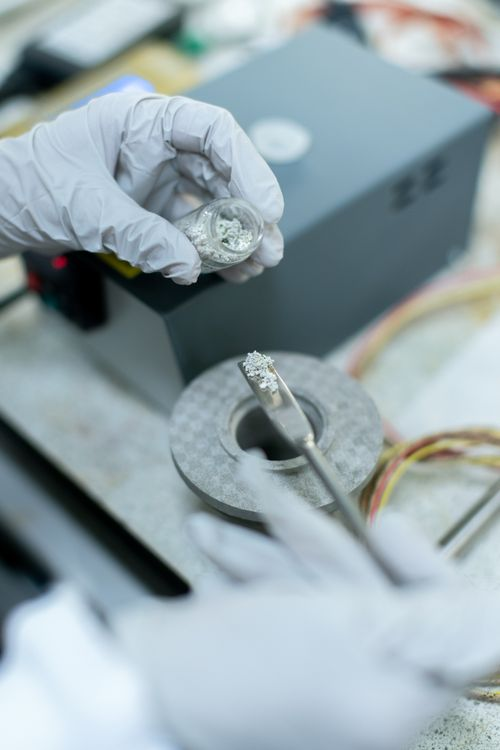
Ultrasonic atomisation produced the metal powder used for laser processing. Particle size, shape and consistency influence how evenly the powder spreads and how the laser energy is absorbed during each pass. The quality of this feedstock affects density and defects in the built specimens, which in turn influence their mechanical and corrosion behaviour. AMAZEMET in Poland produced the powder, with IMDEA in Spain and Warsaw University of Technology contributing to the wider study.
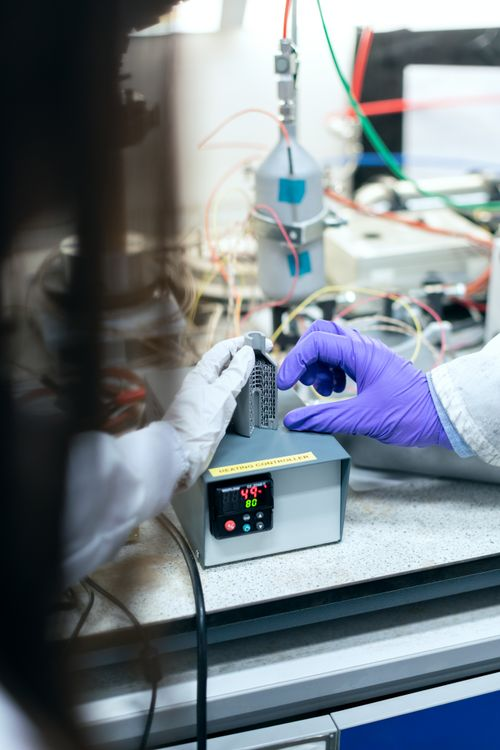
After printing, the alloy’s exposed surface determines how readily it reacts with surrounding fluid. Plasma electrolytic oxidation applies electrical energy in an electrolyte to develop a ceramic-like layer on the metal. The voltage, current, electrolyte composition and treatment time influence the coating’s structure and protection. Selecting those parameters for each alloy and surface condition allows corrosion behaviour to be adjusted while preserving the geometry produced by the additive process.
The researchers, including Dr Sabbaghian, developed electrolyte formulations and refined the treatment settings through experiments with both alloys. Coated additively manufactured specimens showed corrosion resistance approaching 100 times that of the corresponding untreated material under the laboratory test conditions. That measured improvement concerns the metal and coating system in the test environment; implant lifetime and clinical performance would require further mechanical and biological evaluation.
The comparison between Mg-4Zn-0.5Mn and Mg-4Zn-0.5Ca also allowed the team to examine how manganese and calcium additions affect processing and corrosion behaviour. Both compositions passed through powder preparation, laser melting and protective treatment, making the manufacturing sequence part of the comparison. Changes to microstructure during printing can influence the response to plasma electrolytic oxidation and the subsequent corrosion tests. Repeatable powder specifications and coating conditions will therefore be needed before either alloy can be developed for a defined device design.
Qualifying an additively manufactured medical component also requires control of internal porosity, residual stress, surface roughness and local composition. These properties influence structural integrity, fatigue behaviour and coating coverage on complex geometries. Cleaning, finishing and inspection need to be considered when a printed material is developed for a particular device. Corrosion testing forms part of this evidence alongside mechanical and biological assessments, and repeatability must be demonstrated across production batches.
Possible applications include temporary bone fixation and other structures needed to support tissue during healing. Each device design imposes different demands on load bearing, geometry and degradation rate, depending on its intended site and duration of service. Further tests must relate the corrosion resistance measured on laboratory specimens to those specific mechanical and biological requirements, including how the protective coating behaves as degradation progresses.
The MACS project has established a sequence from magnesium powder preparation through additive manufacture to protective surface treatment. Development towards a medical device will require repeatability across larger batches and more complex geometries, followed by long-term degradation, mechanical and biological testing. Those steps will define whether either studied alloy can be qualified for a specified temporary implant application.