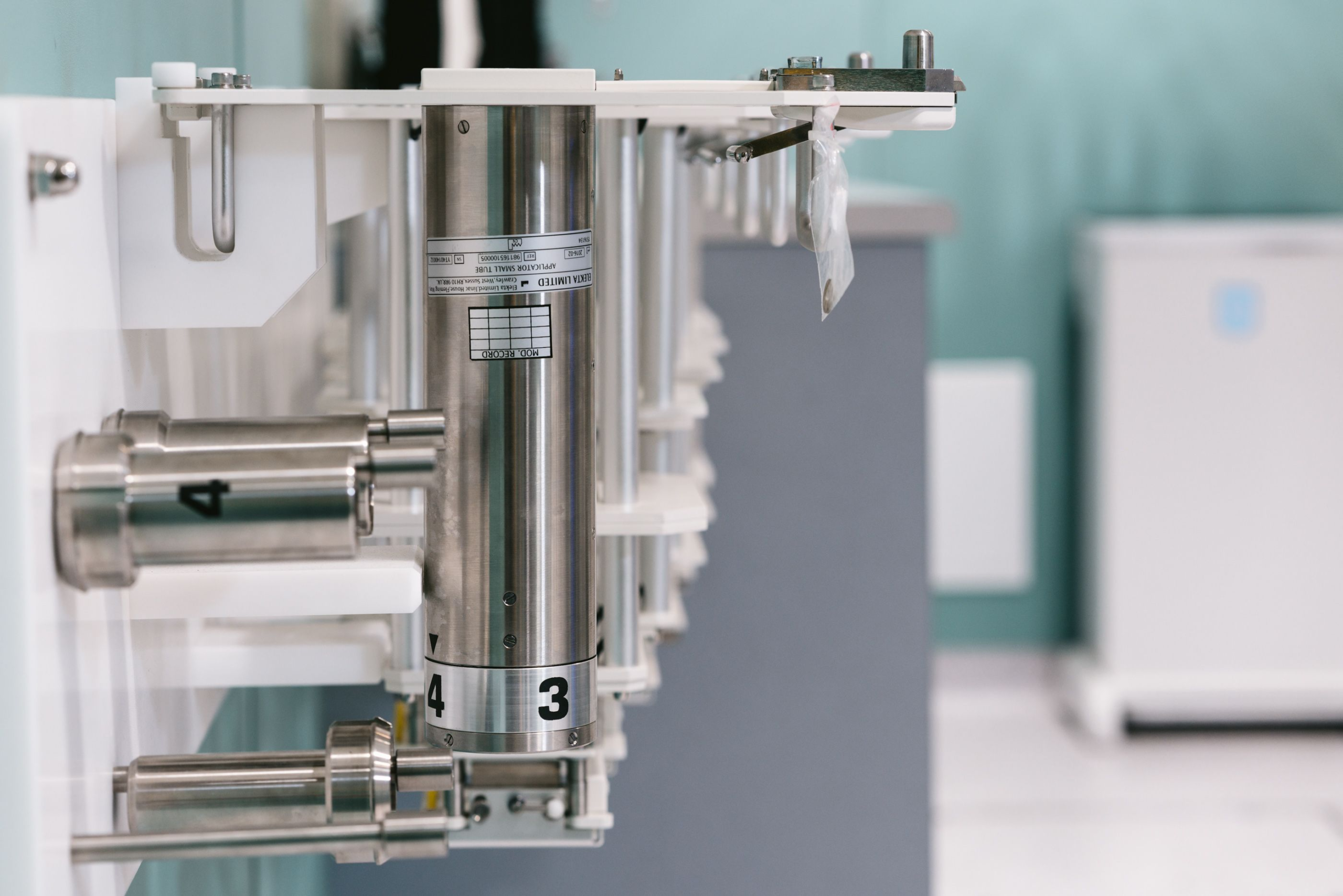
The Centre for Process Innovation (CPI) is seeking suppliers of custom phosphoramidite and succinate materials for pilot-scale oligonucleotide manufacturing research. Its procurement supports equipment being installed for the GC3 programme at the Medicines Manufacturing Innovation Centre. The opportunity, published on 26 October 2026, has an estimated value of £173,000 excluding VAT and specifies material quantities between 10g and 1kg. The purchasing exercise is open; no supplier has been awarded the work.
Responses are due by noon on 16 November 2026, with a proposed contract period from 24 December 2026 until 23 December 2029. The £173,000 figure is an estimated procurement value rather than money already spent on research chemicals. The supplier selected through the competition will still need to satisfy the detailed requirements and any conditions on orders placed during the contract term. The opportunity is separate from the installation of the pilot manufacturing equipment itself.
CPI operates applied research and scale-up facilities within the UK High Value Manufacturing Catapult. Its Medicines Manufacturing Innovation Centre develops methods intended to bridge laboratory chemistry and future manufacturing operations. The GC3 programme is installing equipment for a novel oligonucleotide production process; it has not disclosed the full process conditions, achieved yields or a qualified commercial manufacturing line. The procurement gives a defined view of some materials needed to develop and test the proposed route.
Oligonucleotides are comparatively short, defined sequences of nucleic-acid building blocks used in research, diagnostics and some pharmaceutical applications. Their manufacture involves assembling a target sequence through controlled chemical reactions, followed by purification and analytical verification. Sequence identity, purity and contamination control are central because changes in a chemical input or a processing step can affect the resulting material. The current tender concerns a specific part of that production supply chain.
Phosphoramidites are widely used activated building blocks for solid-phase oligonucleotide synthesis. In a typical process, a protected building block reacts with a growing sequence attached to a support, after which chemical steps prepare the chain for the next cycle. The efficiency of repeated coupling and the quality of the input material can influence the amount of product recovered and the burden placed on subsequent purification. The precise process chosen for GC3 has not been disclosed in the short tender notice.
Succinate-based materials can take part in preparing linking chemistry for supported synthesis, but the tender does not identify the bespoke molecular structures or validated recipe required by GC3. The appearance of phosphoramidites and succinates in the same purchasing exercise does not establish a single function for every compound or disclose the novel process in full. Details of the requested molecules, purity and packaging will have to be established from the tender documentation supplied to bidders.
Quantities of 10g to 1kg indicate a requirement that crosses laboratory sample supply and larger development batches. Material consistency can become more demanding as repeated runs are made with the same process conditions. Stability in storage, chemical identity, impurity profiles and reliable deliveries can influence whether engineers can compare successive trials meaningfully. Suppliers will need to meet CPI’s requested specification and documentation requirements; the public synopsis does not identify agreed purity limits or the number of production campaigns.
The notice weights quality and service at 60%, with price accounting for the remaining 40%. The proposed supply arrangement runs for three years, subject to contract award and actual purchasing requirements. Two public notices, 100808-2026 and 100810-2026, describe matching £173,000 opportunities with the same materials, buyer and closing date. They do not establish that CPI has committed two separate £173,000 purchases; the records should be reconciled before a combined expenditure figure is reported.
Reproducibility during process development depends on distinguishing changes caused by equipment settings from those caused by input materials. Differences in reagent identity, handling, degradation or impurity profile can alter coupling efficiency and increase the burden of purification. Material records and analytical verification therefore have a practical role in comparing successive pilot trials. The open tender does not prescribe a single completed quality-control regime, and supply selection cannot itself demonstrate successful qualification of the manufacturing process.
The next confirmed milestone is the 16 November bidding deadline, followed by assessment of suppliers against the stated quality, service and price criteria. Successful procurement would give CPI access to specialist reagents needed for development campaigns at the Medicines Manufacturing Innovation Centre. It would not establish that GC3 has completed pilot validation or begun commercial production of oligonucleotides; those require separate process results and manufacturing approvals.