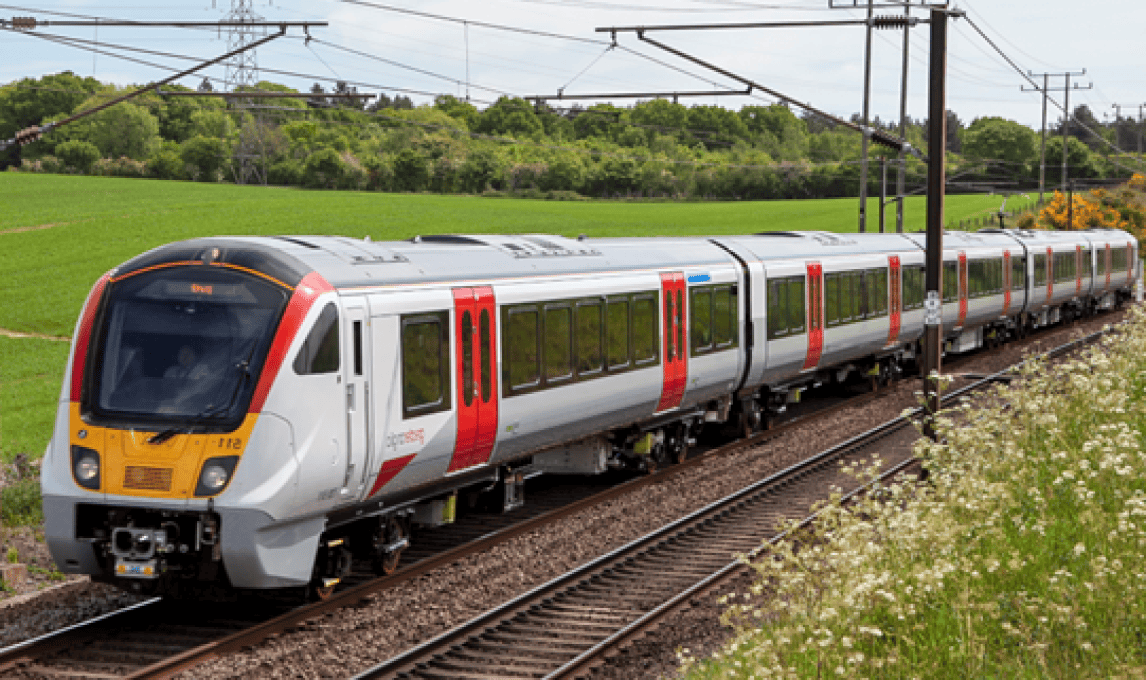
Alstom has secured a 15-year extension to its maintenance agreement with Greater Anglia, covering the operator’s fleet of 133 Class 720 Aventra electric multiple units. The contract, worth approximately £800 million, will keep Alstom responsible for maintaining the trains into the early 2040s, providing continuity for major overhauls, routine maintenance, fault repairs, replacement materials, and reliability improvements. Alstom has not specified a fixed 2041 contract expiry date, and the extension should not be presented as ending in that exact year.
The agreement extends an existing Train Services Agreement rather than placing an order for new rolling stock. Greater Anglia’s 133 five-car Class 720 units are already in operation, forming a fleet of 665 vehicles used on commuter and regional routes across eastern England and Greater London. Angel Trains owns the vehicles, which were manufactured at Alstom’s Derby Litchurch Lane works.
Maintenance will continue at Seven Kings depot in east London, where the company supports the fleet’s operational requirements. Alstom says the extension supports approximately 100 roles and expects to recognise the agreement as an order during the third quarter of its 2026/27 financial year. Those roles relate to continued maintenance activity and should not be interpreted as 100 newly created positions.
The renewed contract covers planned work, including major component overhauls, together with unplanned maintenance and fault rectification. Material supply and reliability growth initiatives also fall within its scope, allowing engineering teams to address defects identified through inspection and operating experience. Alstom has not disclosed a specific new hardware modification programme, so the extension does not establish that particular equipment upgrades have already been commissioned.
Alstom reports that the Class 720 fleet has recently achieved more than 40,000 miles per technical incident, significantly exceeding its contractual reliability requirements. The measure records the distance operated between qualifying equipment incidents. It does not directly describe the number or duration of passenger delays, which also depend on operational conditions and the consequences of individual faults.
Maintaining reliability as the fleet ages will require attention to components that deteriorate at different rates. Traction equipment, braking systems, passenger doors, heating and ventilation, and onboard electrical systems encounter different combinations of mechanical loading, thermal stress, and operating cycles. The inspection interval appropriate for one component may therefore be unsuitable for another, even when both are installed on the same train.
Door equipment is exposed to repeated operating cycles at stations, while traction systems respond to acceleration, vehicle loading, and the conditions encountered during service. Braking equipment experiences frictional and thermal effects that vary with speed, stopping patterns, and the distribution of braking effort. Maintenance planning must account for these differences while minimising the time that complete units are removed from passenger service.
Major overhauls provide opportunities to dismantle, inspect, repair, or replace equipment before deterioration compromises availability. Work may involve removing components from the train for specialist treatment before they are returned to service or replaced by refurbished units. The effectiveness of this approach depends on reliable technical records, appropriate inspection methods, and sufficient workshop and materials capacity.
Unplanned defects create a different operational demand. A failed component can prevent a train from entering service even when the remainder of its systems remain functional, making the availability of compatible replacements important. Long-term materials arrangements can support repair planning, but delays can still arise if a required component is unavailable or a fault proves difficult to reproduce and diagnose.
Reliability improvement work can reduce recurring problems when engineering teams are able to establish the underlying failure mechanism. Fault records from multiple trains may reveal patterns associated with component wear, operating conditions, or maintenance procedures. Any resulting changes must be evaluated against the approved equipment configuration and the operator’s performance and safety requirements.
The Class 720 fleet has moved beyond its initial introduction period. Ordered in 2016, the trains entered service progressively and are now established across Greater Anglia’s network. The maintenance extension carries their engineering support into the next phase of their operating lives, when component overhaul schedules and accumulated equipment history will increasingly influence depot activity.
The trains are also part of a substantial British rolling stock manufacturing programme. Alstom says it has produced 2,660 Aventra vehicles at Derby since 2015 for several UK operators; the wider Aventra fleet has delivered more than 18 billion passenger miles, a figure covering multiple customers rather than solely Greater Anglia. Continued servicing at Seven Kings represents a different industrial activity from train assembly, maintaining demand for specialist technical staff, replacement components, diagnostic equipment, and repair facilities after the original manufacturing work has been completed.
The contract’s financial value therefore describes long-term servicing of existing equipment rather than investment in another production run. Maintenance expenditure extends across the life of a fleet and includes activities that cannot be undertaken economically or reliably as isolated repairs. Coordinating those activities under a long-term agreement provides a framework for meeting availability requirements while planning component replacements over several operating cycles.
Greater Anglia’s intensive timetable also makes fleet availability a practical engineering constraint. When a unit cannot be released from maintenance, the operator must accommodate its absence within the available fleet and service plan. Equipment condition, depot throughput, and the ability to resolve faults before scheduled departures consequently affect the number of trains available for passenger operation.
The agreement has been confirmed as Greater Anglia prepares for its transition into Great British Railways. Martin Beable, chief operating officer at GBR Anglia, has welcomed the continuation of the relationship with Alstom and Angel Trains, identifying further reliability improvements as an objective. The maintenance extension provides contractual continuity during that process without implying that the wider railway reorganisation has already been completed.
It follows separate CrossCountry maintenance and refurbishment contracts involving Alstom, but the agreements concern different fleets and engineering requirements. Greater Anglia’s award relates specifically to the existing Class 720 trains and the maintenance arrangements needed to keep them operating.
With the contract extending into the early 2040s, its performance will be determined by the condition of the fleet, the effectiveness of planned overhauls, and Alstom’s ability to manage faults and replacement materials. The company’s reported reliability figures provide a reference point for that work, rather than a guarantee of future operating performance.