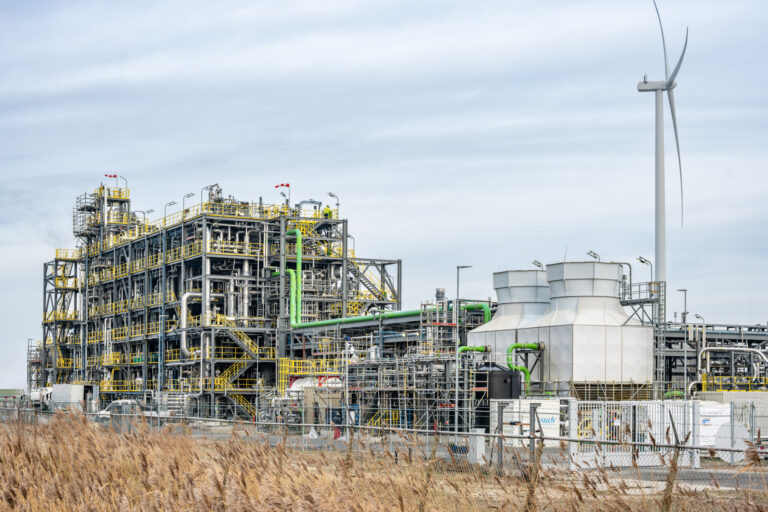
Avantium has completed a €55.45 million equity raise to fund the production ramp-up of its furandicarboxylic acid plant at Delfzijl in the Netherlands, as the renewable chemicals manufacturer prepares for its first commercial product deliveries.
The financing was completed through a fully committed and underwritten rights offering, resulting in the issue of 33,608,956 new ordinary shares at €1.65 each. Existing shareholders subscribed for 28,817,796 shares before the remaining allocation was taken up through the rump offering.
The shareholder take-up rate reached 85.7%, with the transaction completed after the subscription period closed on 10 November. The proceeds are intended to support operations at the Delfzijl facility, customer qualification, and further development of Avantium's technology licensing business.
The financing follows the production of the first FDCA batch at the company's flagship plant in September. That milestone established that the integrated process equipment could manufacture the target chemical, but the facility has not yet demonstrated sustained operation at its full design capacity.
Avantium is now increasing production while establishing the consistency required for commercial supply agreements. The company expects initial deliveries towards the end of 2026, subject to the completion of qualification work and continued successful operation.
The Delfzijl facility is designed to manufacture approximately 5,000 tonnes of FDCA annually. That figure represents its rated production capacity rather than the amount currently being produced.
FDCA is a chemical building block used in the manufacture of polyethylene furanoate, or PEF. Avantium markets its PEF technology under the releaf brand, targeting applications including packaging, films, fibres, and other polymer products.
PEF is manufactured through polymerisation involving FDCA and monoethylene glycol. Its properties differ from those of polyethylene terephthalate, or PET, which is used extensively in conventional packaging and textile applications.
Avantium is seeking to commercialise PEF as a plant-based alternative for selected applications, drawing on characteristics including gas barrier performance and mechanical properties. Those characteristics must be evaluated against the requirements of individual products and manufacturing processes.
The industrial production of FDCA begins with carbohydrate-derived feedstocks. Avantium's YXY technology includes sugar dehydration and oxidation operations, followed by purification to produce material suitable for subsequent polymer manufacture.
These operations must be coordinated because the quality of material leaving one processing stage affects the conditions and output of those that follow. Reaction performance, separation efficiency, equipment reliability, and product purity consequently determine the effectiveness of the complete manufacturing process.
Avantium completed commissioning of the plant's major process units before producing its first FDCA. The purification equipment was the final major unit to complete commissioning, allowing the company to progress from individual system testing to integrated production.
The transition from initial output to commercial manufacture introduces further engineering requirements. Individual production campaigns provide information about process stability, equipment limitations, and how operating conditions influence the quality of the finished chemical.
Increasing throughput can change the behaviour of connected process equipment. Heat transfer, fluid movement, reaction conditions, and separation performance must remain within acceptable limits as production volumes rise.
Engineers also need to demonstrate that the plant can manufacture material consistently across successive operating periods. A successful initial batch does not establish that every subsequent batch will satisfy the specifications agreed with commercial customers.
Product qualification is therefore taking place alongside continued production. Customers intending to manufacture PEF need evidence that FDCA from the industrial facility meets their requirements for purity and other relevant characteristics.
The quality of a polymer's constituent chemicals can influence polymerisation behaviour and the properties of the resulting material. Changes in raw material composition may affect process conditions, making consistency particularly important when introducing a new industrial supplier.
Avantium has existing commercial arrangements with customers interested in FDCA and PEF. Moving towards routine supply requires the company to demonstrate that the manufacturing process can deliver suitable material at the quantities and intervals required.
The completed financing provides additional working capital during this period. Chemical production requires expenditure on feedstocks, utilities, staffing, maintenance, testing, and other operating activities before the resulting material generates commercial revenue.
Plant ramp-up can also require corrective engineering work and changes to operating procedures as equipment performance becomes better understood. These requirements can place additional demands on available capital during the early stages of commercial manufacture.
The project has already experienced commissioning difficulties. Earlier in 2026, Avantium identified construction-related defects affecting titanium welds in process piping, requiring remediation before the affected systems could be brought into operation safely.
Those repairs were completed, and the company subsequently commissioned its remaining major process units. Avantium also concluded contractual close-out arrangements with engineering contractor Worley in September, addressing outstanding matters associated with the construction phase.
The latest equity financing is separate from those engineering milestones. It provides resources for the operating and commercial development now required following the plant's initial start-up.
Tom van Aken, chief executive of Avantium, said: “The funding puts us in a stronger position to execute our business plan.”
The financing will also support the company's licensing strategy. Avantium intends to offer its technology to industrial partners interested in developing additional FDCA and PEF production facilities.
Commercial-scale operating data from Delfzijl will be relevant to those discussions. Potential licensees must assess equipment requirements, process performance, raw material availability, capital expenditure, and the economics of producing FDCA at their proposed locations.
Experience at the flagship plant can help establish the basis for engineering larger or replicated facilities, although each new project would still require site-specific design and qualification.
The company has previously indicated that ramp-up to full design capacity could take approximately 12 to 24 months following plant start-up. The completion of the rights offering does not establish a revised date for reaching that capacity.
Avantium's immediate production objectives remain increasing FDCA output, completing customer qualification, and preparing the first deliveries under its commercial agreements. Performance during sustained operation will determine how quickly the facility progresses towards its intended output and how effectively it supports future technology licensing.