Ori Biotech has expanded its manufacturing partnership with Essex-based Europlaz Technologies to increase production capacity and improve supply continuity for consumables used in cell and gene therapy manufacturing.
The agreement provides dedicated cleanroom resources, access to manufacturing equipment, material holding arrangements, and inventory management capabilities as customers prepare to move from clinical development towards larger-scale commercial production.
Europlaz has supported Ori's consumable development and design for manufacture activities since 2023. The expanded arrangement builds on that relationship, with both companies preparing to meet additional demand arising from partnerships established during 2026.
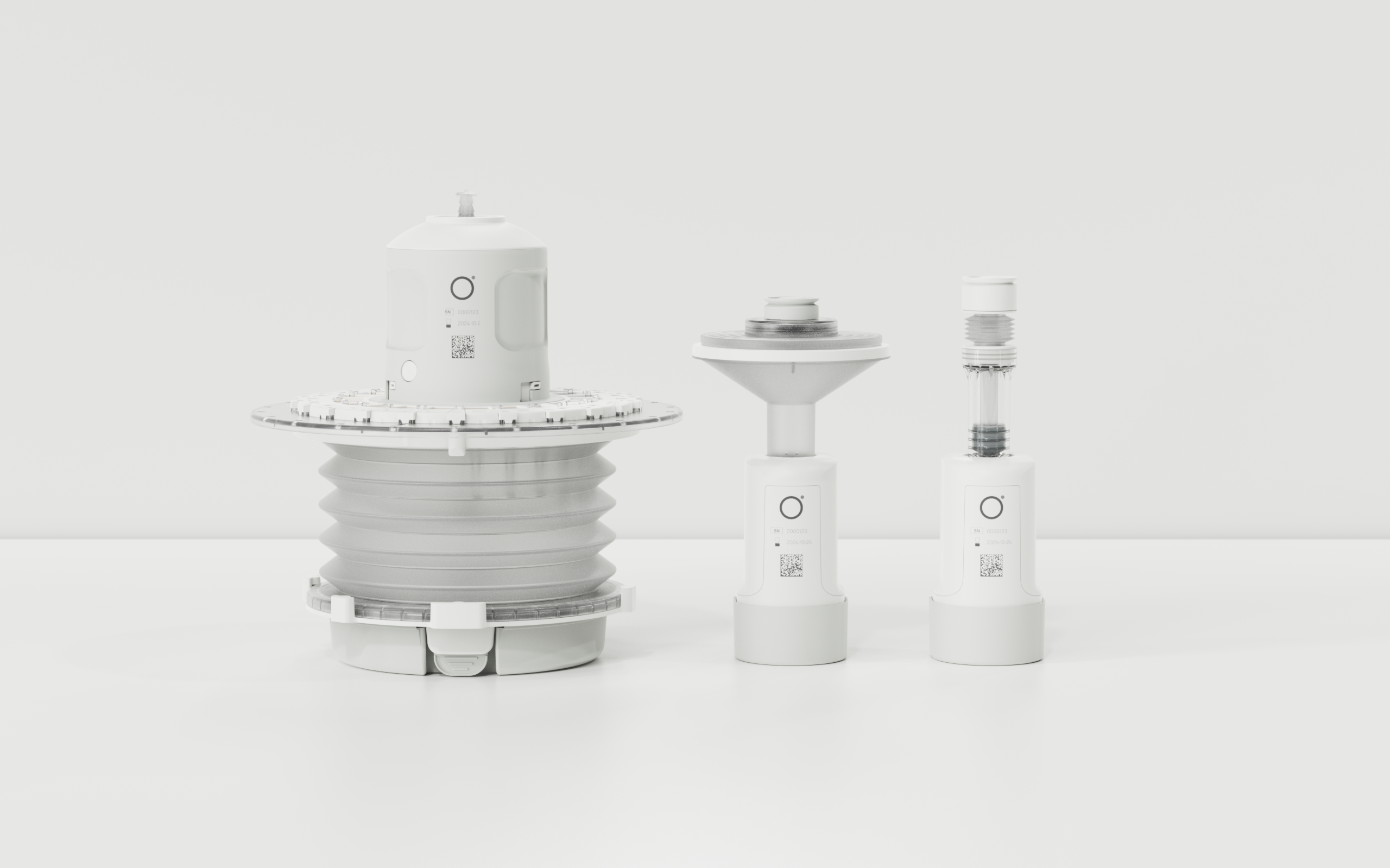
Ori develops the IRO automated manufacturing platform for cell therapies, combining processing equipment, specialised consumables, software, and data management. The consumables provide the physical interfaces required to handle materials during controlled manufacturing operations.
Components in the IRO consumable family are injection moulded and assembled in an ISO Class 7 cleanroom under an ISO 13485 quality management system. The arrangement is intended to provide manufacturing controls suitable for customers developing therapies under good manufacturing practice requirements.
The production requirements differ from those of many conventional industrial consumables because individual cell therapy manufacturing runs can be associated with a specific patient.
Autologous therapies use cells collected from the person who will eventually receive the treatment. Those cells are processed, expanded, or modified before being prepared for administration, creating a manufacturing process in which material identity and traceability are particularly important.
A delay affecting one batch can have consequences beyond ordinary production scheduling. The availability of suitable processing equipment and consumables must be coordinated with the collection, manufacturing, testing, and delivery arrangements associated with the therapy.
Jason C. Foster, chief executive of Ori Biotech, said: “A delay in a single critical consumable can mean a delay in treatment for someone whose life is in the balance.”
Ori says that recent consumable shortages elsewhere in the industry have reinforced the importance of maintaining reliable supplies. The company has developed a structured programme covering critical materials, suppliers, logistics, and manufacturing locations to manage the risks associated with these dependencies.
The Europlaz agreement extends that programme into physical manufacturing capacity. Dedicated cleanroom space and equipment availability are intended to give the partners greater flexibility as demand changes and new customers progress through clinical development.
Injection moulding is central to the production of many medical consumable components. Polymer material is heated and introduced into a mould, where it takes the required geometry before cooling and being removed for subsequent processing.
Repeatability depends on controlling the tooling, polymer grade, processing temperature, pressure, cooling conditions, and handling of the finished component. Variations can affect dimensional characteristics or other properties required for the assembly to function correctly.
Where components form part of a closed fluid handling arrangement, the quality of sealing interfaces and connections can be particularly important. Dimensional deviations may affect assembly performance, while unsuitable material selection can create compatibility problems with the fluids used during processing.
Manufacturing therefore requires controls extending from the incoming polymer through moulding, inspection, assembly, and final packaging. The appropriate acceptance criteria depend on the design and specified use of each consumable.
Europlaz operates medical device manufacturing facilities in Southminster, including ISO Class 7 cleanrooms used for controlled moulding and assembly activities. Its wider capabilities cover tooling, component manufacture, validation, packaging, and supply chain management.
Cleanroom classification establishes limits for airborne particulate concentrations under defined conditions. It does not, by itself, guarantee that a component is sterile or suitable for use in every cell therapy manufacturing process.
Microbiological controls, material compatibility, cleaning, packaging, and any applicable sterilisation requirements must be assessed separately against the intended product specification.
Ori and Europlaz report that their quality arrangements include inspection procedures, environmental monitoring for particulates and bioburden, and documented controls covering manufacturing changes.
These measures provide evidence about the conditions under which components are produced and help manufacturers identify variations before products enter downstream processing.
ISO 13485 provides a quality management framework associated with medical device manufacturing. Its requirements include controls over documentation, suppliers, manufacturing processes, traceability, and corrective action.
Operating under that framework supports consistent production, but certification to a quality management standard should not be confused with approval of a particular therapy or certification that every completed consumable is suitable for all clinical applications.
Customers must still establish that the selected components meet their manufacturing requirements and are appropriately qualified within the process used to produce the therapy.
Changes to the consumable supply chain can create additional work after a therapy production process has been established. A different material, moulding procedure, supplier, or assembly method may require assessment to determine whether the finished product remains equivalent to the previously qualified component.
Documented change control helps address that issue by recording proposed modifications and ensuring that customers receive relevant information before changes affecting their process are introduced.
The expanded partnership also includes material holding and inventory arrangements intended to reduce exposure to short-term supply disruption.
Maintaining suitable stock can provide flexibility when demand increases or procurement lead times change, although inventory levels must be balanced against storage requirements, material shelf life, and the need to maintain traceability.
Supplier monitoring provides an additional control. Tracking delivery performance, quality findings, and material availability can identify developing constraints before they interrupt the production schedule.
Ori has established formal business continuity arrangements covering suppliers, manufacturing sites, logistics, and critical materials. These controls are intended to support customers whose development or commercial manufacturing programmes depend on a reliable flow of consumables.
Europlaz's manufacturing and supply chain activities include procurement, vendor qualification, controlled storage, material traceability, and production planning. Bringing these functions together reduces the number of separate organisations involved in certain stages of component manufacture and distribution.
That integration does not eliminate supply risk, but it allows more of the production sequence to be coordinated through a common set of manufacturing and quality controls.
The partners have not disclosed the financial value of the expanded agreement, the additional number of consumables expected to be produced, or a new employment target.
Capacity will be increased in response to customer requirements as more IRO programmes progress towards commercial production. The manufacturing arrangements are intended to support that growth while maintaining component quality, traceability, and continuity of supply.