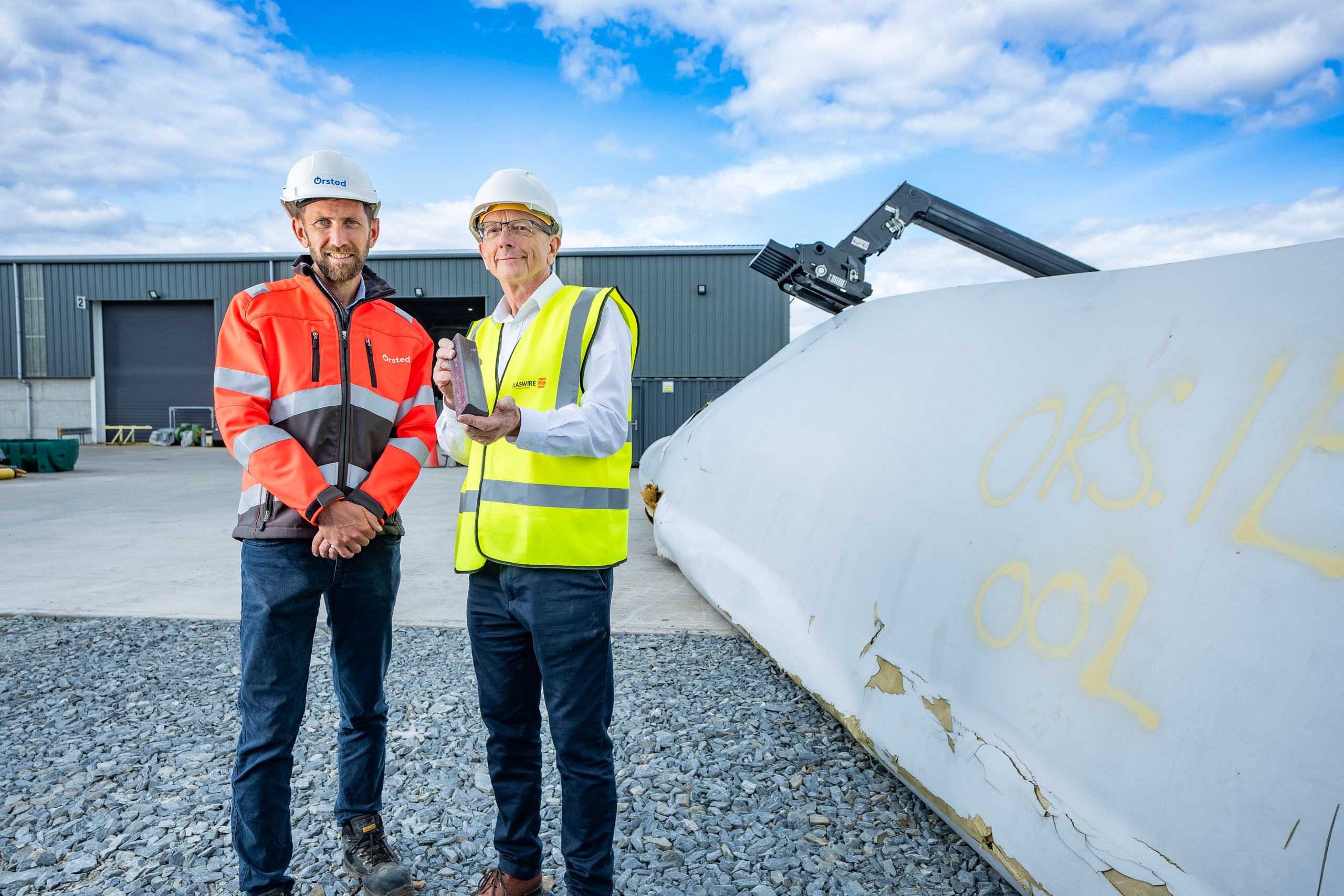
Plaswire, the Northern Ireland-based recycling technology company, has signed a memorandum of understanding with the Port of Inverness to explore development of a wind turbine blade and composite materials recycling facility in the Scottish Highlands. The planned operation could support approximately 70 jobs when operating at its intended capacity; those positions have not yet been created. The agreement establishes the intended project and the basis for further development; it does not mean a new industrial recycling facility has already been commissioned or begun processing blades.
The memorandum of understanding sets out a proposed collaboration between Plaswire and the Port of Inverness, not a binding construction award or proof that a facility has been financed and built. The proposed operation would address a growing waste-management problem for the wind industry. Turbine blades are generally manufactured from fibre-reinforced composites, designed to tolerate repeated aerodynamic loading and exposure to the elements over years of operation. Those same properties make the structures difficult to process when blades are retired, replaced, or rejected during manufacture.
Plaswire’s announcement sets out a planned industrial recycling approach for material that has traditionally presented difficulties for conventional mechanical recovery. Any expected processing volumes, recovery rates, environmental savings, or job numbers remain projections until the required plant is built, commissioned, and operated at a measured throughput.
The project has particular relevance to Scotland’s established onshore wind fleet and its developing offshore supply chain. As turbine installations age, operators must assess whether blades can be repaired and continue in service or whether removal and replacement are necessary. Decisions depend on the condition of the laminate, structural integrity, turbine design, and the economic and engineering requirements of each site.
Composite blades cannot generally be recycled in the same way as homogeneous steel or aluminium structures. They contain reinforcing fibres embedded in a polymer matrix, often alongside core materials, adhesives, coatings, and metallic fittings. The combination of materials provides strength and stiffness at comparatively low mass but complicates separation after the component has reached the end of its useful life.
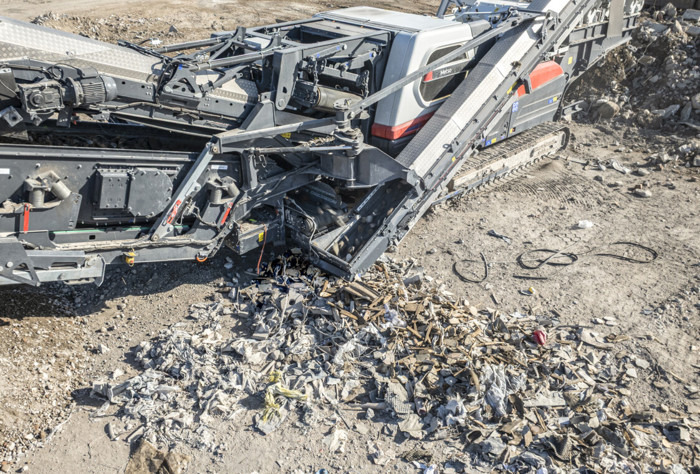
Cutting and shredding can reduce a blade into pieces that are easier to transport or use as filler, but size reduction alone does not restore continuous reinforcement fibres or recover the original resin. Higher-value recovery depends on the chosen process, the condition of the incoming material, contamination control, and whether potential buyers can use the resulting product consistently.
Large blade sections also create logistics constraints before processing begins. Their length, shape, and mass make transport more complex than for most routine industrial scrap. Operators may need to cut components near the point of removal, assess lifting arrangements, and coordinate specialised vehicles and handling facilities before material can reach a recycling site.
The location of a processing facility therefore affects the economics of recovery. Bringing material to a regional operation can shorten some movements, but the net benefit will depend on collection distances, processing energy requirements, material yields, and the destinations of any recovered products. These factors must be assessed rather than assumed from the location alone.
Industrial acceptance will depend partly on establishing specifications for the incoming blades. Different generations of turbine equipment use different resin systems, fibres, core materials, and manufacturing methods. A process suitable for one laminate may require adjustment or additional pretreatment when other materials arrive.
Feedstock records and inspection can reduce uncertainty. Where the original blade design and constituent materials are known, operators can separate incoming material into more consistent categories. Poorly characterised mixtures may complicate process control and reduce the predictability of the recovered material.
Recovery technologies must also manage coatings, adhesives, and inserts. Metallic fixings can interfere with cutting or downstream treatment, while surface layers and residual contamination can affect the quality of recovered products. Preparing blades for processing may therefore involve a combination of dismantling, sorting, size reduction, and material-specific treatment.
The intended uses for recovered fibres or other outputs will influence how the eventual installation is configured. Some applications can tolerate shorter reinforcement fibres or mixed material, while structural products may impose stricter requirements for mechanical properties and consistency. Producing saleable material is a separate test from demonstrating that a blade can be broken down.
Evidence of commercial operation will require more than an announced partnership. The project must advance through engineering design, site preparation, equipment procurement, regulatory requirements, and commissioning before production figures can be established. Once the equipment is operating, measurements of intake, recoverable output, reject material, energy use, and system availability will provide a clearer assessment of performance.
Environmental claims will also depend on the full process boundary. Avoiding landfill or displacing virgin material can offer benefits, but transport, pretreatment, processing inputs, and management of residual fractions must be taken into account. Forecast reductions should be attributed to the project proponents until they are supported by independently measurable operating results.
The potential market extends beyond blades removed at the end of service. Manufacturing rejects, installation damage, and components replaced following inspection may all create composite waste, although their availability and composition will vary. A regional facility would require reliable collection arrangements and enough appropriate material to sustain production at its planned scale.
Developing that supply chain involves coordination between turbine owners, maintenance providers, demolition and removal contractors, logistics operators, and processors. Each party must understand how blades will be handled, recorded, transferred, and accepted. The intended recycling operation cannot establish reliable throughput unless the upstream collection system is also developed.
Wind operators will continue to face choices between repair, reuse, and disposal according to the condition and suitability of individual components. Recycling represents one possible route when repair or reuse is no longer practical, but it does not remove the need for careful assessment before a blade is taken out of service.
Plaswire’s Inverness agreement is an early development milestone within that longer industrial chain. The next substantive evidence will be progress on the facility itself, details of installed processing equipment, secured material supplies, and verified performance once commissioning has taken place. Until then, the announced recycling capacity and expected environmental outcomes remain plans rather than achieved results.