Siemens will combine Customer Services, Factory Automation, Motion Control, and Process Automation into a single Automation organisation from 1 October. The restructuring brings much of the group’s industrial control, drives, process systems, and lifecycle support under one management structure as software, artificial intelligence, and automation hardware become more tightly connected.
The new organisation will be led by Rainer Brehm, currently chief operating officer for automation within Siemens Digital Industries and its chief technology officer. Brehm previously led the Factory Automation business and will report to Cedrik Neike, Siemens managing board member and chief executive of Digital Industries. His appointment accompanies a structural change involving four substantial operating activities rather than standing as the main development itself.
Factory automation typically centres on programmable controllers, industrial computing, machine control, distributed I/O, and engineering software, while process automation has different requirements around continuous and batch production, instrumentation, plant availability, and distributed control. Motion control adds drives, motors, and precision positioning, while Customer Services supports installed equipment across its operating life. Combining those disciplines creates a wide technical span, but it also reflects how difficult it has become to separate their digital layers cleanly.
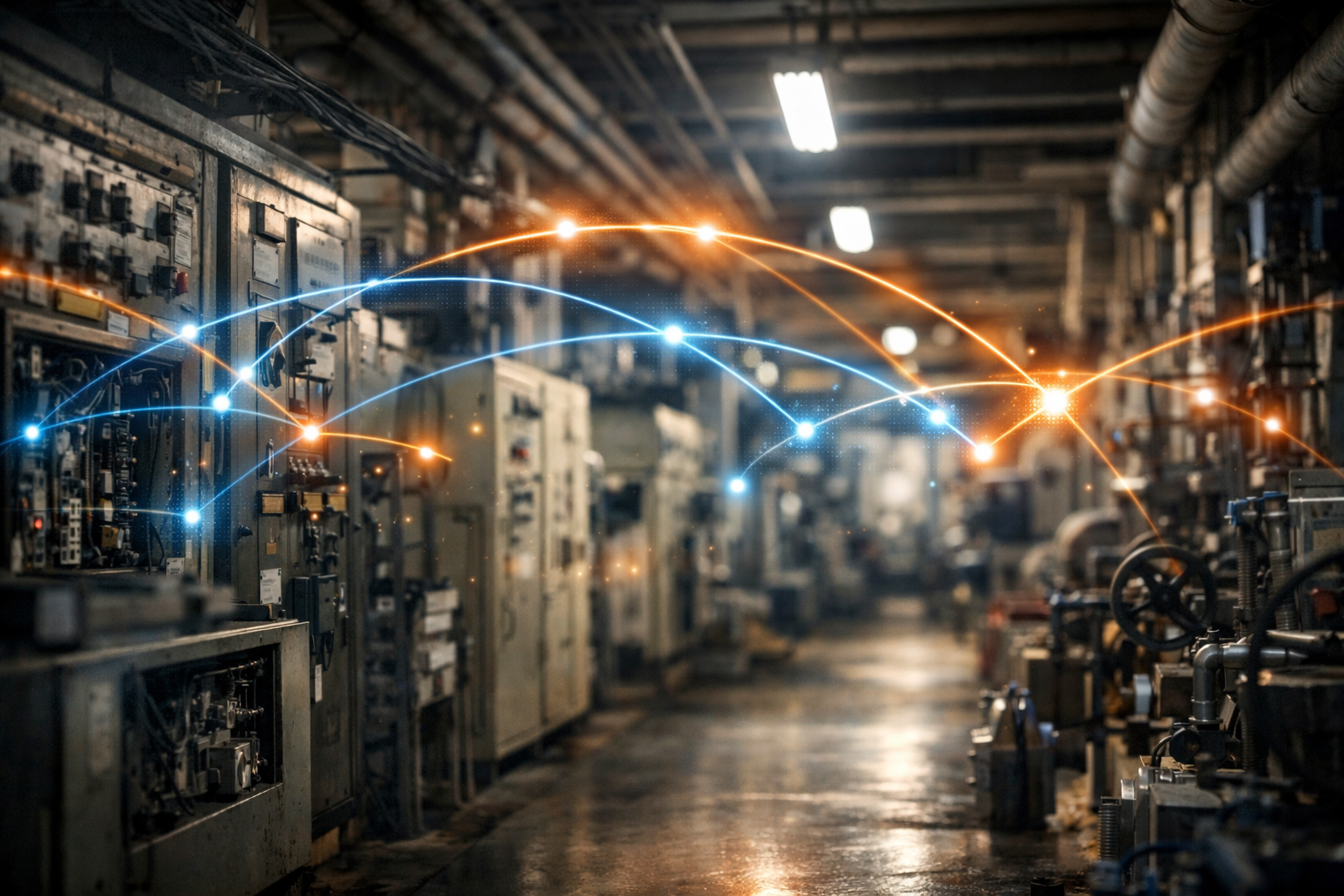
Modern production lines increasingly exchange information between machine control, drives, vision, manufacturing software, data platforms, and maintenance systems. Industrial AI adds another layer because models intended to optimise equipment or assist operators need access to reliable operating data and a route back into the automation system. Software-defined automation is pushing in the same direction by moving more control functions away from hardware-specific implementations towards systems that can be configured, updated, and managed through software.
The organisational question is whether consolidation reduces the internal boundaries customers encounter when building those systems. A manufacturer commissioning a new line may require PLCs, motion control, industrial networks, software, engineering support, lifecycle services, and AI-enabled applications as one operating environment. Separate product organisations can retain deep technical expertise, but they can also produce overlapping roadmaps and integration work that ultimately lands with the machine builder or end user.
The restructuring follows a strong financial period for Siemens’ industrial businesses. Siemens recently reported record industrial-business profit and a €132 billion order backlog, with factory automation among the areas benefiting from improving demand. That backdrop gives the company scope to reorganise around technology convergence without presenting the move as a response to a collapsing automation market.
The harder work begins after the reporting lines change. Factory and process customers often operate on very different equipment lifecycles, qualification requirements, safety architectures, and maintenance schedules. A packaging machine may be redesigned every few years, while a chemical plant control system can remain in service for decades; motion-control users may judge technology by cycle time and positioning accuracy, whereas process operators place greater emphasis on availability, redundancy, and controlled change.
A single Automation organisation therefore has to create common technology where commonality adds value without flattening the distinctions between those markets. Shared software engineering, cybersecurity, data handling, AI tooling, and lifecycle services offer obvious areas for consolidation. The underlying control architectures still need to meet the performance and risk requirements of their individual applications, particularly where failures can stop a continuous process, damage equipment, or create a safety hazard.
Siemens has explicitly tied the new structure to industrial AI and software-defined automation, both of which are becoming central to its Digital Industries strategy. AI-assisted engineering can reduce configuration work, while machine-learning applications can support inspection, maintenance, process optimisation, and operator decision-making. More autonomous production requires those capabilities to interact with the control layer rather than remaining separate analytics projects sitting above the plant.
That makes organisational integration more than an administrative exercise if it changes how products are engineered and supported. A unified business could make it easier to coordinate controllers, drives, software, industrial AI, and services around common platforms, but customers will judge the result on compatibility, engineering effort, lifecycle support, and whether existing investments remain usable. Industrial users are rarely enthusiastic about architectural neatness if achieving it requires unnecessary plant migration.
The new organisation takes effect on 1 October. From that point, Siemens will have a single management home for four activities covering much of the path from industrial control hardware through motion, process systems, and installed-base support. The structure is simpler on paper; whether it becomes simpler in an engineering office or control cabinet will depend on the product roadmaps, interfaces, and migration decisions that follow.