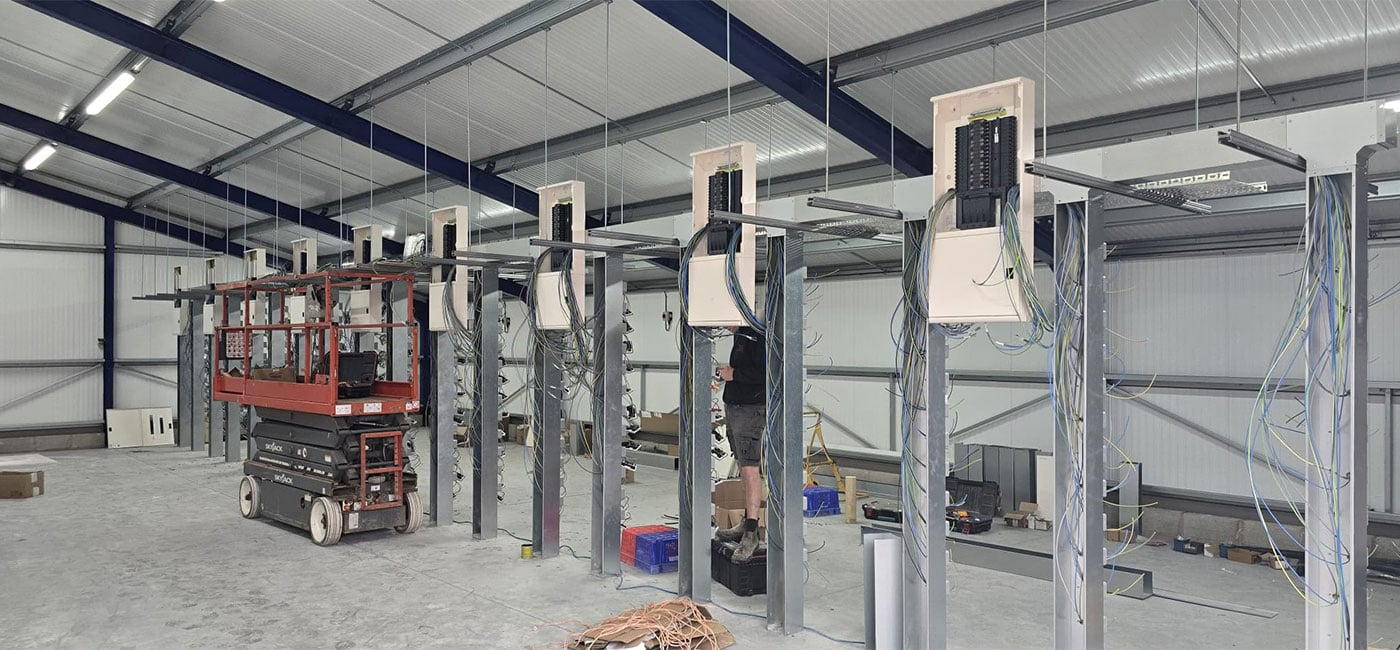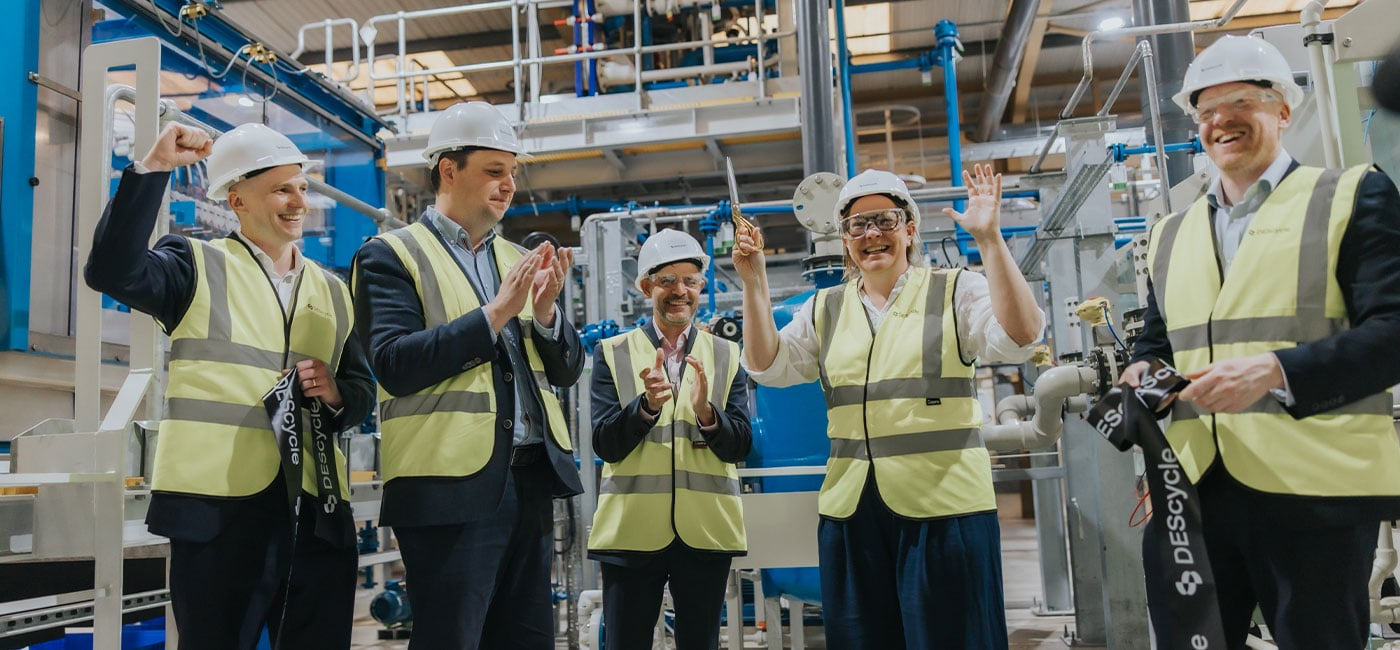
DEScycle has opened a demonstration plant at the Wilton Centre in Teesside, moving its metals recovery technology from pilot work into an operational industrial environment.
Designed to process complex electronic waste, including printed circuit boards containing metals, polymers, glass fibres, and other composite materials, the plant will initially recover gold, copper, silver, and palladium. It will also provide the operating data required to assess how consistently the process performs across varied commercial feedstocks.
Built around 250kg batches, the installation is expected to process between 50 and 100 tonnes of material annually during its demonstration phase. DEScycle says the project has reached Technology Readiness Level 7, placing the technology beyond laboratory validation and into sustained operation under industrial conditions.
Its process uses proprietary chemistry to separate and recover metals at lower temperatures than conventional pyrometallurgical routes. Smelting remains effective at handling mixed material, but it requires substantial energy input, while established hydrometallurgical systems can depend on aggressive acids and complex downstream treatment. DEScycle is seeking to establish a route that operates closer to sources of waste while producing material suitable for onward refining or reuse.
The opening follows trials in which Cisco equipment was used to test recovery against commercially relevant electronic hardware. Those trials provided representative feedstock and helped establish how the chemistry behaved beyond carefully prepared laboratory samples.
With the Wilton Centre plant now operational, the company can collect longer-term measurements covering throughput, reagent use, energy demand, metal yield, product purity, equipment availability, and batch-to-batch consistency. Those figures will determine whether the process can support larger centralised installations or smaller distributed plants configured around defined regional waste streams.
Electronic waste contains valuable concentrations of industrial metals, although recovery is complicated by constant variation in product design. Component populations, solder systems, coatings, substrates, adhesives, and enclosure materials differ across equipment generations, which means feedstock classification and preparation can influence plant performance as heavily as the extraction chemistry itself.
A distributed model could reduce the distance over which mixed electronic waste is transported and retain a greater proportion of processing value close to where equipment is collected. Plants could also be configured around particular streams, such as telecommunications hardware, data centre equipment, automotive electronics, or industrial control systems, rather than accepting an unrestricted mixture of discarded products.
Smaller facilities still require the same engineering discipline as larger recycling operations. Reliable material handling, emissions control, chemical management, worker protection, effluent treatment, residue handling, and product quality cannot be relaxed simply because the plant is modular or geographically distributed.
Feedstock security will shape the commercial model alongside technical performance. Recycling plants need predictable volumes and an understanding of material composition, while electronics manufacturers and asset operators increasingly want documented recovery routes for redundant equipment. Long-term agreements may therefore be needed to provide the plant with sufficient material while giving suppliers traceability over where valuable metals are recovered.
The plant begins operating as manufacturers seek more secure access to copper and specialist metals required for electrification, renewable energy equipment, digital infrastructure, and advanced electronics. Secondary recovery cannot replace primary mining, but it can reduce material losses and provide an additional source of supply when several industrial sectors are competing for the same resources.
Commercial expansion will require evidence that recovered products meet buyer specifications without excessive additional processing. Reagent recovery, equipment corrosion, maintenance frequency, residue composition, and the handling of contaminants will influence whether the process can compete with established recycling routes once all operating costs are included.
Repeated operation will also expose the effect of variable feedstock on product quality. A process that performs strongly on a selected batch of circuit boards may behave differently when material contains alternative flame retardants, greater proportions of plastics, different solder alloys, or higher concentrations of unwanted metals.
Teesside provides an appropriate location for that development work because the surrounding industrial cluster offers access to process engineering expertise, chemical handling infrastructure, analytical capability, and potential commercial partners. The site also places the project within a region seeking to replace declining heavy industrial activity with lower carbon processing and advanced materials operations.
DEScycle’s immediate task is to turn a successful plant opening into a stable production record. If throughput, recovery, and product quality remain consistent across sustained campaigns, the company will have the evidence required to design a repeatable commercial installation rather than another enlarged pilot.