DeepOcean has completed subsea decommissioning work for Spirit Energy at the Seven Seas and Grove West fields in the southern UK North Sea.
Covering engineering, project management, tooling, vessel services, and offshore execution, the campaign included recovery of a wellhead protection structure weighing more than 100 tonnes and removal of associated subsea infrastructure.
At Seven Seas, the protection structure was lifted from the seabed and recovered aboard the Edda Freya construction vessel. The operation required detailed lift engineering, confirmation of the structure’s condition, assessment of its actual submerged weight, and close control as the load passed through the splash zone.
Supporting piles were cut below the seabed to meet clearance requirements. Removing the remaining steel several metres beneath the mudline reduces the risk of interference with fishing equipment, future seabed use, or environmental monitoring once the site has been closed.
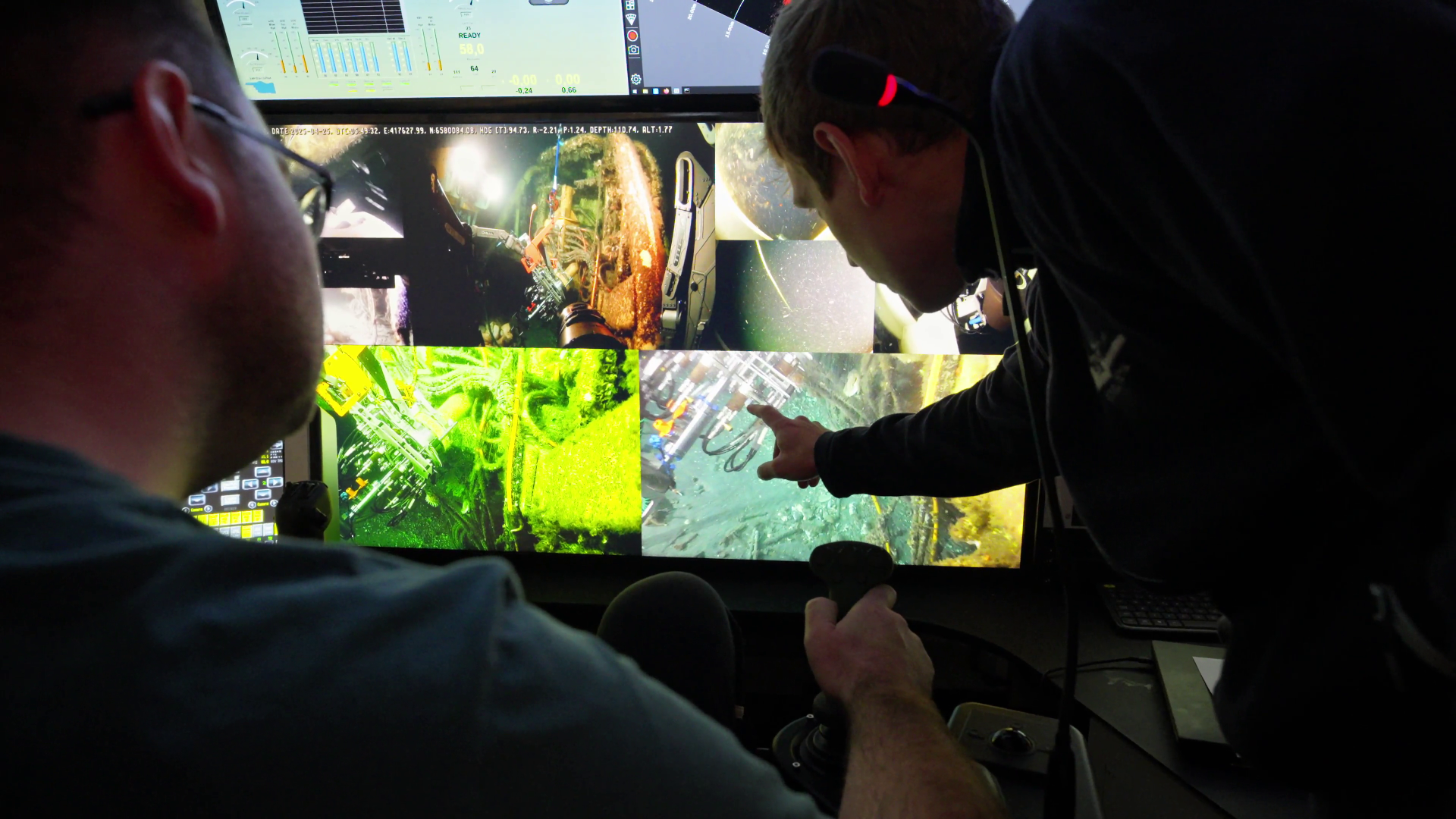
At Grove West, an intervention class remotely operated vehicle used specialist tooling to disconnect a spool from a subsea Christmas tree. Completing the work remotely avoided conventional diver intervention and prepared the installation for a later rig-based campaign.
Remote intervention reduces human exposure to offshore hazards, although it transfers complexity into tooling design, controls, imaging, communications, and contingency planning. Equipment must operate reliably in limited visibility while delivering enough force and positional accuracy to release connections that may have remained untouched for years.
Older subsea equipment can also differ from its original drawings after decades of operation. Corrosion, marine growth, sediment movement, previous repairs, and undocumented modifications may all change how a component can be accessed, cut, disconnected, or lifted.
Decommissioning plans therefore require alternative tooling and recovery methods before the vessel leaves port. A seized connector or inaccessible fastening can delay an entire campaign when the required cutting or intervention equipment is not already onboard.
Material recovered during the work will be assessed for reuse or recycling where practical. Once equipment reaches shore, traceability becomes important because contaminated components, mixed metals, coatings, elastomers, and residual fluids may require different processing routes.
The campaign follows a wider increase in North Sea recovery work, including another programme covering the removal and recycling of redundant subsea equipment. Operators are increasingly grouping compatible scopes to make better use of specialist vessels, remotely operated systems, tooling, and engineering teams.
As mature fields reach the end of production, decommissioning is becoming a larger component of offshore expenditure. The work extends well beyond lifting equipment from the seabed and includes well isolation, cleaning, flushing, disconnection, structural analysis, waste classification, environmental surveys, onshore dismantling, and preservation of records demonstrating that liabilities have been addressed.
Vessel efficiency has a substantial influence on project cost because construction vessels, heavy lift equipment, ROV spreads, and specialist crews all carry high daily rates. Combining several tasks into one campaign can reduce mobilisation time, although delays at one location can then affect the wider schedule.
Weather remains another constraint, particularly during lifts that require narrow limits for wave height, wind, and vessel motion. The condition of the asset may be uncertain until it is inspected subsea, which leaves project teams balancing detailed preparation against information that can only be confirmed offshore.
Historical data quality often determines how much contingency must be carried. Operators may have good production and maintenance records, but the measurements needed for a removal lift were not always collected when equipment was installed. Surveys, digital models, and improved material records can narrow that uncertainty, although physical inspection remains necessary before critical cuts or lifts are made.
Remote systems will take on a greater share of the work as machine vision, force feedback, subsea metrology, and manipulator capability improve. Those technologies can extend the range of operations completed without divers, but they still require robust fallback arrangements when a damaged interface or seized component defeats the planned method.
DeepOcean’s work at Seven Seas and Grove West combined conventional heavy lifting with targeted robotic intervention under one engineered scope. Integrating those methods can shorten offshore campaigns and leave installations ready for subsequent well activity without mobilising separate spreads for each stage.
The growing volume of North Sea decommissioning will continue to test vessel availability, specialist labour, waste handling capacity, and the quality of historic asset information. Contractors able to standardise tooling and recovery methods across several fields will be better placed to control cost as the workload becomes a sustained industrial programme rather than a series of isolated removals.