Quantinuum, Rolls-Royce, Riverlane, and EPCC have formed a multi-year collaboration to examine whether quantum computing can support demanding industrial design and simulation work.
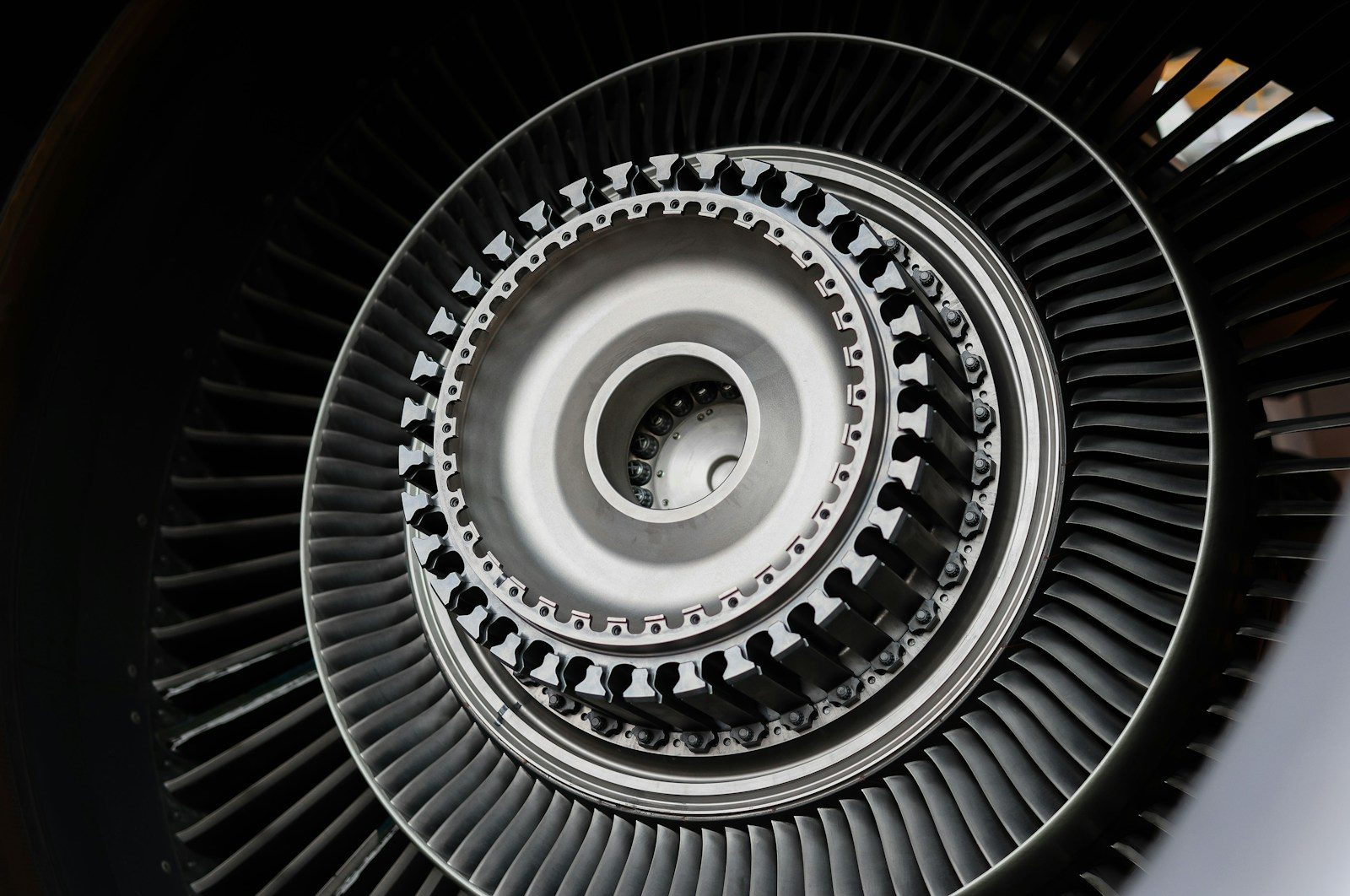
Gas turbine fluid dynamics will provide the first engineering case, with Rolls-Royce supplying representative industrial problems while Quantinuum contributes quantum hardware and software. Riverlane will provide quantum error correction expertise, and EPCC will examine how quantum resources can be connected with established high performance computing infrastructure.
Turbine development already depends on computational fluid dynamics, combustion analysis, thermal modelling, materials simulation, and structural assessment. As engineers add geometric detail, turbulence, chemical reactions, temperature variation, and transient operating conditions, the computational burden increases sharply.
Rather than attempting to replace conventional supercomputers, the partners will investigate hybrid workflows in which separate elements of a calculation are assigned to the most suitable architecture. Classical systems would continue to handle geometry, data preparation, optimisation, visualisation, and the bulk of established numerical processing.
Quantum processors may eventually contribute to selected optimisation, chemistry, linear algebra, or sampling tasks, although current machines remain restricted by error rates, logical qubit capacity, and the overhead required to prepare and retrieve useful data. Riverlane’s involvement reflects the scale of the correction problem that must be solved before quantum systems can perform calculations with sufficient depth and reliability.
EPCC will bring experience of integrating emerging computing systems with national supercomputing facilities and established research workflows. Industrial simulation environments contain validated solvers, material databases, geometry tools, data management systems, and certification records developed over decades, so any quantum component must connect with those systems without undermining traceability.
The programme sits within a broader effort to establish a manufacturing and computing base for quantum technology. Europe has also begun developing a pilot production line for neutral atom quantum systems, addressing the need for scalable hardware, specialist components, packaging, control electronics, and repeatable assembly.
Rolls-Royce’s engineering cases will allow candidate algorithms to be compared against existing high performance computing methods using the same boundary conditions and performance measures. Accuracy, execution time, resource requirements, and the effort needed to prepare each calculation can then be assessed against a mature industrial baseline.
Faster execution alone would not justify adoption. Simulation results used in aerospace and power generation must remain reproducible, explainable, and sufficiently accurate to support decisions affecting component geometry, cooling arrangements, material selection, maintenance intervals, and safety margins.
Physical testing will continue to form part of that validation chain, particularly where calculations influence certified products. Quantum-assisted methods would have to demonstrate that they preserve or improve correlation with experimental results rather than merely generate an answer more quickly.
Early applications are likely to occupy narrow parts of a larger design loop. These could include optimisation across a large parameter space, examination of molecular behaviour within high temperature materials, or acceleration of mathematical operations that recur inside conventional solvers.
Even limited gains could shorten development cycles when engineers are evaluating thousands of design alternatives, but those gains must be measured after data transfer, error correction, software development, queue times, and verification have been included. A nominally faster processor can lose its advantage if the surrounding workflow becomes more cumbersome.
Industrial adoption will also require stable access to hardware. Engineering organisations cannot base programme schedules on experimental systems whose availability, performance, or software interfaces change unpredictably, particularly when several design teams need to reproduce the same result months apart.
By supplying domain expertise, Rolls-Royce can keep the programme tied to calculations that have recognisable engineering constraints. Quantinuum and Riverlane can then identify which elements may become tractable as hardware and logical qubit performance improve, while EPCC can determine how those resources would operate alongside conventional computing capacity.
Gas turbine design will not move wholesale onto quantum hardware, and the collaboration has not been structured around that assumption. Its purpose is to identify where the technology could enter the workflow, which calculations are suitable, and what performance threshold must be reached before deployment becomes technically and commercially credible.
Anchoring the work in a demanding industrial case should produce a clearer measure of progress than isolated benchmark demonstrations. Turbine simulations already operate against stringent requirements for accuracy, speed, validation, and engineering control, leaving little room for theoretical advantage that disappears when the full workflow is considered.