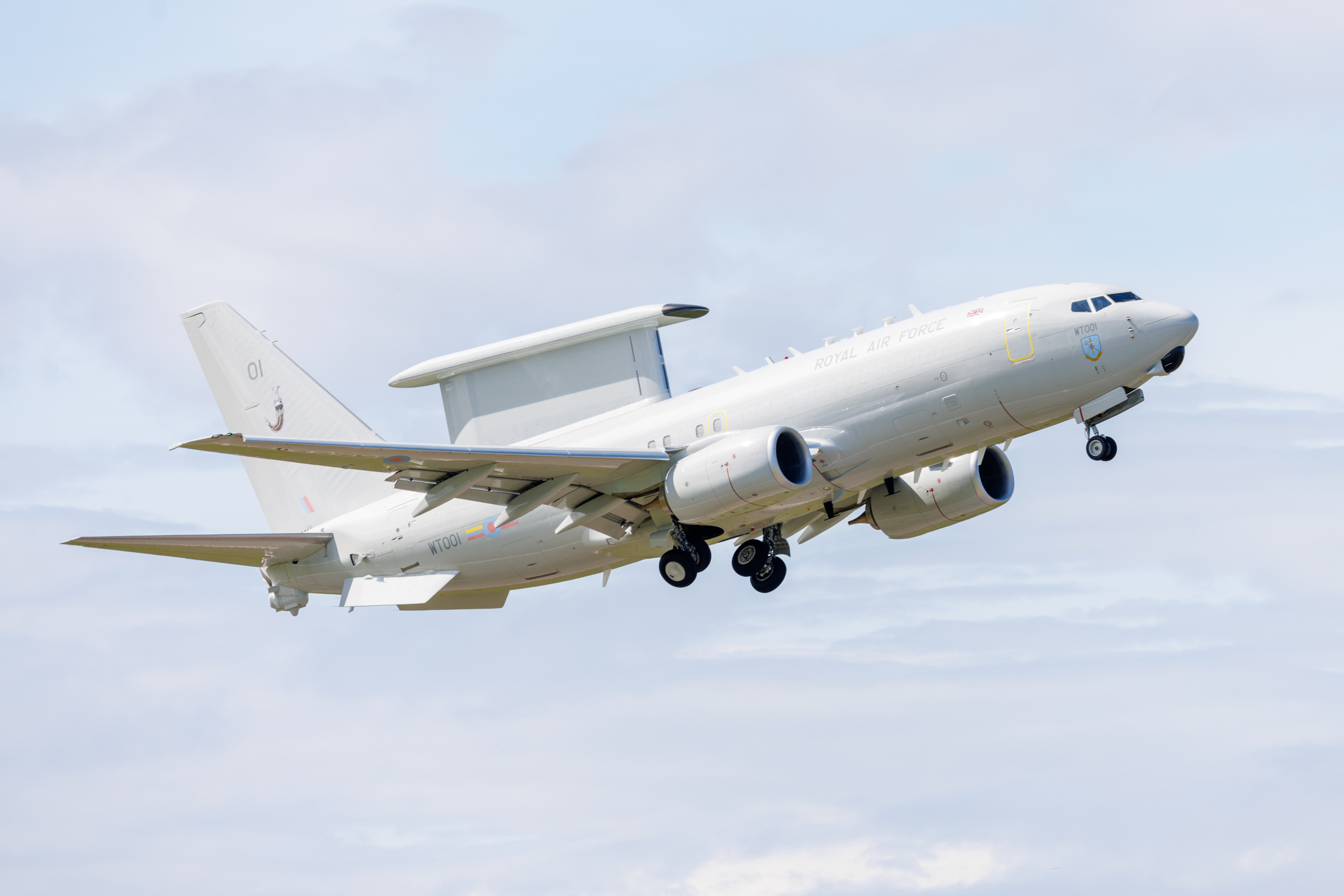
Boeing Defence UK has deployed additional engineers and test personnel to RAF Lossiemouth as the first British E-7 Wedgetail moves through its final ground and flight assessment programme.
Having completed systems activation, modification work, and radar evaluation at Boscombe Down, the aircraft has arrived at its future operating base in Scotland. Activity at Lossiemouth will prepare the platform for Royal Air Force handover while establishing the engineering routines required for operational service.
Derived from the Boeing 737 Next Generation airframe, the E-7 incorporates a Multi-role Electronically Scanned Array radar mounted above the fuselage. The aircraft is designed to provide airborne surveillance, command, and battle management, allowing its crew to detect and track aircraft while coordinating activity across a wide operating area.
Final assessment will cover aircraft systems, mission equipment, software, communications, radar performance, and the interaction between the modified airframe and its specialist installations. Ground testing will also confirm maintenance access, diagnostic procedures, technical documentation, and the support arrangements required before regular operation begins.
Lossiemouth already hosts Boeing’s UK support operation for the RAF P-8A Poseidon fleet, with more than 200 company personnel providing maintenance, training, technical services, and supply support. The incoming E-7 team can therefore draw on an established workforce familiar with a related Boeing airframe, military maintenance requirements, and the operating environment at the station.
Airframe commonality should simplify some elements of support, but the Wedgetail’s radar installation, operator stations, mission computing, cooling equipment, power demand, and communications systems create a distinct maintenance burden. Technicians will require platform-specific training, tooling, spares, test equipment, and access to specialist mission system expertise.
The transition from development testing to operational support is one of the most demanding phases of a military aircraft programme. Engineering teams must resolve remaining defects while configurations are frozen, documentation is brought under formal control, and modifications introduced during testing are reflected across spares, simulators, maintenance instructions, and training material.
A relatively small fleet places additional pressure on reliability because the loss of one aircraft can remove a substantial share of available capacity. Maintenance planning, repair turnaround, component stocks, and access to suitably cleared specialists consequently have a direct influence on the capability available to the RAF.
Modification and testing work also feed into the wider British aerospace supply chain. Infrastructure, training, logistics, software, systems integration, and through-life support can provide a more sustained workload than the original conversion phase, provided technical capability remains close to the aircraft throughout its service life.
Software will form a growing proportion of that workload. Radar processing, communications, electronic support, data fusion, and operator interfaces will continue to evolve after entry into service, creating a recurring need for controlled updates and configuration assurance.
Each software change must be tested against the wider mission system and introduced without compromising interoperability with allied platforms. In a surveillance aircraft, changes to one processing function can affect how information is displayed, shared, classified, or passed to other assets.
Housing both Wedgetail and Poseidon at Lossiemouth may allow parts of training, logistics, and airframe support to be consolidated, although mission-specific activity will continue to demand separate secure facilities, technical data, and specialist personnel.
Experience gathered during the final test programme will shape those arrangements. Faults found during late-stage flying provide valuable evidence about diagnostic access, spares consumption, software behaviour, and the time required to restore an aircraft after an unscheduled defect.
Embedding future support personnel within the test organisation helps retain that knowledge at the operating base. Engineers who have resolved development issues can contribute directly to maintenance procedures and training rather than passing information into a separate organisation after acceptance.
The programme must also establish a dependable relationship between the RAF, Boeing, mission system suppliers, and the wider support chain. Responsibility for diagnosing and correcting faults needs to remain clear when a problem crosses the boundary between commercial airframe equipment and specialist military systems.
Completion of testing will confirm whether the first aircraft satisfies its contracted performance and safety requirements, but entry into service will place a different set of demands on the platform. Availability will depend on how quickly the support organisation can identify faults, obtain parts, manage software, and return the aircraft to operation.
Lossiemouth is therefore becoming more than the final destination for the first Wedgetail. The station is being established as the centre of an engineering system that must keep a heavily modified commercial airframe, an advanced radar, secure communications, and complex mission software operating as one dependable military capability.