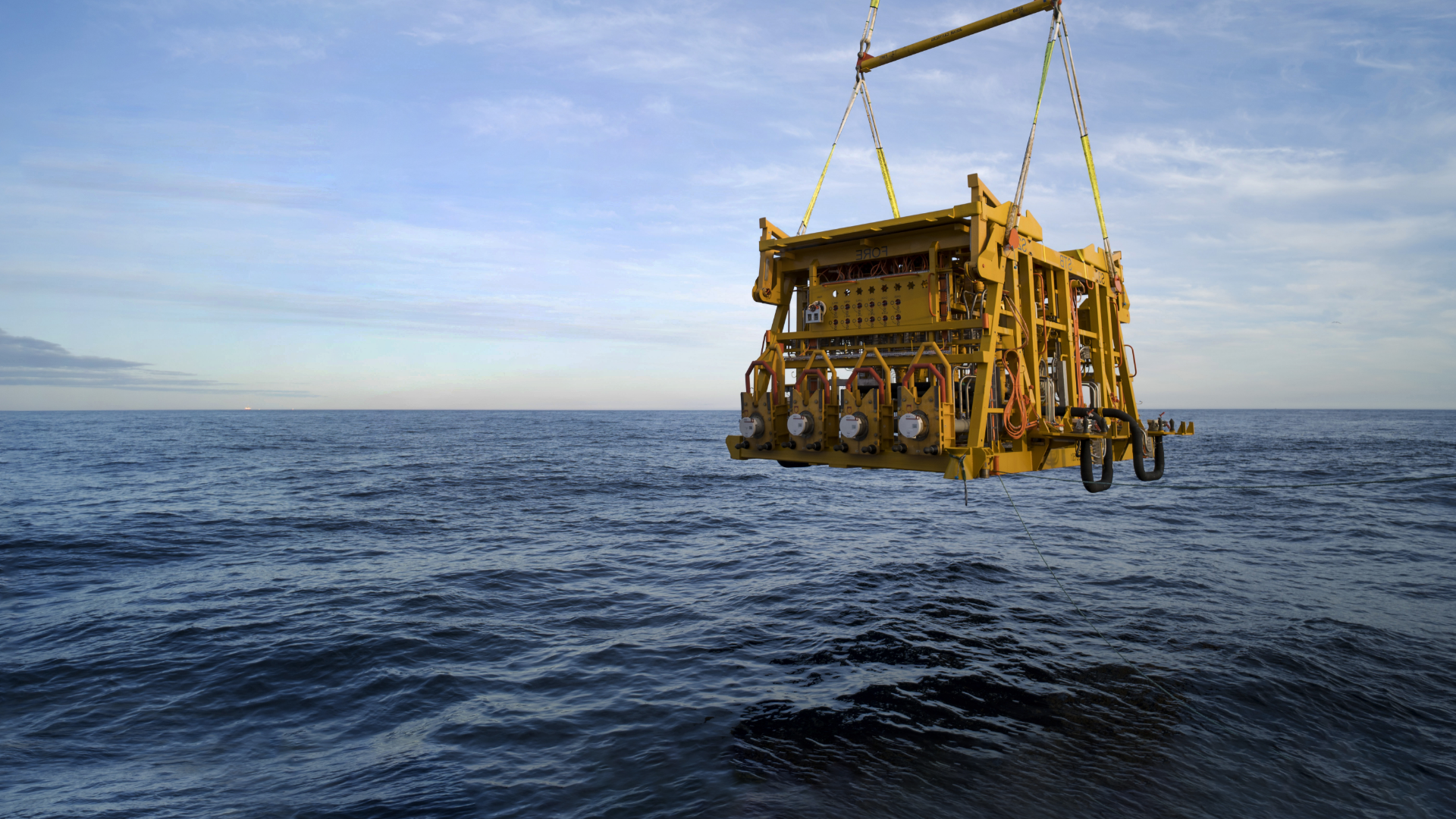
Ocean Installer, part of the Moreld Group, has won a contract with TotalEnergies covering the recovery of around 1,000 tonnes of subsea infrastructure from the Byggve, Skirne, and Atla fields in the North Sea.
The project scope includes engineering, extensive dredging operations, recovery of subsea structures and pipelines, and transportation to shore for disposal. The offshore campaign is scheduled for 2027, with most recovered equipment expected to be recycled or reused.
Moreld has described the award as a sizeable contract, a classification it uses for expected values between NOK 100m and NOK 500m. The award strengthens Ocean Installer’s position in offshore decommissioning, an area expected to grow as fields across the North Sea and other mature basins move further into late-life operation and asset retirement.
The Byggve, Skirne, and Atla work will require a combination of planning, survey data, subsea engineering, dredging, lifting, cutting, handling, vessel operations, and onshore disposal coordination. Recovery projects of this kind are technically different from installation campaigns, although they draw on many of the same marine construction disciplines. Engineers have to understand how structures were installed, how they have changed during years of operation, and how they can be safely removed without creating unnecessary risk.
Subsea decommissioning is becoming a larger part of offshore workload. Fields developed during earlier phases of North Sea expansion are now reaching the point where infrastructure must be removed, made safe, reused, recycled, or monitored under approved abandonment plans. That creates a growing market for contractors able to combine engineering studies, offshore execution, environmental controls, and material recovery.
Removing 1,000 tonnes of infrastructure from the seabed is not simply a reverse installation job. Pipelines and structures may be buried, partially exposed, damaged, marine-grown, or affected by seabed movement. Dredging may be needed to expose assets before cutting or lifting. Lifting plans have to account for weight uncertainty, trapped sediment, residual fluids, structural degradation, and vessel motion. Every operation has to be planned around weather windows, safety cases, permits, and environmental commitments.
The contract also reflects the industrial shift underway in mature offshore basins. Production, tie-back development, decommissioning, carbon storage, offshore wind, and subsea power infrastructure are increasingly competing for engineering skills, vessels, yards, and specialist suppliers. Recent North Sea asset transactions show that the basin still has production value, but late-life engineering and eventual retirement are now inseparable from the commercial model.
Operators are judged on decommissioning cost, reputation, and regulatory performance. Poor planning can extend campaigns, increase vessel days, raise environmental exposure, and create uncertainty around final liability. Strong execution can reduce cost, recover useful materials, and free seabed areas while demonstrating that end-of-life obligations are being handled properly.
Recycling and reuse are becoming more important within that equation. Subsea equipment contains steel and other materials that can be recovered, processed, and returned to industrial use where contamination, condition, and logistics allow. Reuse is more difficult because offshore equipment may have been designed for specific fields, loads, interfaces, and service conditions, but selected components can sometimes be repurposed after inspection, refurbishment, and certification.
The contract also shows how offshore contractors are adapting to a market where new installation work and removal work can sit side by side. Companies with subsea engineering, vessel management, lifting, dredging, and project execution capability can transfer those skills into decommissioning. The commercial challenge is building enough repeatable work to justify equipment, personnel, and systems dedicated to asset retirement.
Ocean Installer’s TotalEnergies contract adds to a decommissioning track record at a time when the company and its parent group are positioning around end-of-life projects. The work supports a growing market for contractors that can handle complex subsea recovery, not only in the North Sea but across other mature offshore regions where older assets are approaching retirement.
The 2027 campaign will be part of a wider North Sea transition. Production assets may continue to change ownership and some fields will attract further investment, but the region’s engineering future also depends on how efficiently it removes and recycles the infrastructure built during previous development cycles. Decommissioning is no longer peripheral work at the end of the offshore value chain. It is becoming a core engineering market in its own right.