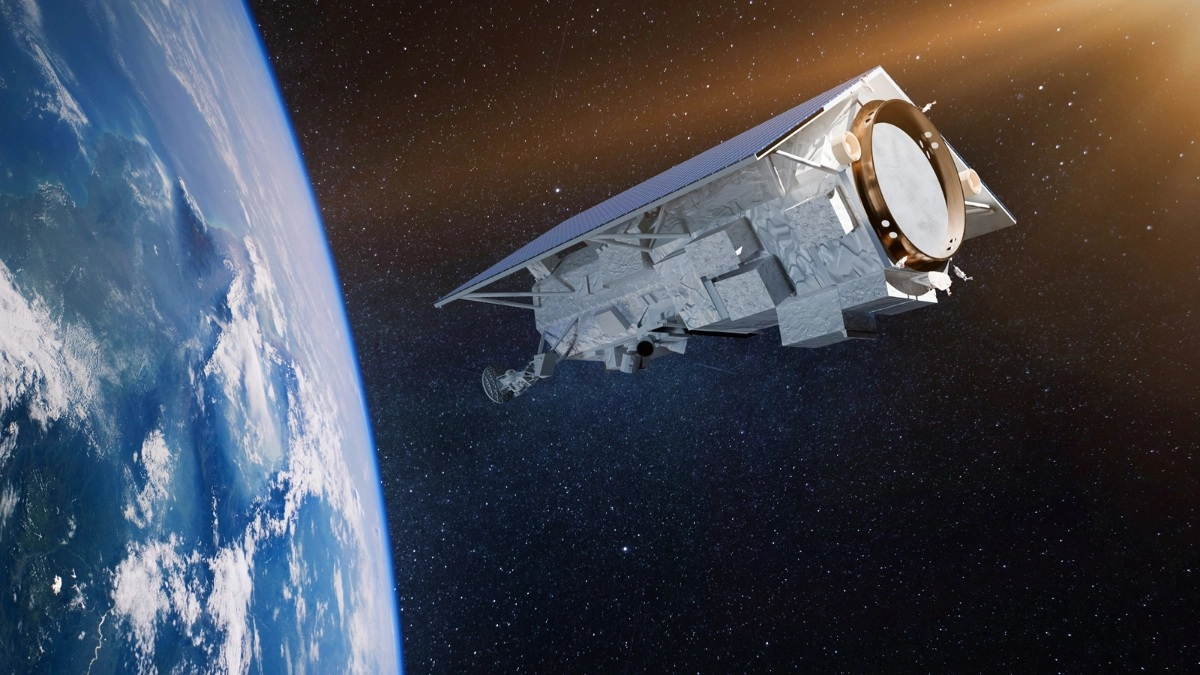
BAE Systems has entered an agreement to build high-resolution imaging satellite buses for Vantor, supporting the next generation of Vantage 20 cm-class imaging satellites for defence and intelligence programmes.
The spacecraft will be built from BAE Systems’ Evolve spacecraft line, with the company also leading integration and testing for the programme. Vantor is developing the satellites to increase high-resolution commercial imagery collection, reduce latency, and support intelligence work from orbit.
The Vantage constellation is being developed around 20 cm-class imaging, a capability at the high end of commercial Earth observation and increasingly central to national-security applications. Defence and intelligence customers need imagery that is accurate, timely, and available through systems that can be tasked, processed, and integrated quickly into operational workflows.
BAE Systems and Vantor have worked together on previous imaging satellite programmes, including QuickBird and WorldView spacecraft. The latest agreement extends that relationship into a market where satellite production is changing from a small number of bespoke spacecraft toward more repeatable constellation manufacturing, shorter refresh cycles, and tighter integration between space hardware, ground systems, data processing, and analytics.
Satellite buses carry the power, thermal control, communications, avionics, propulsion, attitude control, and structural systems that allow payloads to operate in orbit. A high-resolution imaging payload places demanding requirements on pointing stability, vibration control, power availability, thermal performance, and data handling. The spacecraft bus is not a passive platform; it determines how consistently the payload can collect usable imagery.
Integration and testing are equally important. Imaging satellites must survive launch loads, operate through thermal cycles, maintain optical alignment, communicate reliably, and deliver data through ground infrastructure serving users under tight timelines. Environmental test, system verification, electromagnetic compatibility, software validation, and mission assurance all sit between factory completion and operational value.
The programme reflects the growing industrial weight of space-based intelligence. Earth observation now supports border monitoring, maritime awareness, disaster response, infrastructure assessment, targeting support, logistics planning, and environmental monitoring. The conflict in Ukraine accelerated demand for commercial imagery and demonstrated how constellations can feed government and defence decision-making at speed.
That demand is reshaping the manufacturing model. Traditional government satellite programmes have often been slow, costly, and highly customised. Commercially derived constellations are pushing the sector toward modular platforms, more standardised subsystems, faster integration, and production discipline closer to advanced manufacturing than classic one-off aerospace development. The engineering challenge is maintaining reliability and mission performance while moving faster and building more units.
BAE Systems’ role gives the programme a production base with defence-grade systems experience. Spacecraft for intelligence missions carry different assurance requirements from purely commercial systems because customers need reliability, resilience, security, tasking priority, data integrity, and long-term support. Cybersecurity, encryption, ground segment integration, and supply chain control all sit close to the hardware programme.
The wider defence-industrial landscape is placing greater emphasis on space. Governments are investing in space domain awareness, resilient communications, navigation alternatives, missile warning, and intelligence, surveillance, and reconnaissance. High-resolution imaging satellites sit within that broader architecture, supplying data that can be fused with radar, signals intelligence, open-source information, and ground-based sensors.
Supplier opportunities extend well beyond prime assembly. Satellite programmes draw on precision machining, electronics manufacturing, optics, RF systems, thermal materials, harnessing, propulsion components, software, environmental test, cleanroom operations, and ground equipment. As constellations refresh more quickly, manufacturers able to provide repeatable, qualified subsystems may find steadier demand than in older satellite cycles.
The agreement also underlines how commercial space and defence demand are converging. Vantor’s imagery capability is commercial in structure, but its users include national defence and intelligence organisations. That creates a market where speed, affordability, and commercial innovation have to coexist with security, assurance, and mission reliability.
BAE Systems’ satellite work for Vantor gives that convergence a defined manufacturing programme. The output will be judged not only by launch success, but by whether the spacecraft can deliver high-resolution imagery quickly, reliably, and at the tempo now expected by defence and intelligence users.