YASA is expanding its UK engineering and production capability as Mercedes-Benz moves axial flux electric motors from specialist development towards series vehicle manufacture.
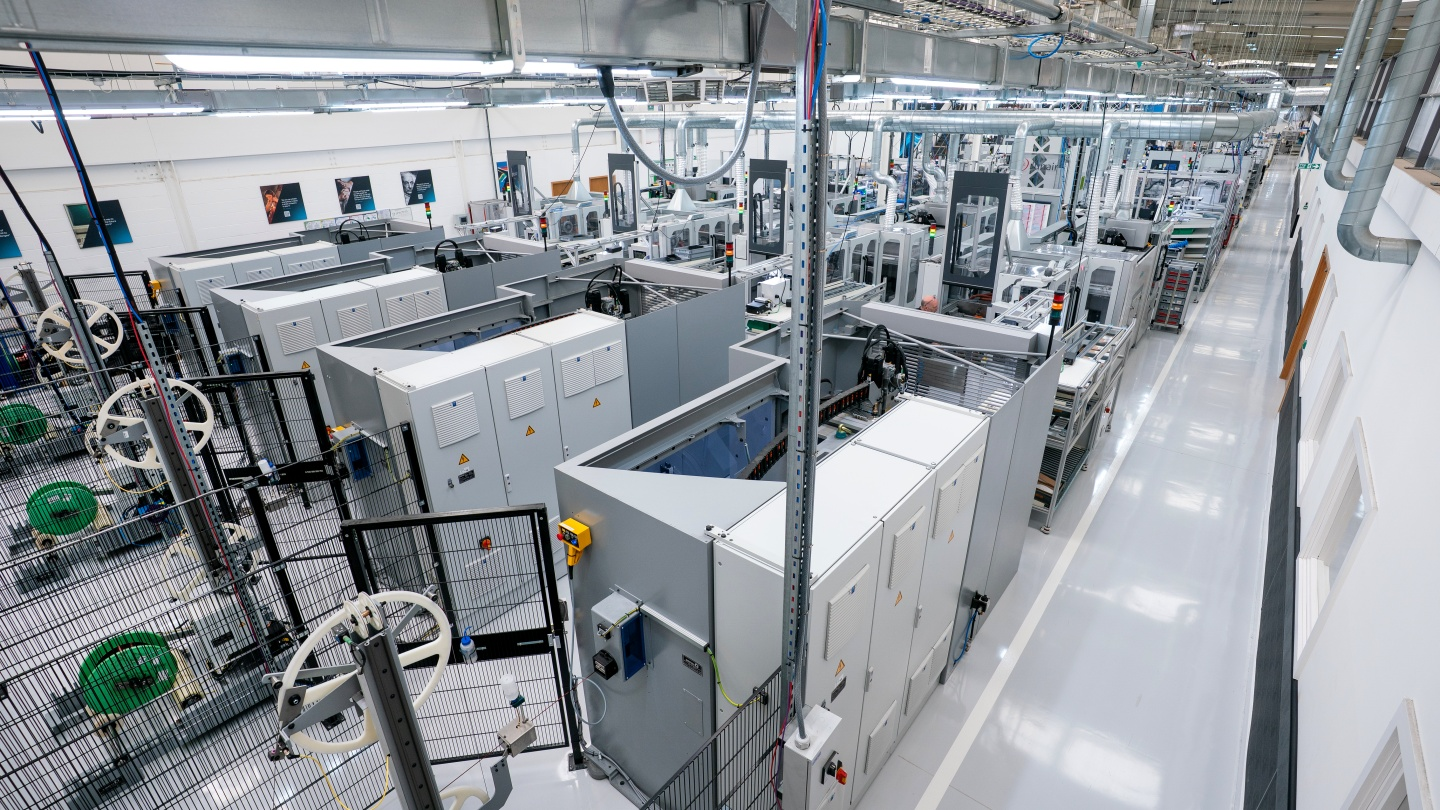
Five years after its acquisition by Mercedes-Benz, the Oxford University spinout is increasing manufacturing capacity, developing higher output motor designs, and preparing a larger headquarters at Bicester Motion. Its upgraded Yarnton facility, opened following a £12 million investment, covers around 60,000 sq ft and can produce more than 25,000 motors annually.
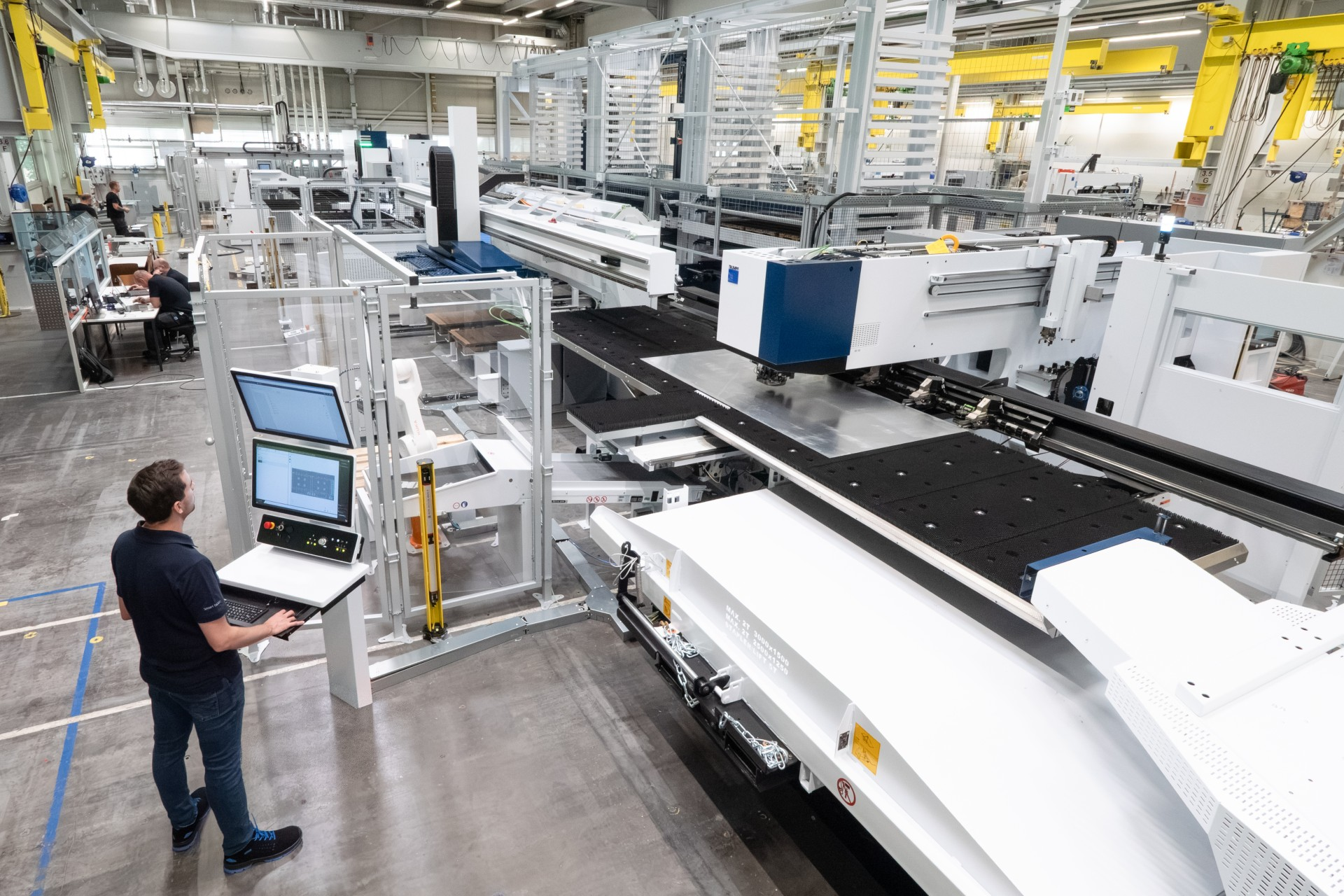
Within the plant, dedicated operations cover coils, busbars, computer controlled winding, impregnation, laser stripping, brazing, rotor balancing, stator welding, assembly, and quality control. Bringing these stages under one roof shortens the distance between process development and production, while reducing the number of external transfers between sensitive manufacturing steps.
YASA’s yokeless and segmented armature design places active components in a disc shaped configuration rather than the cylindrical arrangement used in most radial flux motors. The resulting package can deliver high torque and power density within a short axial length, creating greater freedom around vehicle mass, suspension geometry, battery placement, and driven axle layout.
Prototype motors have demonstrated power density figures substantially above conventional production machines, yet series manufacture introduces a different standard of performance. Thousands of motors must reproduce the required output while meeting controlled limits for dimensions, insulation, balance, joining, thermal behaviour, noise, and durability.
Motor architecture reaches the production test
Mercedes-Benz is preparing axial flux production at Berlin-Marienfelde, where a dedicated system extends across three halls and seven production lines. The Berlin industrialisation programme includes dozens of manufacturing operations, many of which were developed specifically around the architecture.
Yarnton remains central to that transition because the production method is still evolving alongside the motor. Engineering teams can refine winding, joining, coating, assembly, and inspection processes on smaller batches before transferring stable methods into the higher volume environment required for Mercedes-AMG models.
Axial flux machines have gained renewed automotive interest as electric vehicle designers pursue higher performance without increasing powertrain mass. A shorter, lighter motor can release space for batteries or cabin structure, while multiple machines can be positioned across the vehicle without imposing the same packaging penalty as larger radial units.
Compact geometry also raises thermal and manufacturing difficulties. Heat must be removed from a dense active area, and segmented stators require precise positioning, insulation, and joining. Small variation in coil formation, adhesive thickness, magnetic air gap, or rotor balance can affect efficiency, vibration, and reliability.
Automation will be required to hold those variables within acceptable limits, although robotic equipment cannot stabilise a process whose critical parameters remain poorly understood. Production engineers need measurable relationships between winding tension, impregnation, laser preparation, joining energy, dimensional variation, and final motor performance.
Inspection strategies will influence both throughput and cost. Some defects can be detected immediately through machine vision, electrical testing, dimensional measurement, or process monitoring, while others may only appear during complete motor testing. Catching a fault at the end of the line leaves far more value tied up in the rejected assembly.
Material supply adds another constraint. Electrical steel, copper, permanent magnets, insulation, adhesives, structural materials, and cooling components must remain consistent as volumes rise. Changes to chemistry, coating, dimensions, or magnetic properties may require process adjustment even when a supplier regards the material as technically equivalent.
The expanded Yarnton facility gives YASA space to develop those controls while supplying specialist customers and early production programmes. Its planned 90,000 sq ft Bicester Motion headquarters will increase engineering capacity, supporting Mercedes-Benz work alongside possible applications in other transport and power systems.
Aerospace, marine, and generation markets may value the same compact performance, although each imposes distinct speed, duty cycle, cooling, safety, and certification demands. A production method optimised for a high performance road vehicle cannot be transferred unchanged into an aircraft, vessel, or stationary machine.
Cost will decide how far axial flux technology moves beyond premium applications. High value vehicles can absorb specialist materials and developing processes more readily, while broader adoption requires shorter cycle times, stronger yields, simpler assembly, and dependable supply of critical components.
YASA has progressed beyond isolated prototypes and limited production, leaving manufacturing consistency as the central test. The Oxfordshire and Berlin operations must now show that exceptional motor performance can be repeated at automotive volumes without allowing complexity, yield losses, or inspection costs to erode the design’s advantage.