Silbitz Group has been acquired by German investment company VTC from Deutsche Beteiligungs AG and DBAG Fund VI, ending an investment period in which the foundry business expanded its end markets, acquired additional casting capacity, and reduced production scrap.
The transaction was completed in August, with the purchase price undisclosed. VTC is an independent German investment company focused on medium-sized businesses in the DACH region and already has exposure to energy-sector manufacturing through BAETTR, a supplier of components to the wind power industry.
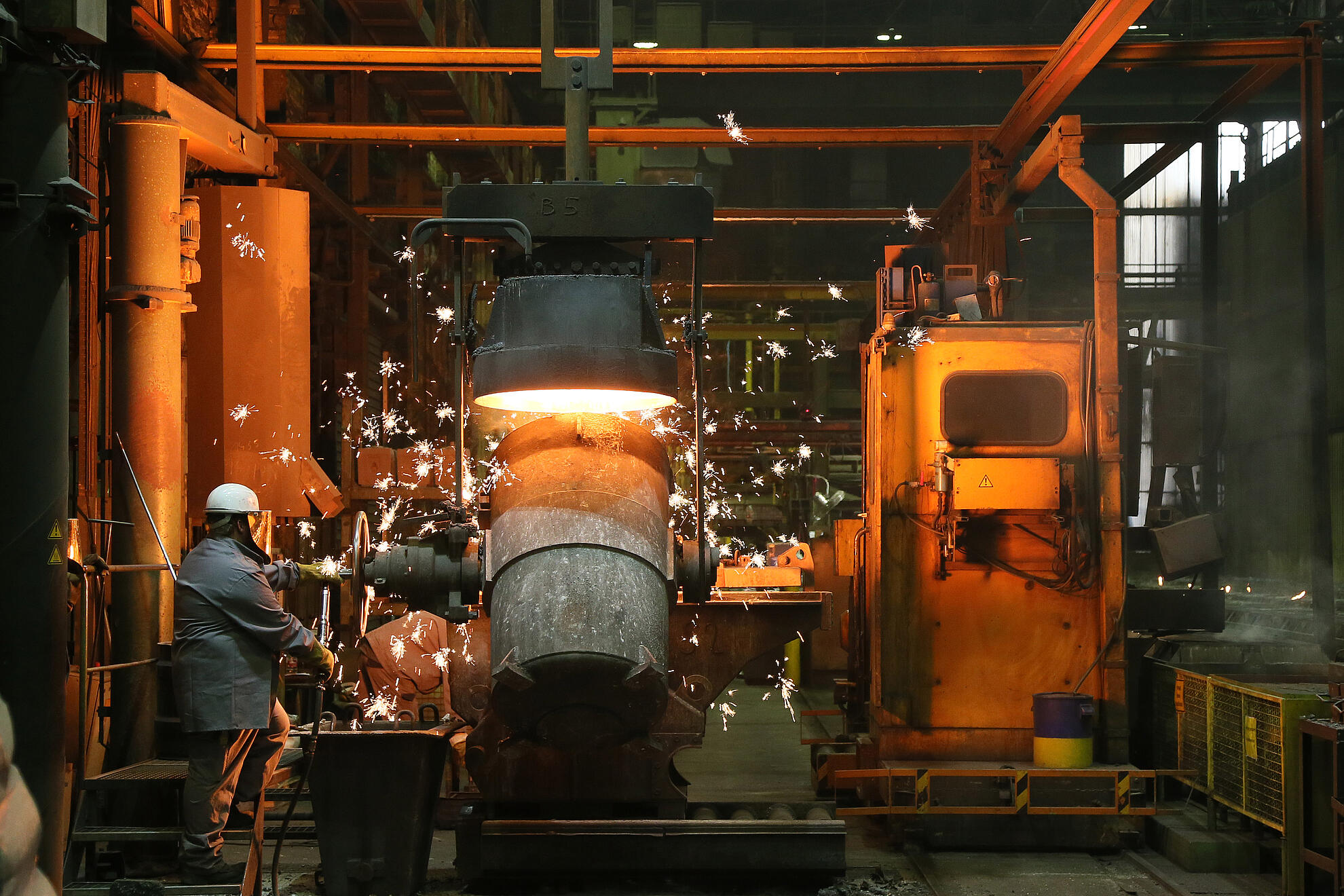
Silbitz produces complex iron and steel castings for industrial applications from sites in Germany and Slovakia. Its markets include rail, power generation, large engines for marine and stationary applications, offshore wind, defence, and nuclear-related work, giving the group exposure to several sectors with different investment and maintenance cycles.
The business broadened that industrial mix during DBAG’s ownership. DBAG and Fund VI invested in Silbitz in 2015, and the group acquired Eisengießerei Torgelow in 2021. Torgelow specialises in large castings used in offshore wind equipment and large engine blocks, extending Silbitz’s capacity in heavy-section components.
The group combines casting with machining, modelling, assembly, quality control, and logistics, allowing customers to source more of the production sequence from one supplier. That capability is particularly useful in heavy engineering, where cast components may require substantial machining, inspection, and documentation before they can enter rail, power, marine, or other safety-critical equipment.
DBAG’s ownership period also included changes inside the production process. The investor said the scrap rate at the Silbitz site was reduced from around 7% to between 3% and 4%, while targeted investment improved energy efficiency at Torgelow. Both measures have direct consequences in foundry economics.
A rejected casting consumes more than the metal poured into it. Melting energy, moulding materials, machine time, fettling, inspection, internal logistics, and downstream machining can all be lost when a part fails quality requirements. Lower scrap therefore increases effective capacity while reducing energy and material consumption per saleable component.
Energy became an unusually difficult operating variable during the investment period. DBAG said the Russia-Ukraine war drove substantial increases in material costs from 2022, while electricity and gas prices temporarily reached multiples of their 2019 levels. Foundries have limited ability to avoid those movements because melting, heat treatment, extraction, compressed air, and finishing all carry significant energy demand.
Process efficiency consequently became inseparable from commercial performance. Reducing scrap, improving furnace utilisation, controlling heat treatment, and scheduling machining more effectively can offset part of an energy-price increase, although none removes exposure to external electricity, gas, alloy, and scrap-metal markets.
Diversification provided another layer of protection. Rail and conventional power applications remain important, while offshore wind, defence, and nuclear-related work expose the group to different programme cycles. A broader customer base does not make foundry demand immune to industrial downturns, but it reduces reliance on one end market and spreads specialist casting capacity across several infrastructure sectors.
DBAG said those measures contributed to a projected EBITDA margin of more than 10% in the 2025 financial year. Margin recovery is significant in foundry production because relatively small movements in yield, utilisation, alloy cost, energy consumption, and rework can materially alter the economics of a production run.
The sale places Silbitz with an investor that already understands at least one of those end markets. BAETTR manufactures components for wind turbines, while Silbitz’s Torgelow operation has established capability in offshore wind castings. No operational integration plan has been announced, so the common sector exposure should not be treated as evidence of a future merger or supply arrangement.
Heavy-industry customers will be more concerned with continuity of qualification and production performance. Components supplied into rail, marine, power, defence, and nuclear applications can carry long approval cycles, demanding material specifications, inspection requirements, and extensive documentation. A change of ownership does not shorten any of those technical obligations.
Future investment will therefore be judged through familiar foundry measures: plant reliability, yield, energy consumption, machining capability, inspection performance, delivery, and retention of metallurgical skills. Those indicators are considerably less glamorous than an acquisition announcement, but they determine whether a specialist foundry earns repeat orders.
Silbitz enters VTC ownership after more than a decade of operational changes that widened its customer base and improved several production measures while the European foundry sector absorbed severe energy and materials volatility. VTC has not announced a new capital programme, leaving the next phase to be measured in plant performance rather than deal rhetoric.