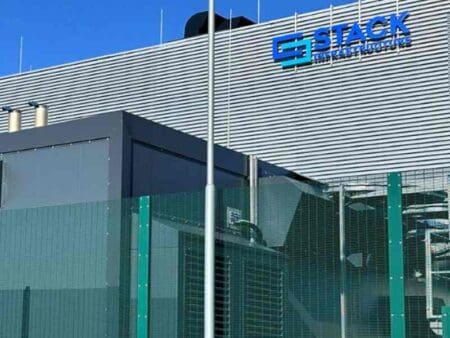

Image courtesy STACK
STACK Infrastructure, which develops and operates data centres, has successfully used advanced biofuel HVO100 (Hydrotreated Vegetable Oil) as a standby power source for a new data centre on its OSL04 campus in Holtskogen (Oslo), Norway.
According to the US-based company, after rigorous testing, HVO100 – which they call the purest form of HVO – is now being utilised in lieu of fossil fuel-based diesel.
HVO is typically made from vegetable oil or used cooking oil due to its lower emission rates compared to regular fuel.
Commenting in a release was Geir Vistung, manager of STACK’s OSL04 Campus: “We are proud to be pioneering green initiatives in Norway…Our heat reuse programme in Oslo is award-winning, we harvest rainwater to support our cooling systems at several of our data centre campuses, and the use of HVO100 is yet another example of industry-leading innovation.”
Have you read:
Tech Talk | Meeting the data centre energy challenge with ‘bridging’ solutions
Australian data centre project taps GE Vernova as BESS integrator
According to STACK in a release, 1,000 liters of HVO releases 195kg of carbon dioxide, compared to 3,600kg for the same amount of regular diesel.
HVO100, they add, citing research from Neste, has also been shown to produce approximately 33% lower levels of fine particles, 9% fewer nitrogen oxides, 30% fewer hydrocarbons, 24% lower carbon monoxide, and lower levels of polyaromatic hydrocarbons than traditional diesel. Lower smoke and soot emissions were also recorded when using HVO.
In addition to STACK Infrastructure’s latest facility on the OSL04 campus, two more STACK data centres became operational this year in Oslo, increasing STACK’s footprint in Norway by another 18MW.
STACK’s continued expansion in the Nordics also includes a 72MW campus under development in Copenhagen and an 18MW campus under development in Stockholm.
According to the International Energy Agency, global data centre electricity consumption could double in a few years, reaching 1,000TWh by 2026.
The cooling demands of data centres requires immense energy, a need has continued to rise with the use of AI and high-performance computing.
However, the cold climates and lower posts of countries in Europe’s Nordic region, such as Norway, means these countries have become attractive locations for data centre investments, finds research from the Nordic Council of Ministers.

Join the smart energy community in Milan to be a part of Europe’s premier energy transition event.