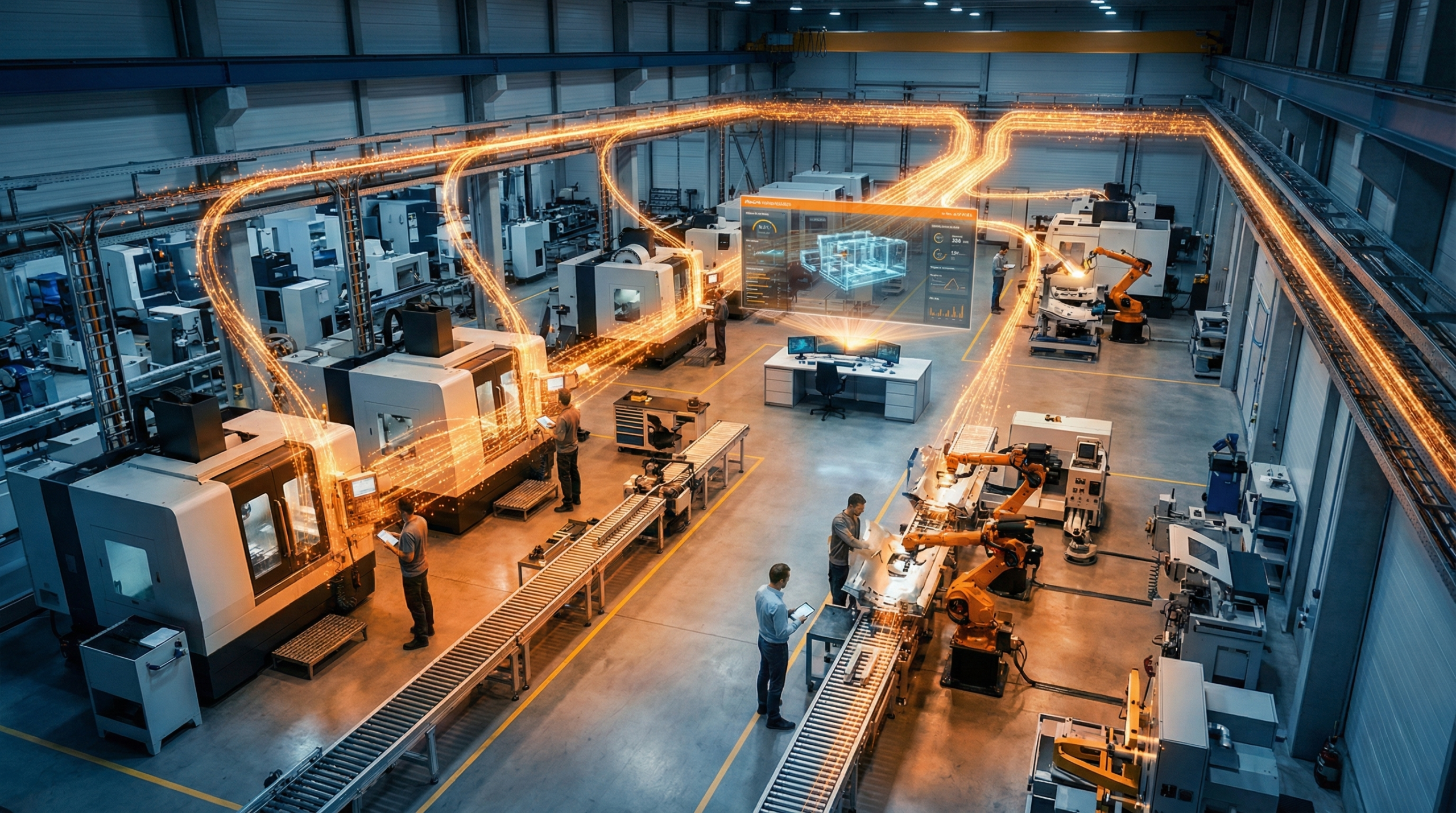
Crowe says four in five UK manufacturers are now using or actively trialling artificial intelligence, while nearly three quarters are engaged in or exploring opportunities in defence manufacturing. Its autumn Manufacturing Outlook Report, produced with the Confederation of British Metalforming, shows companies pursuing new routes to growth while operating costs, recruitment and investment funding remain persistent constraints.
The survey found that 80% of respondents had adopted or were actively trialling AI, up from 52% in Crowe’s spring 2025 outlook. Defence activity was almost as widespread, with 72% of manufacturers either already engaged in the market or exploring how to enter it. The findings are based on responses from more than 60 manufacturing businesses across the UK and multiple sectors, collected during June and July 2026.
Rising costs were identified as the biggest barrier to growth by 57% of respondents, while 62% cited a shortage of qualified applicants as their main recruitment challenge. The latter figure has eased only marginally from 64% in the spring 2026 survey, indicating that the skills problem has remained persistent even as companies increase investment in automation and digital technology.
Funding patterns have also changed sharply. Only 43% of respondents said they continued to fund growth through internal cash reserves, down from 82% in the spring 2026 outlook. Manufacturers trying to invest in automation, AI, energy efficiency and diversification are therefore doing so while higher wages, energy prices and other operating costs continue to pressure margins.
Defence is emerging as one of the clearest diversification routes. The report suggests manufacturers with relevant machining, forming, fabrication and assembly capability are increasingly assessing whether existing operations can serve defence programmes, particularly where automotive demand has weakened. That follows calls from automotive suppliers for practical support to navigate defence qualification, where the path from available factory capacity to approved supplier status can be lengthy and technically demanding.
Entering the sector is not simply a matter of redirecting unused machines. Defence customers typically bring different requirements around traceability, accreditation, security, programme assurance and long term supply, while prime contractors may require evidence of process control and resilience before awarding work. Companies considering the market have to weigh the potential order visibility against the cost and time required to qualify people, systems and production processes.
AI adoption presents a different implementation challenge. Moving from 52% to 80% of respondents using or trialling the technology in roughly 18 months shows how quickly experimentation has spread, but the survey does not indicate that four in five manufacturers have reached mature deployment. Production applications still depend on the quality of operational data, integration with existing systems and a clear connection to engineering, maintenance, planning or quality outcomes.
The skills constraint runs through both themes. Manufacturers adopting AI and more automated processes need people capable of combining production knowledge with digital tools, while defence work increases demand for experienced engineers, technicians and quality specialists. Crowe also points to succession risk as experienced employees approach retirement, increasing pressure to transfer production knowledge at the same time as companies introduce technologies requiring new technical capabilities.
Other findings show that supply chain and environmental requirements remain part of the same investment picture. Some 65% of manufacturers had already received requests relating to carbon footprints or energy efficiency, while 71% said they were open to reshoring opportunities. The reshoring figure is notably lower than the 98% recorded in the spring 2026 report, suggesting that interest remains widespread but is being tested against the economics of bringing work back into the UK.
Innovation support is another point of friction. Only 37% of respondents reported successfully claiming R&D tax relief over the previous 12 months, despite the high level of technology experimentation recorded elsewhere in the survey. Crowe links that gap to uncertainty over eligibility, compliance requirements and the complexity of claims, leaving some manufacturers funding development without making use of a relief intended to support qualifying activity.
The report therefore captures simultaneous pressure on technology investment, workforce planning, financing and market diversification across the same group of manufacturers.
The latest outlook describes a sector pursuing AI, defence work, reshoring and lower carbon production while still constrained by cost and skills. Each route requires capital, technical capability and management attention, so the next stage of growth will depend less on identifying opportunities than on converting them into qualified, repeatable production without adding more strain to already stretched workforces and balance sheets.