UK automotive suppliers are seeking government help to move existing manufacturing capacity into aerospace and defence programmes as falling vehicle volumes collide with stronger demand from military procurement.
Evtec Group chairman David Roberts led a letter signed by eight other manufacturers and the president of the Confederation of British Metalforming. The businesses are concentrated in the West Midlands and North West, where automotive supply chains retain extensive machining, casting, moulding, fabrication and assembly capacity.
The manufacturers are not arguing that a car-parts factory can become a defence supplier simply by accepting a different purchase order. Their proposal centres on the time and capital required to meet aerospace and defence certification, traceability, security and quality requirements before meaningful programme revenue begins to flow.
The letter estimates that qualifying a factory can take between 18 and 36 months. During that period, companies may need to invest in approvals, systems, training, equipment and process changes without having the confirmed defence order book that would normally support conventional borrowing.
That creates an awkward financing gap when automotive revenue is already declining. Suppliers may own production equipment and employ people whose skills transfer readily into defence manufacturing, but the cash flow that would fund conversion is being weakened by lower vehicle volumes at the same time that new defence work remains beyond the qualification gate.
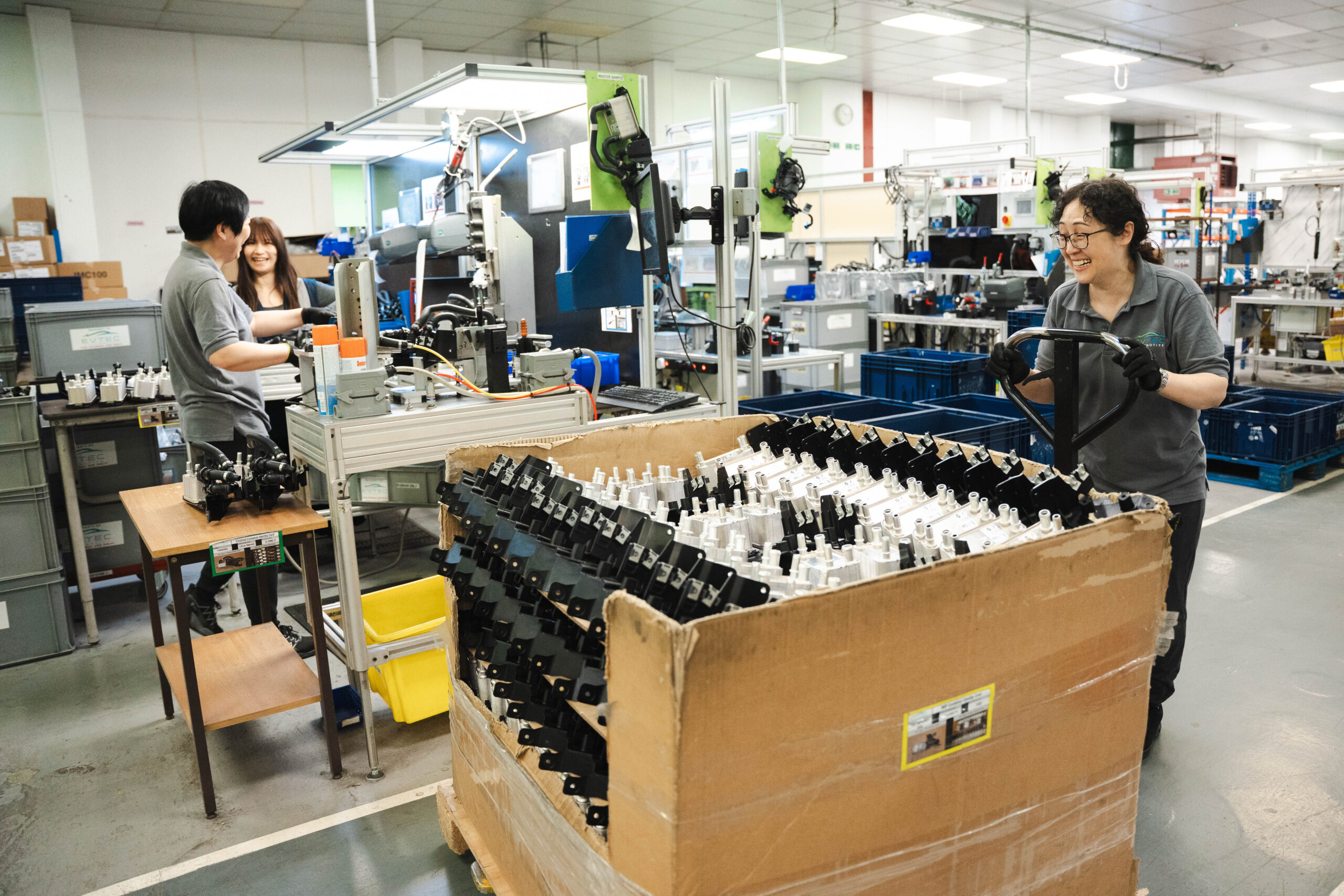
The industrial overlap is substantial. Capabilities identified by the manufacturers include high-integrity casting, five-axis machining, injection moulding, pressings, fasteners, tube fabrication, surface treatment and metrology. All are established processes in automotive production and have applications across aircraft, armoured vehicles, naval systems, weapons and other defence equipment.
Evtec’s own operations illustrate the point. Its businesses cover high-pressure aluminium die casting, precision machining, plastic injection moulding, tube and hose forming, assembly, X-ray inspection and coordinate-measuring-machine metrology. The group already supplies sectors outside conventional vehicle production, including aerospace and other industrial markets.
What changes in defence is the operating framework around those processes. Production volumes can be lower, programme lives longer and configuration control more exacting, while documentation may have to trace material, machining, treatment and inspection history through the life of a component. Security requirements and customer-specific approvals can add another layer before a supplier is permitted to compete for work.
The group wants government assistance with that transition, including support for certification and lower industrial energy costs. It has also proposed a West Midlands pilot programme that would help selected manufacturers move into aerospace and defence while retaining workers who might otherwise be lost as automotive programmes contract.
The companies have offered to invest before confirmed demand, retrain existing staff and take on apprentices against the new capabilities. Their request is therefore aimed less at subsidising finished defence products than at financing the industrial bridge between established automotive production and the point at which a converted factory becomes an approved defence supplier.
The manufacturers link that urgency to an automotive supply chain supporting around 183,000 manufacturing jobs. They cited recent job reductions at JLR as one indication of pressure passing down from vehicle makers into component businesses, although the conversion proposal extends across a broader group of suppliers and capabilities.
The government says its industrial policy already includes targeted grants, measures intended to reduce industrial energy costs and support for aerospace competitiveness. Defence procurement plans also call for increased spending with smaller companies, including an additional £2.5 billion annually with SMEs by May 2028.
The difficulty is that procurement demand and manufacturing readiness move on different clocks. Announcing higher defence expenditure can create a future market, but a supplier cannot deliver into that market until its processes, premises, quality systems and people satisfy the programme’s requirements.
Elsewhere in Europe, the same industrial logic is appearing at plant level. Volkswagen’s Osnabrück operation is being prepared for a possible transition from specialist vehicle production into defence manufacturing, using an existing factory and workforce rather than recreating industrial capacity on a greenfield site.
The British supplier proposal applies that principle further down the value chain. Machining centres, casting equipment, moulding cells, inspection systems and experienced production teams can remain useful when the end market changes, but only if the businesses operating them survive the period required to qualify for new work.
Eighteen to 36 months is not unusually long for a regulated industrial qualification programme. It becomes more difficult when the revenue that would normally finance those months is disappearing first, leaving government and industry to decide whether viable manufacturing capacity is worth preserving before the alternative order book is fully visible.