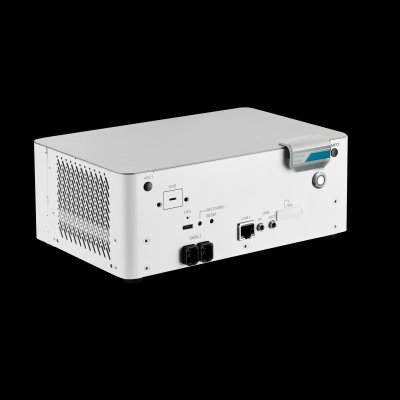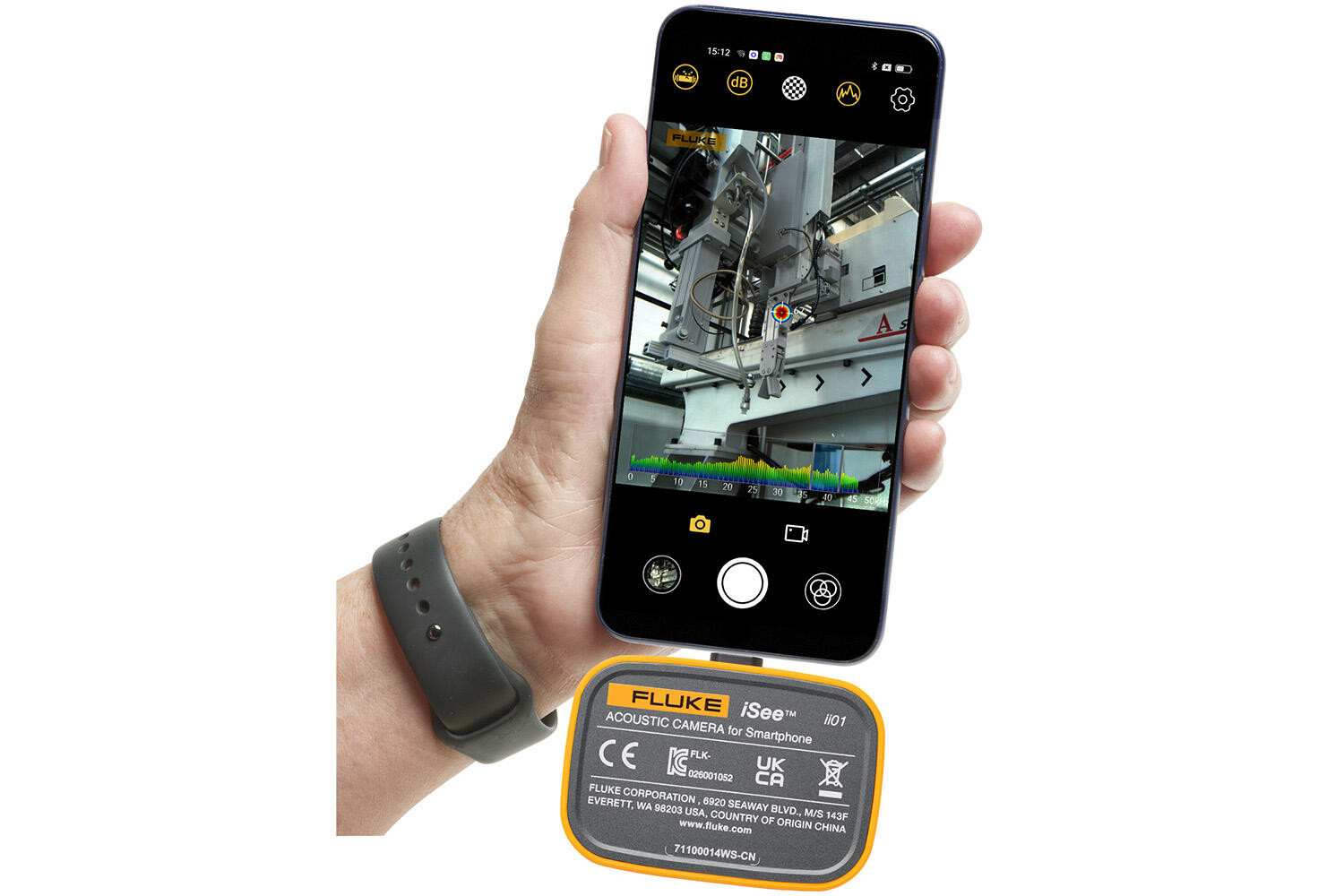
Fluke has expanded its iSee Mobile Imaging Series with the TC03A thermal camera and ii01 acoustic camera, giving maintenance teams two plug-in inspection tools that use a smartphone as the display, processing and reporting interface. The products target different fault signatures — abnormal heat and high-frequency sound — but use the same mobile-first approach to non-contact inspection.
The TC03A is built around a 384 × 288 thermal detector and can generate images at up to 768 × 576 using Fluke’s SuperResolution processing. Manual focus allows technicians to adjust the image for equipment at different working distances, from electronic assemblies inspected at close range to machinery that is safer or more practical to examine from further away.
Thermal imaging is widely used in electrical and mechanical maintenance because many developing faults change the way an asset produces or dissipates heat. Loose electrical connections can create localised heating, overloaded components may run above their normal temperature and mechanical friction can generate thermal patterns before a failure becomes obvious through noise or vibration.
A thermal image allows a technician to survey a wider area before deciding where closer investigation is justified. It is particularly useful where opening equipment, making physical contact or reaching every component individually would be slow or unsafe.
The TC03A integrates with the Fluke iSee app, which provides temperature-difference information, configurable alerts and real-time warnings. The software layer matters because the useful maintenance output is not the thermal picture alone.
A technician still has to decide whether a temperature difference is expected for the operating condition, compare similar components and determine whether the result requires intervention, continued monitoring or no action. Thermal data without equipment context can be as misleading as it is useful.
The ii01 addresses a different class of problem. Its acoustic-imaging system uses Fluke’s SoundMap technology to locate compressed-air and gas leaks by converting high-frequency sound into a visual indication on the smartphone display.
The device covers a frequency range from 2kHz to 48kHz and can detect sources at distances of up to 50 metres depending on site conditions. A one-key leak mode highlights potential leak sources, while real-time decibel readings provide additional information for follow-up inspection.
Compressed-air leaks are a persistent maintenance issue because they can be difficult to locate in a noisy plant and may remain small enough to escape attention while wasting energy continuously. Acoustic imaging allows a technician to scan an area and identify the likely direction of a leak without checking every joint, hose and fitting individually.
Operating distance is especially useful where equipment is overhead or difficult to access. A technician can survey pipework or machinery before deciding whether physical access is necessary, although Fluke’s quoted 50-metre range is conditional rather than universal.
Background noise, leak size, geometry and the surrounding environment will affect detection performance. As with thermal imaging, the instrument narrows the search but does not remove the need for judgement.
Both products are rated to IP54 and use the Fluke iSee app for image capture, reporting and sharing. The smartphone therefore becomes part of the maintenance workflow rather than simply acting as a display.
That reflects a wider change in industrial inspection. Front-line technicians increasingly need condition data to move directly into digital work orders, maintenance systems and remote discussions with specialists. Compact sensors connected to a mobile device can reduce the friction involved in collecting that information during routine rounds.
The format does not turn every user into a thermography or acoustic specialist. Thermal patterns can be distorted by emissivity, reflections, changing load and environmental conditions, while an acoustic image identifies a sound source rather than diagnosing the mechanical cause behind it.
The strongest use case is therefore screening. A technician can inspect more assets, identify abnormal behaviour and direct detailed investigation towards the equipment most likely to require it.
That changes the economics of condition monitoring because specialist attention can be concentrated on exceptions rather than applied uniformly to every machine during every inspection round.
Fluke is positioning the products around a shift from reactive fault finding towards more proactive maintenance. The devices can contribute to that approach, but only where detection is connected with maintenance planning and repair.
Finding a hotspot or a compressed-air leak creates a maintenance requirement; it does not remove the need for technicians, access or replacement parts. Recent Fluke research found that 83% of surveyed UK manufacturers had encountered maintenance delays because required parts were unavailable or subject to long lead times.
Earlier detection can increase the time available to source those parts before failure, which may be as important as the diagnosis itself. A developing fault identified during routine inspection creates options that disappear once production has already stopped.
The mobile format also introduces practical questions around smartphone compatibility, battery life and data handling. Plants that restrict personal devices or control images of industrial equipment will need to decide how the tools fit into existing cybersecurity and information policies.
The TC03A and ii01 nevertheless extend established inspection techniques into a smaller form factor. One looks for abnormal heat; the other listens for acoustic signatures associated with leaks. Their value will depend less on portability alone than on whether the lower barrier to inspection results in more assets being checked before a developing problem becomes an unplanned shutdown.