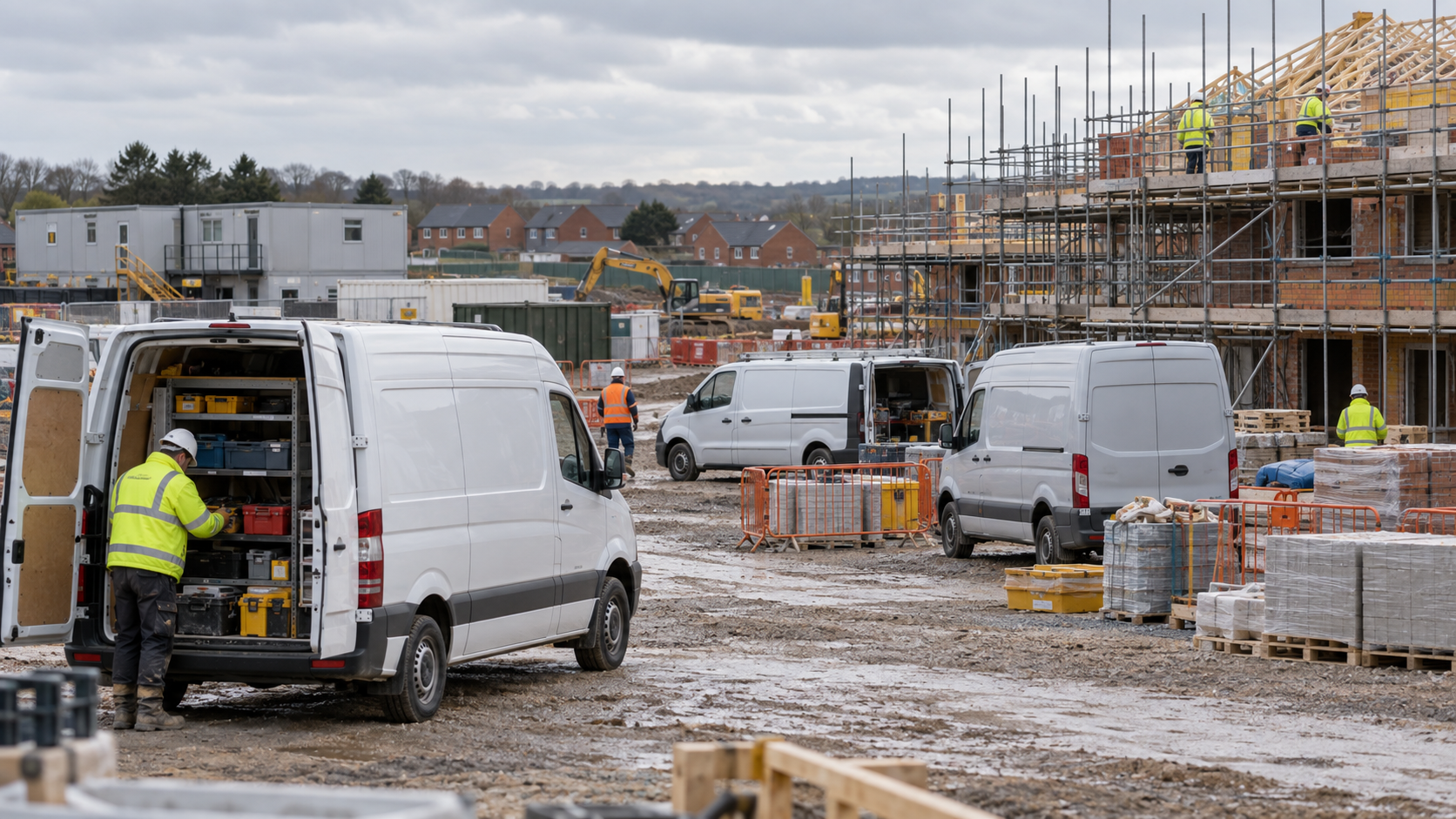
A building firm with ten vans rarely has all ten parked outside the office at the same time. One might be on a Birmingham site for several days, another working near Nottingham, while others move between jobs as labour and materials are reassigned. That makes any record-keeping task tied to the physical vehicle harder to schedule.
Tachograph administration adds another complication when vehicles and journeys fall within the relevant rules. The challenge is less about storing a file once it has been collected and more about building a process that still works when vehicles, drivers and job locations keep changing.
Start by identifying which vehicles and journeys are in scope
Not every van in a construction fleet automatically falls under tachograph rules, so the first useful step is to establish which vehicles and journeys require tachograph records. GOV.UK states that approved tachographs are required where assimilated or AETR drivers’ hours rules apply, subject to the relevant exemptions.
For vehicles using digital or smart tachographs, operators also need a routine for collecting and retaining the data. DVSA requires vehicle unit data to be downloaded at least every 90 calendar days and driver card data at least every 28 days. Operators must also be able to produce the relevant records to enforcement officers for 12 months.
Once a building business has several in-scope vehicles moving between sites, the calendar is only half the problem. Someone still has to make sure each required download happens, the correct file reaches the archive and gaps are spotted before they become part of a compliance review.
The limits of manual tacho downloads
A manual tacho download works more easily when vehicles regularly return to one depot and somebody knows when they will be there. Construction fleets tend to be less predictable. A vehicle needed at another site tomorrow morning might not return to the yard when expected, while a driver may move between vehicles as projects change.
That turns a straightforward administrative job into a coordination exercise. Staff have to know which records are due, where the relevant vehicle is and when somebody will have physical access to it. A spreadsheet or calendar reminder records a deadline, but it does not bring the van back to the depot.
Once this routine starts consuming management attention or depends on too many people remembering individual dates, a remote tachograph download service becomes relevant because it lets a firm with compatible digital tachographs download tacho data remotely without arranging each collection around the vehicle’s return.
What remote tachograph download changes in the workflow
Remote tachograph download separates routine data collection from the vehicle’s physical location. With a compatible setup, tachograph and driver card files are collected at configured intervals and transferred to central storage, while some systems also support company card hosting.
For a ten-van building fleet, the main difference is what staff need to organise. The office no longer needs every relevant vehicle to arrive at the yard before a routine download takes place. A van working away from the main base stays on its job schedule while the remote tacho download process handles the file collection in the background.
Automation does not replace operator responsibility. The business still needs to check whether records are complete, review drivers’ hours data where required and respond when something is missing or a download fails. DVSA guidance places responsibility on operators to make regular checks of tachograph data and take reasonable steps to prevent breaches of drivers’ hours rules.
What to check before moving the process online
A remote system needs to fit the fleet rather than force the fleet around the software. Compatibility comes first. The tachographs fitted to the vehicles, the telematics hardware and the company card arrangement all need to support the chosen setup. Remote download compatibility depends on the tachograph model and the hardware fitted to the vehicle, so this should be checked before rollout.
Access to the records matters as well. Fleet managers should know where files are stored, how access controls are applied, how missing downloads are flagged and how records are exported when needed. Backup arrangements and retention settings deserve the same attention. A neat dashboard has limited value if the underlying files are difficult to produce during an inspection.
The tacho download process should also fit the firm’s existing responsibilities. If one person handles transport compliance alongside payroll, purchasing or site administration, alerts need to be clear enough to identify exceptions without creating another inbox full of routine notifications.
Look for exceptions rather than another daily admin task
For a fleet manager, the value of automation is less about reducing clicks and more about changing which tasks still need attention. Instead of organising every routine collection, the manager focuses on the vehicles or drivers whose expected data has not arrived.
That distinction matters in a construction business. Site changes, vehicle substitutions and staff absence already create enough exceptions during the week. A compliance process works better when normal activity happens consistently and human attention goes to the cases that need a decision.
Fleet growth is another point to consider. A scalable system should allow additional vehicles to join the existing download routine without requiring a separate administrative process for each one. The business still needs to check compatibility and operator responsibilities for each new vehicle, but the underlying collection process stays consistent.
Keep the system proportionate to the fleet
A ten-van fleet does not need a complicated system. It needs reliable records, clear visibility when something is missing and a process that still works when vehicles spend most of the week away from the depot.
For builders operating across the Midlands, the useful question is whether the current tacho download routine still fits the way the fleet works. If staff regularly have to coordinate vehicle returns around collection dates, moving routine downloads online becomes a practical way to reduce that dependency while keeping the existing compliance process easier to manage.