Equinor has started production from Troll Phase 3 Stage 2 in the Norwegian North Sea, bringing eight new subsea wells into a development designed to accelerate approximately 55 billion standard cubic metres of gas from the Troll West reservoir.
First gas flowed on 22 August, several months ahead of the original late-2026 start-up schedule. Equinor also says the project has been delivered several hundred million Norwegian kroner below its NOK12.3 billion cost estimate, with the drilling campaign completed around 25% faster than planned.
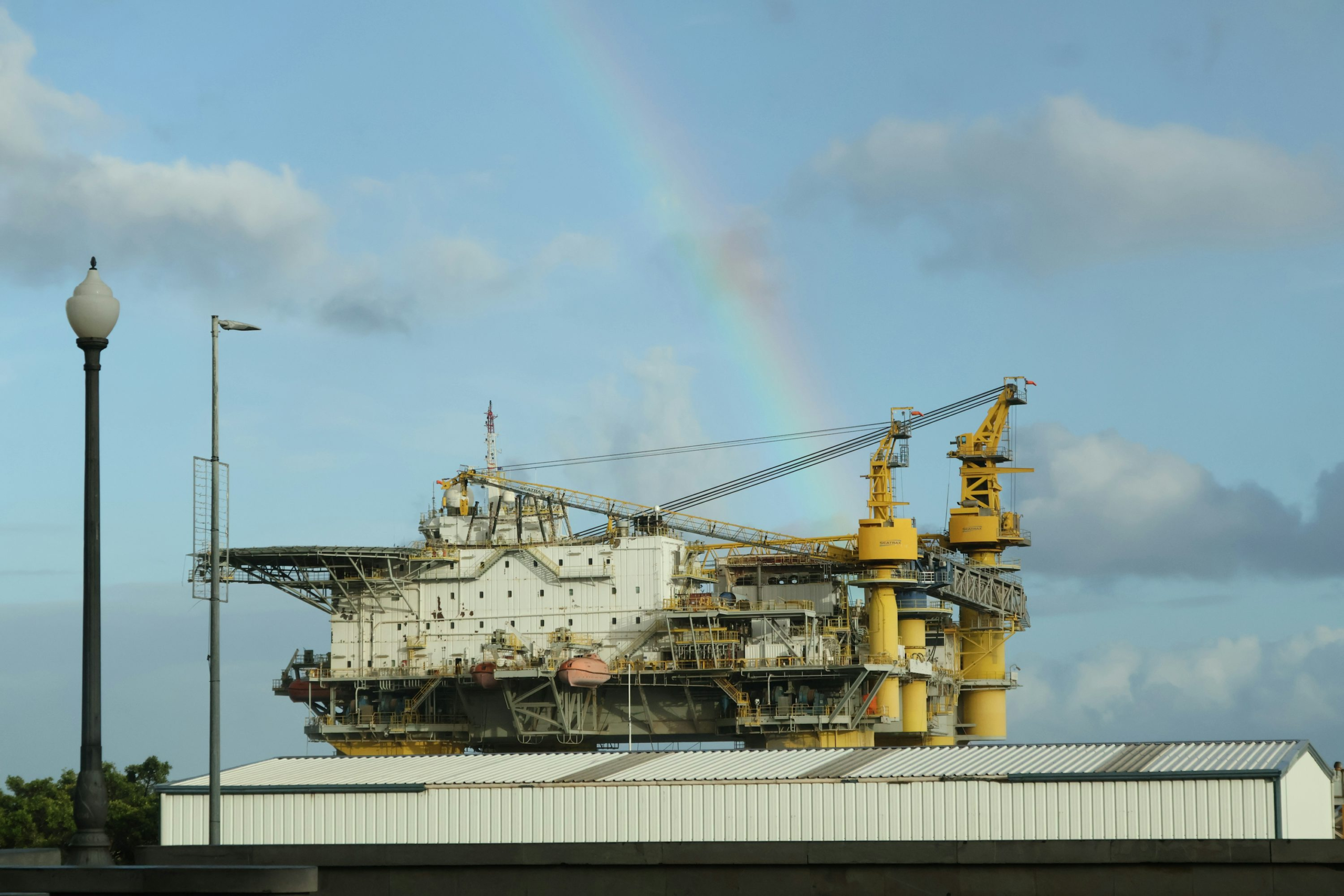
Stage 2 uses existing Troll infrastructure rather than adding another production platform. The eight wells connect through new subsea templates and associated equipment to Troll A, with the gas then flowing through infrastructure that has already supported the field for three decades.
The drilling campaign was completed in five and a half months by Odfjell Drilling’s Deepsea Aberdeen rig, supported by services from SLB and Baker Hughes. Aker Solutions built templates and manifolds at Egersund for OneSubsea, Ocean Installer handled field installation, and OneSubsea supplied an extension to the umbilical.
The project also required extension of the monoethylene glycol line and installation of a 28km, 36-inch gas pipeline by Allseas’ Pioneering Spirit. Randaberg Industries supplied spools and pipeline end terminations, while Aker Solutions carried out modification work on Troll A.
That list is a useful reminder that a subsea tie-back can remain a major manufacturing and construction programme even when it avoids a new platform. Wells, trees, templates, manifolds, controls, flowlines, chemicals, umbilicals and topside modifications have to operate as one system before reservoir gas can use the capacity already available elsewhere in the field.
Troll Phase 3 began production in 2021 and targets the gas cap above the oil column in Troll West while oil production continues from the same broader reservoir area. Stage 2 reuses design work and standardised subsea solutions from the earlier development, reducing the amount of engineering and qualification that has to be repeated for each new step.
Equinor senior vice-president Trond Bokn said efficient marine operations and drilling were the main reasons for the early start and lower cost. Standardisation can remove duplicated engineering, but the saving only appears when reservoir conditions, interfaces and operating requirements remain close enough for proven equipment and procedures to be reused without compromising integrity.
The commercial purpose is to accelerate gas that would otherwise be produced more slowly rather than open a new standalone field. Equinor says the 55 billion standard cubic metres associated with Stage 2 is roughly equivalent to two years of French gas demand. The comparison illustrates scale; it does not mean the entire volume will be sold to France.
Troll already occupies an unusually large position in Norwegian gas production. Equinor says the field contains around 40% of the remaining gas reserves on the Norwegian Continental Shelf and alone meets about 10% of European gas demand. Incremental developments at the field can therefore influence export capability more than their lack of a new platform might suggest.
Lill Harriet Brusdal, Equinor vice-president for Troll and Kvitebjørn, described Troll as “the backbone of Norwegian gas exports to Europe”. Both Troll A and the Kollsnes gas plant are supplied with electricity from shore, reducing operational emissions compared with offshore facilities that generate all of their own power from gas turbines.
The ownership structure also gives the Norwegian state a large direct economic interest. Petoro holds 55.93% of Troll, Equinor 30.55%, Shell 8.19%, TotalEnergies 3.69% and ConocoPhillips 1.64%. Equinor says more than 90% of profits from the field flow to the state through taxation and Petoro’s ownership.
Stage 2 provides a measurable result against the project model set when the partners approved the investment in 2024. The installation package was awarded with an emphasis on existing infrastructure and Norwegian fabrication; production has now started just over two years after the investment decision and ahead of the schedule used at sanction.
The development also sits inside a longer sequence. Earlier this year the partners approved the Troll West Increased Gas Recovery North project, known as TWIN, which is expected to add around 11 billion standard cubic metres through another two wells and associated subsea infrastructure. Equinor has said it wants to reduce cost and execution time across future subsea projects as discoveries become smaller and existing fields mature.
That ambition reflects the changing economics of the Norwegian Continental Shelf. Large platforms and standalone developments can still be justified for sufficiently large resources, but smaller accumulations and reservoir extensions increasingly depend on nearby processing capacity, common equipment and repeatable subsea designs if they are to compete for investment.
Stage 2 is a relatively strong example because the claimed benefits are now tied to an operating project rather than a design target. Eight wells are producing, the drilling campaign finished faster than planned and costs came in below estimate. The next test is less dramatic: keeping those wells reliable and sustaining the export rate through infrastructure whose value increasingly comes from how many additional projects it can absorb after its original development costs were paid.