Jan De Nul has entered the carbon capture and storage market with a contract to install protective rock over sections of the Northern Endurance Partnership’s offshore carbon dioxide pipeline in the North Sea.
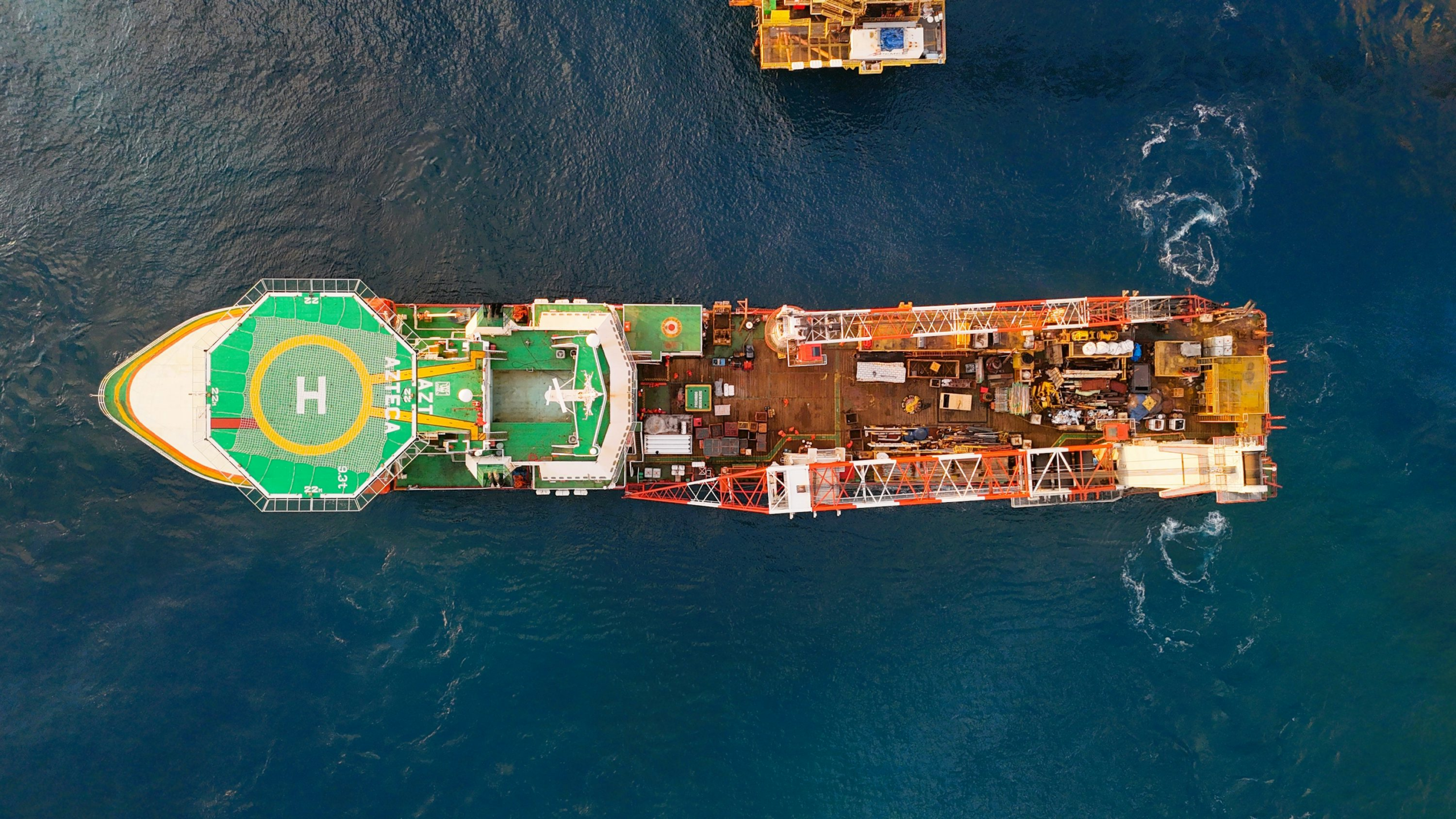
The Belgian marine contractor is working as a subcontractor to Saipem, which holds responsibility for the offshore execution scope. Jan De Nul will deploy its rock installation vessel Simon Stevin over the coming months, using a vertical fall-pipe system to place material accurately on the seabed in water depths of roughly 30 to 60 metres.
The company published its project announcement on 25 August, placing the primary-source development inside this run’s main sourcing window even though trade coverage began appearing on 24 August. It is Jan De Nul’s first CCS project, but the marine engineering involved is based on established subsea construction methods rather than a new type of vessel operation created specifically for carbon storage.
Post-lay rock installation is used where sections of pipeline need additional stability or physical protection after they have been placed on the seabed. A controlled fall pipe lowers the discharge point towards the bottom, reducing the spread that would occur if aggregate were simply dropped from the surface and allowing survey and positioning systems to build a defined rock profile around the installed line.
Jan De Nul describes the pipeline within its scope as approximately one metre in diameter. Project documents can use different dimensions for individual sections of a network, so that figure should be treated as the contractor’s description of the line it is protecting rather than a specification for every part of Northern Endurance.
The work is part of the transport and storage infrastructure being developed to carry captured carbon dioxide from industrial clusters towards permanent geological storage beneath the southern North Sea. The wider Northern Endurance Partnership system is intended to serve emitters on Teesside and the Humber, linking onshore collection and compression with offshore transport and injection.
The engineering sequence is now sufficiently advanced that several conventional offshore supply-chain disciplines are operating at once. Hartlepool is already supporting pipe handling and mobilisation for the offshore campaign, while UK linepipe manufacturing, coating, marine installation and subsea work are being combined into a transport system whose individual packages have to meet the same construction schedule.
Rock placement sits late enough in that sequence to show that CCS is moving beyond feasibility studies and permitting into physical delivery. It is not one of the more technically exotic parts of the development, but pipeline stability and protection are prerequisites for safe operation over a route exposed to seabed movement, fishing activity, anchors and other external loads.
A marine notice for the Northern Endurance programme says post-pipelay rock installation by Simon Stevin was expected to begin around 13 August and continue intermittently until approximately 30 November, subject to weather, operational requirements and programme changes. The work includes locations where sufficient burial cannot otherwise be achieved.
That information also explains why rock installation is not simply cosmetic cover. Burial depth can vary with seabed conditions and installation performance, while crossings and local features can leave parts of a pipeline more exposed than others. Adding placed rock can increase resistance to movement and create a physical barrier without requiring the entire route to be trenched more deeply.
Tom Quintelier, project manager at Jan De Nul, described the award as entry into “a new market” for the contractor. The novelty is commercial rather than mechanical: vessels, survey equipment and rock-placement systems developed for oil and gas, cables and offshore renewables can be redeployed into carbon-storage infrastructure where the physical subsea tasks are comparable.
That transfer matters because CCS economics depend partly on avoiding bespoke equipment wherever proven offshore systems can meet the requirement. Capture plants and injection reservoirs introduce technology specific to handling carbon dioxide, but many marine packages still rely on pipelay vessels, construction support ships, remotely operated vehicles, trenching tools and rock installation equipment already available in the offshore market.
The same supply chain will nevertheless have to work to a different operating case. Carbon dioxide transport requires control of pressure, temperature, material compatibility and impurity levels, while the storage system has to demonstrate long-term containment after injection. A rock installation contractor does not own those responsibilities, but its work has to protect infrastructure that forms part of that wider pressure system.
Jan De Nul’s first CCS contract is therefore less significant as a technology breakthrough than as evidence of industrial normalisation. A specialist marine contractor has been given a defined construction package, is using an existing vessel and established installation method, and is working inside a programme with scheduled offshore activity extending across several months.
For the emerging UK carbon-storage sector, that is arguably more useful than another demonstration built around unique hardware. Industrial scale depends on ordinary engineering packages becoming repeatable, competitive work for companies that already know how to execute them. Simon Stevin will not determine whether Northern Endurance succeeds on its own, but its presence shows that one more part of the project has reached the point where rocks actually have to be put on the seabed rather than represented on a development diagram.