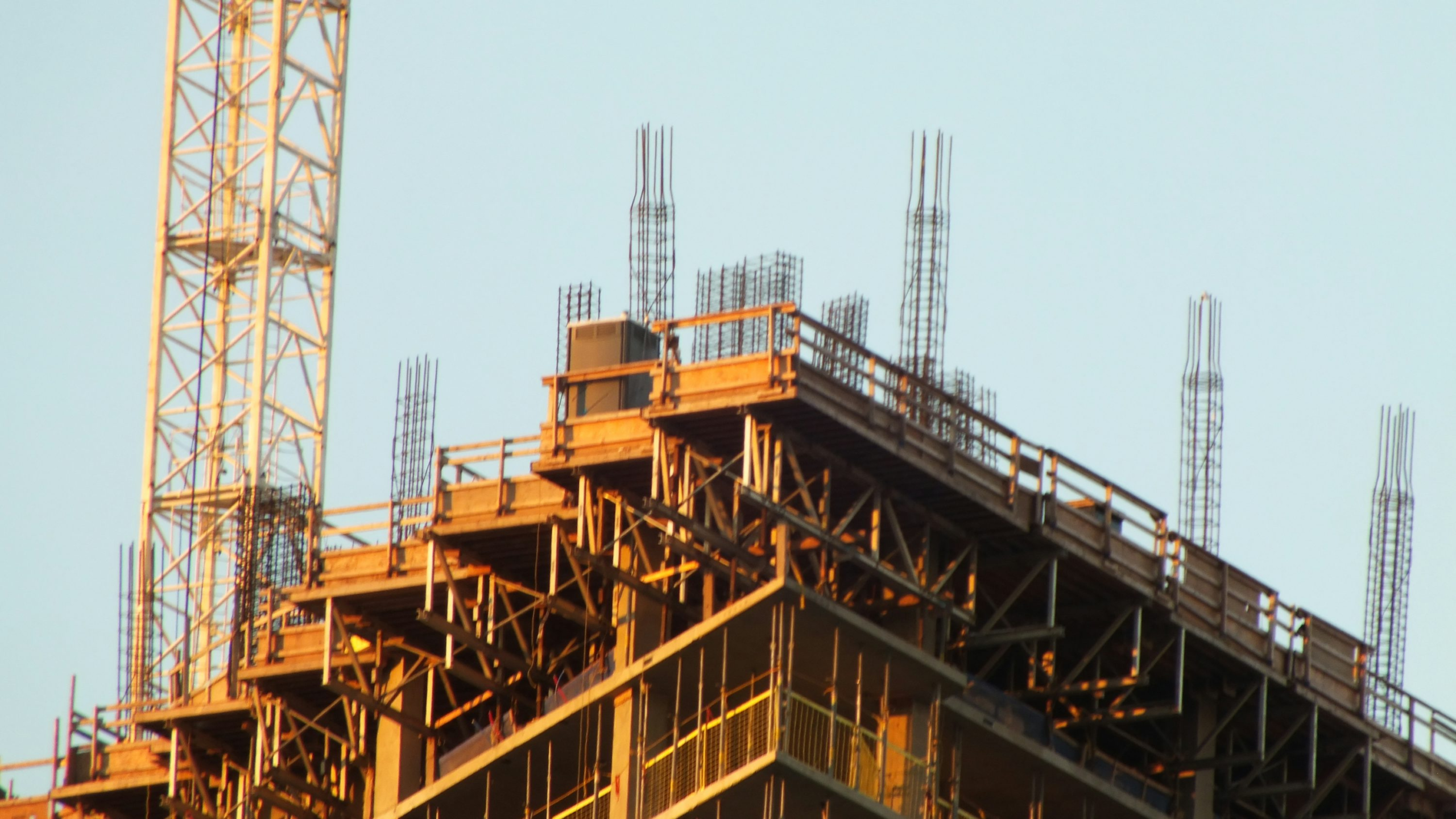
Stockholm Exergi has completed foundation construction for its Beccs Stockholm carbon-removal facility and begun erecting the first structural steel, moving the project into its main above-ground construction phase. The plant is scheduled to enter operation in 2028.
The completed civil works involved more than 2,000 tonnes of reinforcing steel, almost 1,900 steel pipe piles with a combined length of around 45 kilometres, and approximately 11,500 cubic metres of concrete. Skanska worked with Stockholm Exergi on the foundation package, while Saipem is now the principal partner responsible for construction of the facility itself.
The transition is visible at Energihamnen, where storage tanks, conveyors, and other industrial structures occupied the project area less than a year and a half ago. The site now has a completed foundation slab, a new quay under construction, and the first steel members of the future plant rising above ground.
Beccs Stockholm will be integrated with Stockholm Exergi’s existing combined heat and power operation at Värtan. The system is designed to capture biogenic carbon dioxide from the plant’s flue gas, condition and liquefy it, and transfer the liquid CO₂ into a transport chain for permanent geological storage.
When fully operational, the facility is intended to capture around 800,000 tonnes of biogenic carbon dioxide annually. Because the carbon originates from biomass, capturing and permanently storing it is intended to remove carbon from the atmospheric cycle rather than simply prevent a new fossil emission from being released.
That is the basis of bioenergy with carbon capture and storage, or BECCS. The concept is straightforward in a carbon-accounting diagram, but the plant itself requires a substantial process chain encompassing flue-gas handling, capture, compression, cooling, liquefaction, intermediate storage, loading, utilities, controls, and safety systems.
The logistics chain continues beyond the site. Stockholm Exergi plans to transport liquefied CO₂ from Stockholm for permanent storage beneath the North Sea, with Northern Lights involved in the storage value chain. Capture performance at Värtan therefore has to be matched by shipping, receiving, injection, and geological-storage availability.
This interdependence makes BECCS different from installing a standalone piece of pollution-control equipment. If the capture unit is available but transport or storage is unavailable, the carbon cannot be removed permanently. If shipping and storage capacity exist but the capture plant is offline, the downstream infrastructure has nothing to handle.
The completed foundation works are consequently an important delivery milestone without being evidence that the process itself is operational. Structural steel erection now has to be followed by further building work, major equipment installation, piping, electrical systems, instrumentation, controls, utilities, testing, and integration with the existing CHP operation.
The site adds another complication because construction is taking place inside an established urban energy and port environment. Existing operations, marine access, logistics, and limited space all have to be managed while a new large process facility is built around infrastructure that already serves Stockholm.
The project moved into construction after an investment decision in spring 2025. Its financing combines several sources, including €180 million from the EU Innovation Fund, Swedish state support, and sales of future carbon removals to organisations using the voluntary market.
That combination is necessary because carbon removal does not have the same established commodity market as electricity, heat, or conventional industrial products. The additional plant creates a service whose commercial value depends on public support and customers being prepared to pay for independently accounted permanent removals.
Stockholm Exergi has therefore had to develop a market while simultaneously engineering the facility. Long-term economics will depend on the capture plant operating reliably, transport and storage being available, and buyers continuing to value each verified tonne of biogenic CO₂ removed from circulation.
The current milestone at least replaces some of the abstraction with physical quantities. More than 2,000 tonnes of reinforcement and almost 1,900 piles are already in the ground, and the first structural steel is above it. Those are rather firmer measures of project progress than another target year on a presentation slide.
The next two years will determine whether the civil engineering can be converted into a functioning capture-to-storage chain. By 2028, Stockholm Exergi expects the site to be removing carbon at industrial scale. Between the first steel and 800,000 tonnes a year lies most of the difficult process engineering.