Sonair has introduced ADAR One, a safety-certified 3D ultrasonic sensor for human detection and obstacle awareness in autonomous mobile robots, automated guided vehicles, collaborative robots, industrial automation, and humanoid platforms.
The Norwegian company says the sensor provides 180° by 180° three-dimensional spatial awareness, allowing robots to detect people and objects at different heights rather than relying on a flat two-dimensional scanning plane. ADAR One has been certified for SIL2 and PL d applications and assessed as a human detection sensor under IEC 61496 requirements for electrosensitive protection equipment.
The sensor uses acoustic detection and ranging technology and is designed for integration into compact robot designs, including mobile platforms and humanoid systems. Sonair says the system can reduce blind spots that arise when conventional safety detection only covers a limited height or plane around the robot.
Robot safety is becoming more demanding as automation moves into less structured spaces. Traditional industrial robot cells often rely on fixed guarding, safety light curtains, scanners, and controlled access zones. Mobile robots, cobots, and humanoid systems are expected to work closer to people, navigate changing environments, and respond to obstacles that may appear above, below, or outside a single detection layer.
Two-dimensional safety sensing has supported many mobile robot deployments, but shelves, pallet tines, suspended loads, tools, limbs, overhanging objects, and mixed traffic can create detection challenges. Three-dimensional sensing gives the control system a more complete view of the occupied space around the robot, which becomes more valuable as automated platforms handle less predictable tasks.
Certification gives the product its industrial weight. A sensor used for navigation or mapping is not automatically suitable for a safety function. Safety-rated systems require evidence on failure behaviour, diagnostics, performance level, response time, integration rules, and compliance with recognised standards. Machine builders and integrators need components that can become part of a validated safety architecture rather than a perception layer that improves awareness without carrying functional safety responsibility.
Human-robot collaboration depends on more than robot intelligence. Speed limits, stopping distances, control modes, protective fields, emergency procedures, supervision, and site-specific risk assessments all shape whether a system can operate near people. A certified sensor can support those functions, but the complete machine still has to be validated as an integrated system.
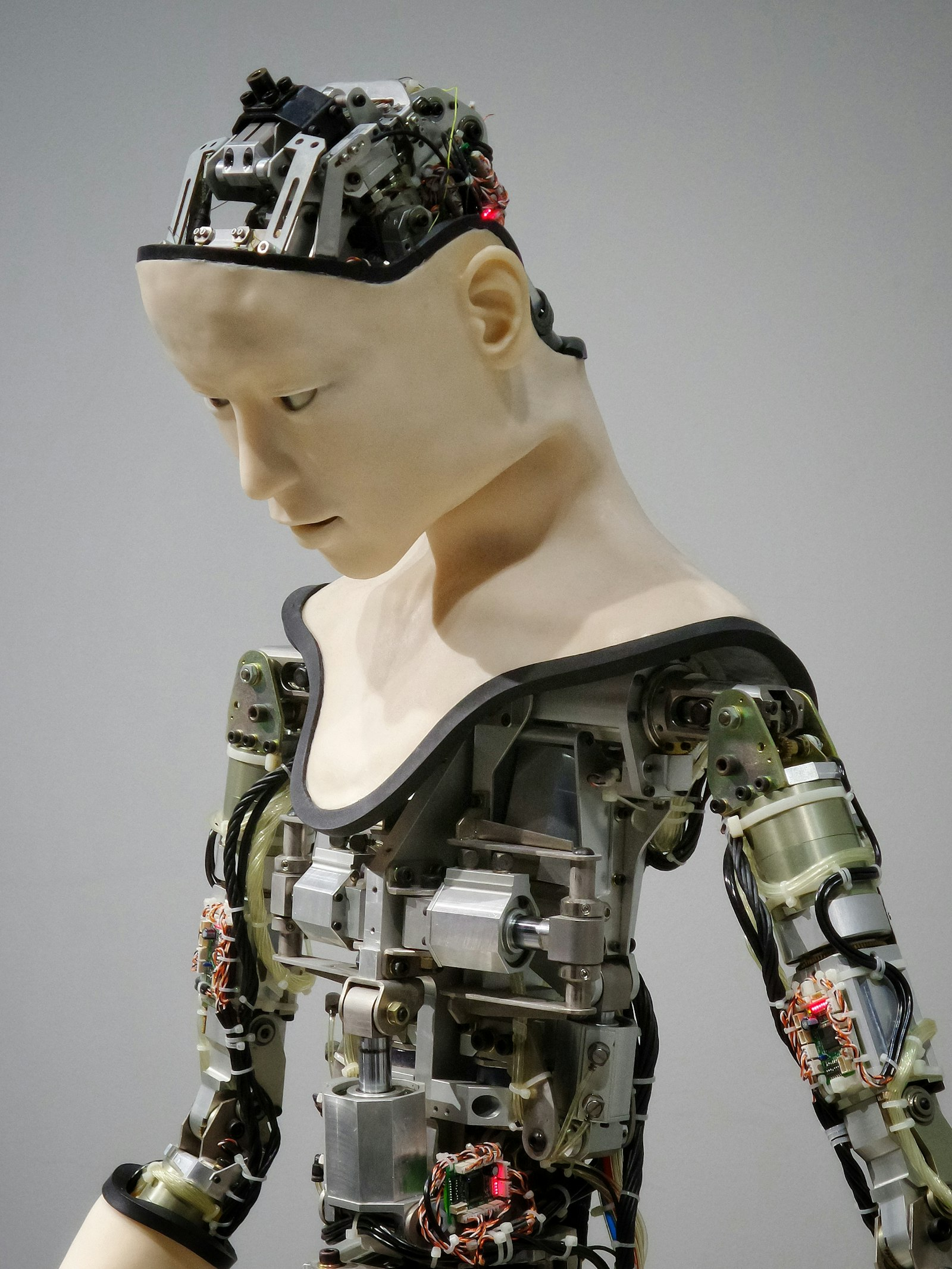
The rise of humanoid robotics increases the need for richer safety sensing. A humanoid’s arms, torso, payload, and movement profile create different risk conditions from a low mobile robot carrying totes. Systems working in commercial, logistics, service, or industrial environments will need to understand people and objects around the full body envelope, not only at floor level.
Field conditions will decide adoption. Ultrasonic sensing can offer advantages with transparent, dark, or reflective materials that may challenge some optical systems, but industrial environments can include vibration, dust, airflow, acoustic noise, temperature variation, and complex surfaces. The sensor’s performance alongside lidar, cameras, radar, encoders, safety controllers, and navigation software will determine how widely it is used.
Manufacturers are increasingly testing robot applications before buying full systems, with facilities such as the MTC’s Robot Experience Centre helping companies assess automation under more realistic factory conditions. Safety sensing is part of that same evaluation. Robots that appear capable in a controlled demonstration still need to behave predictably when the environment changes.
Automation is moving away from isolated cells and toward machines that share space, adapt to variable tasks, and move through complex facilities. That shift will be limited by safety engineering as much as by artificial intelligence or mechanical design. ADAR One enters the market at the point where perception, certification, and practical deployment are becoming one problem.